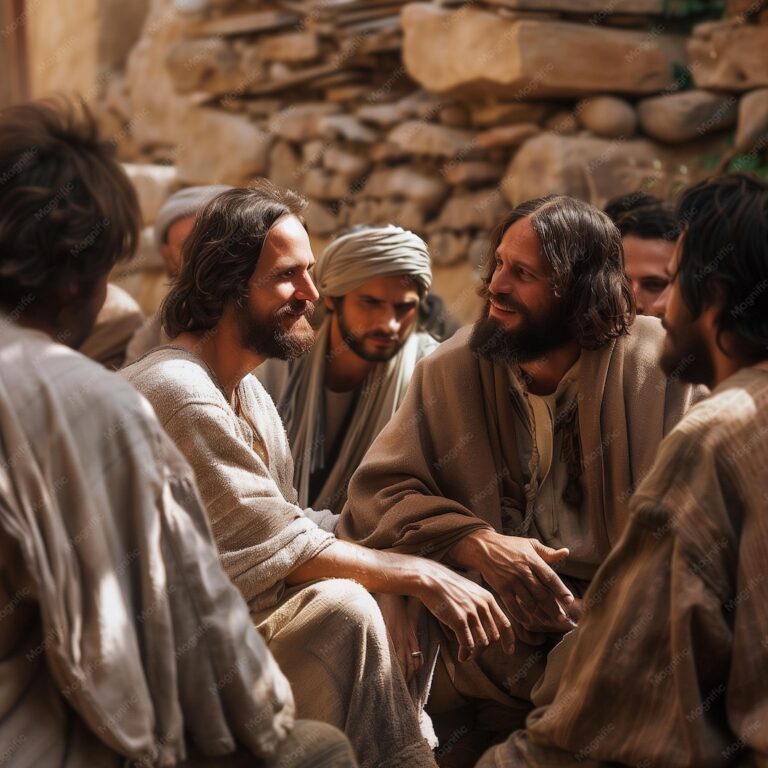
The Book of Mark moves quickly, showing Jesus not only through what He taught, but through what He did. Mark presents Jesus as the Son of God, the promised Messiah, the Servant who came to serve, suffer, and give His life for others. From the beginning of His ministry to the empty tomb, Mark reveals God’s Redemption Plan unfolding through Jesus Christ.
Mark opens with a powerful declaration:
“The beginning of the good news about Jesus the Messiah, the Son of God.”
From there, the story moves with purpose. Jesus calls His disciples, teaches crowds, heals the sick, casts out demons, forgives sins, calms storms, feeds thousands, and confronts those who refuse to believe.
But Mark’s Gospel is not simply a record of miracles.
Every event is moving toward the cross.
Jesus came to serve, but His service would ultimately require sacrifice. He would be rejected, betrayed, beaten, crucified, buried, and raised from the dead.
Mark shows us that Jesus was never surprised by what happened.
Jesus knew His mission.
Jesus knew His Father’s will.
And He obeyed.
The Gospel of Mark is the shortest of the four Gospels, but its message is powerful and direct.
Mark emphasizes Jesus in action.
Rather than spending large amounts of time explaining Jesus’ early life, Mark quickly brings us into His ministry. Jesus is baptized, tempted, begins preaching, calls His disciples, and starts demonstrating the authority of God.
The pace is intentional.
Mark wants us to see Jesus moving among ordinary people while accomplishing extraordinary things.
We see compassion.
Jesus see authority.
We see obedience.
Jesus see conflict.
We see faith.
Jesus see unbelief.
And ultimately, we see the cross and the resurrection.
Mark continually brings us back to one central truth:
Jesus is the Son of God.
Mark records the ministry, death, and resurrection of Jesus during the first century.
Jesus ministered primarily in Galilee and Judea, teaching in synagogues, villages, homes, and public places. His growing popularity brought Him into increasing conflict with religious leaders who questioned His authority and opposed His teaching.
The Roman Empire controlled the region, and crucifixion was a brutal form of execution.
Against this background, Jesus announced the Kingdom of God.
His message challenged both religious expectations and worldly ideas of power.
The Messiah was expected by many to bring political victory.
Instead, Jesus came as a suffering Servant.
His Kingdom would begin with surrender, sacrifice, and salvation.
Jesus is the central person throughout Mark.
He is the Son of God, Messiah, Savior, Teacher, Healer, Servant, and King.
His authority is demonstrated through His words and His actions.
John prepares the way for Jesus and calls people to repentance.
His ministry points away from himself and toward Christ.
Peter becomes one of Jesus’ closest disciples. He experiences tremendous moments of faith but also failure.
His story reminds us that following Jesus does not mean never making mistakes.
It means continuing to follow Him.
Jesus calls ordinary people to become His followers and eventually carry His message into the world.
Their journey includes faith, confusion, fear, failure, growth, and eventually mission.
The Pharisees, teachers of the law, chief priests, and other leaders frequently challenge Jesus.
Their opposition demonstrates the danger of allowing religious knowledge to exist without a heart willing to obey God.
Pontius Pilate represents Roman authority during Jesus’ trial and ultimately authorizes His crucifixion.
Yet even Pilate’s decision becomes part of the Redemption Plan God had already revealed.
Much of Jesus’ early ministry takes place in Galilee.
It is where He calls disciples, teaches crowds, heals people, and demonstrates God’s power.
Capernaum becomes an important center of Jesus’ ministry.
Many miracles and teachings take place there.
The Sea of Galilee becomes the setting for many important moments, including the calling of disciples, storms, miracles, and teaching.
Jesus eventually travels toward Jerusalem, knowing what awaits Him.
The journey toward Jerusalem becomes a journey toward the cross.
Jesus is crucified at Golgotha.
What appears to be the greatest defeat becomes the central event of God’s Redemption Plan.
Jesus is placed in a tomb after His crucifixion.
But the tomb does not remain His final destination.
He rises.
Jesus repeatedly demonstrates complete obedience to the Father.
He does not simply teach obedience.
He lives it.
Mark repeatedly asks the reader to consider what it means to truly believe.
Some people believe immediately.
Others struggle.
Some witness miracles and still refuse to believe.
Faith becomes a central question throughout the Gospel.
Jesus announces that the Kingdom of God has come near.
His Kingdom is different from earthly kingdoms.
It is built upon God’s authority rather than human power.
Jesus teaches that greatness is not found in being served.
True greatness is found in serving others.
This reaches its highest expression when Jesus gives His own life.
Jesus demonstrates authority not only over sickness and demons but also over sin.
He came to address humanity’s greatest problem.
Jesus repeatedly tells His disciples that suffering and death are ahead.
He knows the cross is coming.
He willingly walks toward it.
Death is not the conclusion.
Jesus rises from the grave, demonstrating God’s power over death and giving believers hope for eternity.
From the beginning, Scripture points toward God’s plan to redeem humanity.
Mark shows that plan moving directly toward Jesus Christ.
Jesus does not accidentally arrive at the cross.
He knows what is coming.
Jesus warns His disciples.
He continues toward Jerusalem.
Jesus allows Himself to be arrested.
He remains obedient when falsely accused.
Jesus accepts the cross.
And He gives His life.
The cross demonstrates the seriousness of sin while revealing the depth of God’s mercy and grace.
Jesus becomes the sacrifice.
But the story does not end there.
The tomb becomes empty.
The resurrection confirms that God’s Redemption Plan cannot be defeated by sin, death, or the grave.
Mark reveals Jesus in a very direct way.
He is revealed through His authority.
Jesus commands demons.
He heals sickness.
Jesus controls nature.
He forgives sins.
Jesus raises the dead.
He teaches with authority.
Jesus feeds the hungry.
He welcomes sinners.
Jesus confronts hypocrisy.
And finally, He gives His life.
The Roman centurion standing near the cross sees something others had missed and declares:
“Surely this man was the Son of God!”
Mark wants the reader to reach the same conclusion.
Jesus is not merely a teacher.
He is not merely a miracle worker.
Jesus is the Son of God and Savior.
As you move through the Book of Mark, you will discover:
A Savior who serves
A Messiah who fulfills God’s promises
A Teacher who speaks with authority
A Shepherd who cares for people
A Lord who commands creation
A Savior who forgives sin
A Servant who willingly suffers
A King who wears a crown of thorns
A Sacrifice who gives His life
A risen Lord who defeats death
You will also discover something about yourself.
How do you respond when Jesus calls?
Do you believe?
Do you obey?
I trust Him when you do not understand?
I follow Him when following becomes difficult?
Mark does not simply tell us what Jesus did.
It asks us what we will do with Jesus.
Mark teaches that faith is more than hearing.
It is responding.
The disciples heard Jesus and followed Him.
People heard Jesus and brought their sick to Him.
Others heard Jesus and rejected Him.
Some saw miracles and believed.
Others saw the same miracles and hardened their hearts.
The difference was not always what they saw.
It was what they were willing to believe.
Mark reminds us that Jesus deserves more than admiration.
He deserves obedience.