The day of Pentecost changed the direction of the early church.The Wind Came From Heaven, Holy Spirit came with power, Peter proclaimed Jesus Christ, Scripture was fulfilled, and thousands were faced with a choice. Acts 2 shows that God’s promise was never only about one moment in history. It was about salvation, repentance, obedience, and carrying the message of Jesus Christ into the world.
Obedience, God’s Covenant, Judgment, Blessing, Wrath, Grace, Holy Spirit, Apostles, Redemption Plan, Jesus Christ
📖 Acts 2:1 (NIV)
“2 When the day of Pentecost came, they were all together in one place. “
Acts 2 begins with the believers gathered together when a sound like a violent wind came from heaven.
What appeared to be tongues of fire rested upon them, and they were filled with the Holy Spirit.
People from many nations heard the believers speaking in their own languages and were amazed.
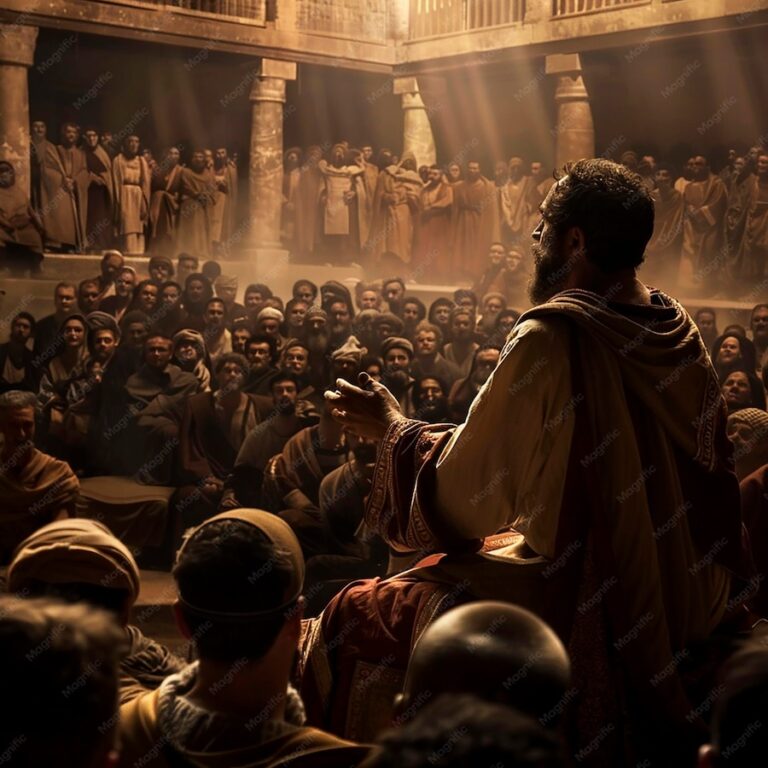
Peter then stood with the apostles and explained what was happening through Scripture.
He connected Pentecost to the words spoken through the prophet Joel.
God’s Spirit was being poured out, and the promise of salvation was available to everyone who calls on the name of the Lord.
Peter then brought the message directly to Jesus Christ.
Jesus had been crucified, but
God raised Him from the dead. Peter explained that this was part of God’s deliberate plan and that David’s words pointed toward the resurrection of the Messiah.
The people were cut to the heart and asked what they should do.
Peter told them to repent and be baptized in the name of Jesus Christ for the forgiveness of sins and promised the gift of the Holy Spirit.
About three thousand accepted the message.
The church began to grow through teaching, fellowship, prayer, generosity, worship, and daily salvation.
📖 Acts 2:1-4 (NIV)
“2 When the day of Pentecost came, they were all together in one place. 2 Suddenly a sound like the blowing of a violent wind came from heaven and filled the whole house where they were sitting. 3 They saw what seemed to be tongues of fire that separated and came to rest on each of them. 4 All of them were filled with the Holy Spirit and began to speak in other tongues[a] as the Spirit enabled them.”
The Holy Spirit came suddenly, and the sound was like a violent wind coming from heaven.
The direction matters.
The power did not originate with the apostles. It came from God.
They were not creating something through human ability.
They were receiving what Jesus had promised.
This begins an important lesson about God’s work through people.
Human beings can prepare, learn, pray, and obey, but God’s power comes from God.
The believers were gathered together, waiting as Jesus had instructed them in Acts 1.
Their obedience placed them where Jesus told them to be when the promise arrived.
Sometimes we want God’s blessing without first following His instruction.
Acts 2 begins by showing that obedience and God’s promises work together.
📖 Acts 2:5-8 (NIV)
“5 Now there were staying in Jerusalem God-fearing Jews from every nation under heaven. 6 When they heard this sound, a crowd came together in bewilderment, because each one heard their own language being spoken. 7 Utterly amazed, they asked: “Aren’t all these who are speaking Galileans? 8 Then how is it that each of us hears them in our native language? “
The believers were filled with the Holy Spirit and began speaking in other languages as the Spirit enabled them.
The ability was given for a purpose.
People from many nations were in Jerusalem, and they heard the wonders of God being declared in languages they understood.
God was removing a communication barrier.
The Gospel was beginning to move beyond one group of people.
The Holy Spirit was not given simply to create an extraordinary experience.
The Spirit empowered believers to become witnesses and communicate God’s message.
This is part of God’s Redemption Plan.
The message of Jesus Christ was never intended to remain hidden.
📖 Acts 2:9-12 (NIV)
“9 Parthians, Medes and Elamites; residents of Mesopotamia, Judea and Cappadocia, Pontus and Asia,[b] 10 Phrygia and Pamphylia, Egypt and the parts of Libya near Cyrene; visitors from Rome 11 (both Jews and converts to Judaism); Cretans and Arabs—we hear them declaring the wonders of God in our own tongues!” 12 Amazed and perplexed, they asked one another, “What does this mean?”
The crowd included people from many different regions and nations.
They had different backgrounds and spoke different languages, yet they heard the message.
Peter later explained from Joel that God would pour out His Spirit on people across generations and that everyone who calls on the name of the Lord will be saved.
This reveals the breadth of God’s Covenant.
Salvation is not presented as something reserved for one age, one social position, or one generation.
The promise reaches outward.
The Redemption Plan through Jesus Christ is bigger than the boundaries people create.
God’s grace reaches people where they are, but His grace also calls them toward repentance and a changed life.
📖 Acts 2:13-16 (NIV)
“13 Some, however, made fun of them and said, “They have had too much wine.”
“14 Then Peter stood up with the Eleven, raised his voice and addressed the crowd: “Fellow Jews and all of you who live in Jerusalem, let me explain this to you; listen carefully to what I say. 15 These people are not drunk, as you suppose. It’s only nine in the morning! 16 No, this is what was spoken by the prophet Joel:”
Not everyone responded with faith.
Some people were amazed and wanted to understand what was happening.
Others mocked the believers and accused them of being drunk.
This is an important lesson because witnessing God’s work does not guarantee that everyone will accept it.
People can see the same event and respond differently.
Some ask, “What does this mean?”
Others dismiss it.
The apostles did not allow mockery to stop them.
Peter stood up and explained the truth.
Faith does not require everyone to agree with you.
Obedience sometimes means continuing to speak the truth even when others do not understand or accept it.
📖 Acts 2:17-21 (NIV)
“17
“‘In the last days, God says,
I will pour out my Spirit on all people.
Your sons and daughters will prophesy,
your young men will see visions,
your old men will dream dreams.”
“18
Even on my servants, both men and women,
I will pour out my Spirit in those days,
and they will prophesy.”
“19
I will show wonders in the heavens above
and signs on the earth below,
blood and fire and billows of smoke.”
“20
The sun will be turned to darkness
and the moon to blood
before the coming of the great and glorious day of the Lord.”
“21
And everyone who calls
on the name of the Lord will be saved.’[c]”
He went to Scripture.
He explained Pentecost through the prophecy of Joel.
This is significant because God’s Covenant had been moving toward this moment long before Pentecost occurred.
The Holy Spirit was not an unexpected change in God’s plan.
It was part of what God had promised.
Peter showed that Scripture connected God’s past promises with what the people were witnessing in the present.
This teaches us to look at the Bible as one unfolding story.
The Old Testament points forward.
The New Testament reveals the fulfillment.
And Jesus Christ stands at the center of God’s Redemption Plan.
📖 Acts 2:22-25 (NIV)
“22 “Fellow Israelites, listen to this: Jesus of Nazareth was a man accredited by God to you by miracles, wonders and signs, which God did among you through him, as you yourselves know. 23 This man was handed over to you by God’s deliberate plan and foreknowledge; and you, with the help of wicked men,[d] put him to death by nailing him to the cross. 24 But God raised him from the dead, freeing him from the agony of death, because it was impossible for death to keep its hold on him. 25 David said about him:
“‘I saw the Lord always before me.
Because he is at my right hand,
I will not be shaken.”
Peter did not avoid the difficult truth.
The people needed to understand that Jesus had been crucified.
Human beings were involved in His death, but Peter also explained that Jesus’ death occurred according to God’s deliberate plan and foreknowledge.
Then came the greatest declaration:
God raised Jesus from the dead.
Death could not hold Him.
The resurrection changed everything.
Jesus was not simply a teacher whose life ended at the cross.
He was the Messiah.
He was risen.
Peter and the other apostles were witnesses of this truth.
Christian faith rests on Jesus Christ—not on human perfection.
People fail.
People make wrong choices.
But Jesus Christ overcame death.
📖 Acts 2:26-29 (NIV)
“26
Therefore my heart is glad and my tongue rejoices;
my body also will rest in hope,
“27
because you will not abandon me to the realm of the dead,
you will not let your holy one see decay.
“28
You have made known to me the paths of life;
you will fill me with joy in your presence.’[e]
“29 “Fellow Israelites, I can tell you confidently that the patriarch David died and was buried, and his tomb is here to this day.
David died and was buried.
Therefore, Peter explained that David was speaking prophetically about someone greater than himself.
That person was Jesus Christ.
God had promised David that one of his descendants would sit upon the throne.
The promise pointed forward to the Messiah.
Acts 2 therefore demonstrates the continuing strength of God’s Covenant.
Generations passed.
Kings came and went.
People died.
But God’s promise continued moving toward fulfillment.
What God promises does not become outdated because humanity changes.
📖 Acts 2:30-34 (NIV)
“30 But he was a prophet and knew that God had promised him on oath that he would place one of his descendants on his throne. 31 Seeing what was to come, he spoke of the resurrection of the Messiah, that he was not abandoned to the realm of the dead, nor did his body see decay. 32 God has raised this Jesus to life, and we are all witnesses of it. 33 Exalted to the right hand of God, he has received from the Father the promised Holy Spirit and has poured out what you now see and hear. 34 For David did not ascend to heaven, and yet he said,
“‘The Lord said to my Lord:
“Sit at my right hand”
Peter’s message reached the hearts of the people.
They asked the apostles:
“What shall we do?”
Hearing the truth creates a decision.
Peter answered by calling them to repentance and baptism in the name of Jesus Christ for the forgiveness of sins.
The Gospel is not simply information to collect.
It calls for a response.
Repentance means turning toward God rather than continuing in the same direction.
Grace does not mean sin does not matter.
Grace provides a way back to God.
Through Jesus Christ, forgiveness becomes possible.
The choice remains with the individual.
📖 Acts 2:35-40 (NIV)
“35
until I make your enemies
a footstool for your feet.”’[f]”
“36 “Therefore let all Israel be assured of this: God has made this Jesus, whom you crucified, both Lord and Messiah.”
“37 When the people heard this, they were cut to the heart and said to Peter and the other apostles, “Brothers, what shall we do?”
“38 Peter replied, “Repent and be baptized, every one of you, in the name of Jesus Christ for the forgiveness of your sins. And you will receive the gift of the Holy Spirit. 39 The promise is for you and your children and for all who are far off—for all whom the Lord our God will call.”
“40 With many other words he warned them; and he pleaded with them, “Save yourselves from this corrupt generation.”
Peter warned the people to save themselves from the corrupt generation around them.
Every generation faces choices.
Culture changes.
Technology changes.
People’s priorities change.
But God’s standard does not change.
The warning is not simply about other people.
It asks us to examine ourselves.
What are we following?
What controls our decisions?
Are we allowing the world around us to determine what is right and wrong, or are we allowing God to shape how we live?
Judgment and blessing both appear throughout Scripture because choices have consequences.
Jesus offers salvation, but we must respond.
📖 Acts 2:41-47 (NIV)
“41 Those who accepted his message were baptized, and about three thousand were added to their number that day.”
“42 They devoted themselves to the apostles’ teaching and to fellowship, to the breaking of bread and to prayer. 43 Everyone was filled with awe at the many wonders and signs performed by the apostles. 44 All the believers were together and had everything in common. 45 They sold property and possessions to give to anyone who had need. 46 Every day they continued to meet together in the temple courts. They broke bread in their homes and ate together with glad and sincere hearts, 47 praising God and enjoying the favor of all the people. And the Lord added to their number daily those who were being saved.”
Then something remarkable happened.
Devoted themselves to the apostles’ teaching, fellowship, breaking of bread, and prayer.
They shared with those who had needs.
Worshiped together.
And they ate together with sincere and glad hearts.
And the Lord continued adding people who were being saved.
The early church was not simply a group that gathered once a week.
Their faith affected how they lived.
Their possessions, relationships, worship, generosity, and priorities were changing.
The Holy Spirit was producing a community centered on Jesus Christ.
The Gospel had been preached, people responded, and now their lives began to demonstrate what they believed.
Acts 2 shows that God’s Covenant stands through every generation.
The promise spoken through the prophets reached fulfillment in Jesus Christ and the coming of the Holy Spirit.
The resurrection confirmed Jesus as Lord and Messiah, and the promise of salvation was extended to those who would call upon Him.
God’s Covenant did not end at the cross.
The cross was part of the Redemption Plan.
The resurrection demonstrated God’s power.
Pentecost demonstrated God’s promise.
And the growing church demonstrated that the Gospel would continue moving forward.
Human beings may fail, but God’s Covenant remains.
Acts 2 teaches us that God’s grace gives us an opportunity, but that opportunity calls for a response.
The people heard Peter’s message.
They were cut to the heart.
Then they asked what they should do.
That progression matters.
We hear.
We understand.
And we make a choice.
People respond.
People can change direction.
None of us will become perfect through our own efforts.
The only perfect souls are God and Jesus Christ.
That is why God’s Redemption Plan is centered on Jesus.
We can choose obedience.
We can seek forgiveness.
And we can turn away from what is wrong.
We can pray.
We can learn.
And we can allow the Holy Spirit to guide how we live.
Acts 2 is ultimately about Jesus Christ.
The Holy Spirit came as Jesus had promised.
Peter proclaimed His death.
Peter proclaimed His resurrection.
And Peter explained that Scripture pointed toward Him.
Peter declared Jesus to be both Lord and Messiah.
Then the people were given an opportunity to respond.
The church that followed was built around the teaching of the apostles, fellowship, prayer, worship, generosity, and salvation through Jesus Christ.
Pentecost was powerful, but the power pointed beyond the event.
It pointed to the risen Savior.
Wind came from heaven.
Spirit was given.
Gospel was preached.
Three thousand responded.
And the Redemption Plan continued.
Jesus Christ had risen, and now His message was moving into the world.