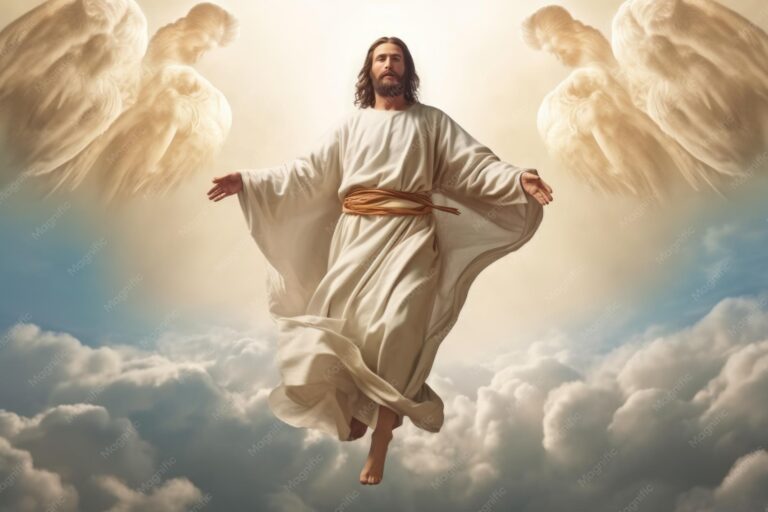
Jesus had risen from the dead, but His work through His followers was only beginning. Before He was Taken Up To Heaven, He prepared the apostles for what was ahead. They were told to wait, pray, receive the Holy Spirit, and become witnesses. Acts 1 shows that God’s Covenant continues through people who trust His timing and follow His instructions.
Obedience, God’s Covenant, Risen, Blessing, Grace, Apostles, Judas, It Is Written, Redemption Plan, Jesus Christ
📖 Acts 1:1 (NIV)
“1 In my former book, Theophilus, I wrote about all that Jesus began to do and to teach “
Acts begins by connecting everything that follows to what Jesus had already done.
After His suffering and resurrection, Jesus appeared to His followers for forty days and gave them convincing proof that He was alive.
He spoke about the kingdom of God and prepared His apostles for a mission that would reach far beyond Jerusalem.
The apostles wanted to know when the kingdom would be restored to Israel.
Jesus redirected their attention from knowing the future to fulfilling their purpose.
They would receive power through the Holy Spirit and become witnesses in Jerusalem, Judea, Samaria, and eventually the ends of the earth.
Then Jesus was taken up into heaven. His departure did not mean His work was finished.
It meant the next part of God’s Redemption Plan was beginning.
The apostles returned to Jerusalem and joined together constantly in prayer.
Peter recognized that Scripture had already spoken about Judas and the need for another apostle to take his place. After prayer, Matthias was chosen.
Acts 1 teaches us that God’s work does not stop when one chapter ends. Sometimes God closes one chapter so His people can begin the next.
📖 Acts 1:1-3 (NIV)
“1 In my former book, Theophilus, I wrote about all that Jesus began to do and to teach 2 until the day he was taken up to heaven, after giving instructions through the Holy Spirit to the apostles he had chosen. 3 After his suffering, he presented himself to them and gave many convincing proofs that he was alive. He appeared to them over a period of forty days and spoke about the kingdom of God.”
The foundation of Acts is not an idea, philosophy, or human command.
It is the risen Jesus Christ.
Jesus appeared to His followers over forty days after His suffering.
He did not simply tell them to believe without evidence.
He presented convincing proof that He was alive.
The apostles had witnessed His death, but now they were witnesses of His resurrection.
Their future ministry would depend upon this truth.
Our faith also begins with Jesus Christ. Christianity is not built upon humanity being perfect.
People fail, make mistakes, and sometimes make terrible choices.
Jesus is different. He is the risen Savior at the center of God’s Redemption Plan.
The apostles were about to carry that message into the world.
📖 Acts 1:4-7 (NIV)
“4 On one occasion, while he was eating with them, he gave them this command: “Do not leave Jerusalem, but wait for the gift my Father promised, which you have heard me speak about. 5 For John baptized with[a] water, but in a few days you will be baptized with[b] the Holy Spirit.”
“6 Then they gathered around him and asked him, “Lord, are you at this time going to restore the kingdom to Israel?”
“7 He said to them: “It is not for you to know the times or dates the Father has set by his own authority.”
Jesus told the apostles not to leave Jerusalem.
They were instructed to wait for the gift the Father had promised.
Waiting can be difficult because people naturally want to move forward immediately.
The apostles had a mission, but Jesus told them to wait.
This teaches an important lesson about obedience.
God’s timing is not always our timing.
The apostles could not accomplish their mission through human strength alone.
They needed the Holy Spirit.
God’s Covenant includes His promises, and His promises do not depend upon humanity knowing every detail ahead of time.
Sometimes obedience means moving. Sometimes obedience means waiting.
The important thing is recognizing what God has asked us to do and trusting Him with what we cannot yet see.
📖 Acts 1:8-10 (NIV)
“8 But you will receive power when the Holy Spirit comes on you; and you will be my witnesses in Jerusalem, and in all Judea and Samaria, and to the ends of the earth.”
“9 After he said this, he was taken up before their very eyes, and a cloud hid him from their sight.”
“10 They were looking intently up into the sky as he was going, when suddenly two men dressed in white stood beside them. “
Jesus told the apostles that they would receive power when the Holy Spirit came upon them.
This power was not given so they could become important. It was given so they could become witnesses.
There is a difference between having power and knowing how to use it.
The apostles were being prepared to represent Jesus Christ to the world.
Their witness would begin in Jerusalem, move through Judea and Samaria, and eventually reach the ends of the earth.
God’s Redemption Plan was bigger than one city, one people, or one generation.
The Holy Spirit would empower imperfect people to accomplish work that was greater than themselves.
That remains an important lesson.
God does not require us to be perfect before He can work through us.
He asks us to be willing, obedient, and faithful.
📖 Acts 1:11-13 (NIV)
“11 “Men of Galilee,” they said, “why do you stand here looking into the sky? This same Jesus, who has been taken from you into heaven, will come back in the same way you have seen him go into heaven.”
“12 Then the apostles returned to Jerusalem from the hill called the Mount of Olives, a Sabbath day’s walk[c] from the city. 13 When they arrived, they went upstairs to the room where they were staying. Those present were Peter, John, James and Andrew; Philip and Thomas, Bartholomew and Matthew; James son of Alphaeus and Simon the Zealot, and Judas son of James. “
The apostles wanted to know when the kingdom would be restored to Israel.
Jesus did not give them a date.
Instead, He gave them a responsibility.
This is an important distinction. We often want answers about the future while God gives us instructions for the present.
Jesus told them what they needed to know: they would receive power and become witnesses.
There are things God has chosen to keep within His own authority.
Knowing everything about tomorrow is not required for obedience today.
This connects with the larger message of Scripture.
God knows the beginning, the middle, and the end. We do not.
Faith means trusting God even when He has not revealed every detail.
The apostles did not need the date of the future kingdom to begin serving Jesus.
They needed to follow the instruction they had already received.
📖 Acts 1:14-17 (NIV)
“14 They all joined together constantly in prayer, along with the women and Mary the mother of Jesus, and with his brothers.”
“15 In those days Peter stood up among the believers (a group numbering about a hundred and twenty) 16 and said, “Brothers and sisters,[d] the Scripture had to be fulfilled in which the Holy Spirit spoke long ago through David concerning Judas, who served as guide for those who arrested Jesus. 17 He was one of our number and shared in our ministry.”
When Jesus had finished speaking, He was taken up before their eyes, and a cloud hid Him from their sight.
The apostles stood looking toward heaven.
Two men dressed in white then reminded them that this same Jesus would return in the same way they had seen Him go.
Jesus’ ascension was not the end of His story.
It marked a transition.
His earthly ministry had been completed, His resurrection had been witnessed, and now His followers were being sent forward.
The promise of His return also gives Acts a future dimension.
The apostles were not simply looking backward at something that had happened.
They were living between Christ’s resurrection and His promised return.
The message is therefore both historical and personal: Jesus Christ is risen, Jesus Christ is in heaven, and Jesus Christ will come again.
📖 Acts 1:18-20 (NIV)
“18 (With the payment he received for his wickedness, Judas bought a field; there he fell headlong, his body burst open and all his intestines spilled out. 19 Everyone in Jerusalem heard about this, so they called that field in their language Akeldama, that is, Field of Blood.)”
“20 “For,” said Peter, “it is written in the Book of Psalms:
“‘May his place be deserted;
let there be no one to dwell in it,’[e]
and,
“‘May another take his place of leadership.’[f]”
After returning to Jerusalem, the apostles gathered together with other believers and constantly devoted themselves to prayer.
This is one of the first pictures Acts gives us of the early church.
They had questions. They had experienced loss.
Their leader had ascended. Judas was gone.
A new apostle needed to be chosen.
Yet they prayed.
Prayer was not something they turned to only after everything else failed.
Prayer became part of how they prepared for what God was going to do.
They prayed together with the women, Mary the mother of Jesus, and Jesus’ brothers.
This shows that the early believers were not depending upon individual strength.
They were seeking God’s direction together.
Pentecost came power, there was prayer.
Before the Gospel spread across nations, there was obedience.
Before the church moved forward, believers waited together before God.
📖 Acts 1:21-23 (NIV)
“21 Therefore it is necessary to choose one of the men who have been with us the whole time the Lord Jesus was living among us, 22 beginning from John’s baptism to the time when Jesus was taken up from us. For one of these must become a witness with us of his resurrection.”
“23 So they nominated two men: Joseph called Barsabbas (also known as Justus) and Matthias.”
Peter explained that what happened with Judas was not outside God’s knowledge.
He pointed back to Scripture and recognized that what had happened was connected to what had been written through David.
This phrase—“It is written”—is important throughout Scripture.
God’s Redemption Plan did not suddenly appear after Jesus’ resurrection.
The story had been unfolding through God’s Covenant and His promises.
Judas made his own choices and was responsible for them. At the same time, God was not surprised by what happened.
The apostles therefore did not respond to Judas’ departure by abandoning their mission.
They looked to Scripture and moved forward.
This teaches us that God’s plan is not destroyed by human failure.
People can make wrong choices, but God’s purposes remain.
Human weakness does not cancel God’s faithfulness.
📖 Acts 1:24-26 (NIV)
“24 Then they prayed, “Lord, you know everyone’s heart. Show us which of these two you have chosen 25 to take over this apostolic ministry, which Judas left to go where he belongs.” 26 Then they cast lots, and the lot fell to Matthias; so he was added to the eleven apostles.”
Peter explained that another man needed to take Judas’ place as an apostle and become a witness of Jesus’ resurrection.
Two men were nominated: Joseph called Barsabbas, also known as Justus, and Matthias.
But before the decision, they prayed.
Their prayer recognized something important: God knows every heart.
They asked the Lord to show which man He had chosen.
Then they cast lots, and Matthias was added to the eleven apostles.
The important message is not simply the method they used. It is the attitude behind the decision.
They recognized that leadership in the work of God was not merely about personal ambition.
They sought God’s direction.
Judas’ failure did not end the apostolic mission.
A vacancy became an opportunity for someone else to serve.
God’s work continued.
Acts 1 demonstrates that God’s Covenant does not depend upon one person remaining faithful forever.
Judas failed, but God’s Redemption Plan continued.
Jesus had risen, the Holy Spirit had been promised, the apostles had been commissioned, and Scripture was being fulfilled.
God’s promises remained firm even when human beings were imperfect.
That is important for us because we can sometimes look at our own failures and believe that everything is finished.
Acts 1 tells a different story.
God remains faithful.
His purposes continue.
His promises remain.
And His Redemption Plan continues through Jesus Christ.
Acts 1 teaches us to know the difference between what God has asked us to do and what He has chosen not to reveal.
The apostles wanted to know the future, but Jesus gave them a mission.
They were told to wait, pray, receive the Holy Spirit, and become witnesses.
That remains a valuable lesson today.
And we may not know everything that is coming, but we can choose how we live while we wait.
Can pray.
Can obey.
We can study what God has already revealed.
We can share what we know about Jesus Christ.
And when one chapter of life ends, we can remember that God may be preparing the next.
Acts 1 begins with Jesus Christ risen from the dead and ends with His apostles preparing to continue His mission.
Everything points back to Him.
Jesus suffering fulfilled God’s Redemption Plan.
Jesus resurrection established the truth they would proclaim.
His ascension placed Him in heaven.
His promise of the Holy Spirit prepared His followers for what came next.
And His promised return gave them hope for the future.
The apostles were not sent out to build their own kingdom.
They were sent to be witnesses of Jesus Christ.
Acts begins with Jesus going to heaven, but His message does not go with Him and disappear.
Instead, through the Holy Spirit, His followers carry the Gospel forward.
The story continues because Jesus Christ lives.