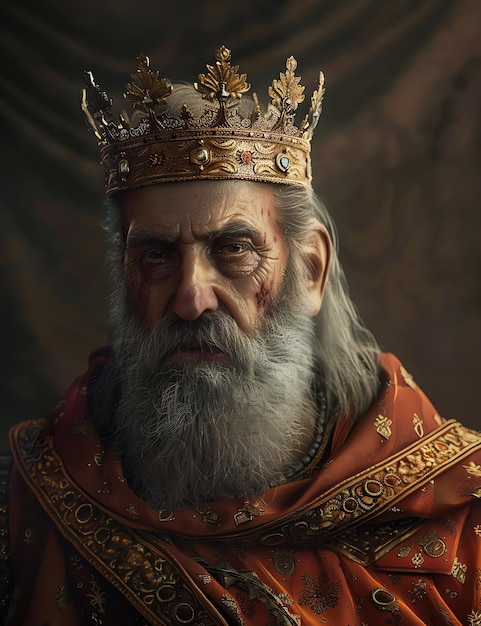
Acts 12, Proceeded To Seize Peter shows two very different responses to God. Peter is imprisoned, but the church prays and God sends an angel to rescue him. Herod receives praise meant for God and is struck down. Through both events, we see that human power has limits, prayer matters, and God’s Word continues to move forward. Nothing can stop God’s Redemption Plan through Jesus Christ.
Obedience, God’s Covenant, Faith, Angel, Rhonda, Judgment, Peter, King Herod, Redemption Plan, Jesus Christ
📖 Acts 12:1 (NIV)
“12 It was about this time that King Herod arrested some who belonged to the church, intending to persecute them.”
King Herod believed he could control the future by controlling God’s people.
He had James put to death and then arrested Peter, placing him under heavy guard.
From a human perspective, Peter appeared to have no way out.
But while Peter was in prison, the church was earnestly praying to God for him.
The night before Peter’s trial, an angel of the Lord appeared.
Peter’s chains fell away, the prison gates opened, and he was led safely into the city.
At first Peter could hardly believe what was happening.
When he realized the Lord had rescued him, he went to the house where believers were gathered in prayer.
The story then turns back to Herod.
He accepted the praise of people who called him a god rather than giving praise to God.
An angel of the Lord struck him down, and he died.
Yet the chapter does not end with Herod. It ends with something greater: the word of God continued to spread and flourish.
Human rulers come and go. God’s Covenant remains.
His Redemption Plan continues, and His Word cannot be imprisoned.
📖 Acts 12:1-4 (NIV)
“12 It was about this time that King Herod arrested some who belonged to the church, intending to persecute them. 2 He had James, the brother of John, put to death with the sword. 3 When he saw that this met with approval among the Jews, he proceeded to seize Peter also. This happened during the Festival of Unleavened Bread. 4 After arresting him, he put him in prison, handing him over to be guarded by four squads of four soldiers each. Herod intended to bring him out for public trial after the Passover.”
Herod arrested people who belonged to the church because he intended to persecute them.
James was killed with the sword, and Peter was seized next.
Herod had political authority, soldiers, and a prison, but none of these things gave him authority over God’s ultimate plan.
Persecution is not new in Scripture.
God’s people have repeatedly faced opposition from those who believe they can stop what God is doing.
Acts 12 reminds us that obedience to God does not mean believers will never face suffering.
It means suffering does not have the final word.
Peter was imprisoned, but the Gospel was not.
📖 Acts 12:5-8 (NIV)
“5 So Peter was kept in prison, but the church was earnestly praying to God for him.:
“6 The night before Herod was to bring him to trial, Peter was sleeping between two soldiers, bound with two chains, and sentries stood guard at the entrance. 7 Suddenly an angel of the Lord appeared and a light shone in the cell. He struck Peter on the side and woke him up. “Quick, get up!” he said, and the chains fell off Peter’s wrists.”
“8 Then the angel said to him, “Put on your clothes and sandals.” And Peter did so. “Wrap your cloak around you and follow me,” the angel told him. “
Peter was surrounded by soldiers, chained, and waiting for trial.
Yet the church did not simply accept the situation as hopeless.
They gathered together and prayed earnestly to God.
Prayer does not mean we know exactly how God will respond.
The believers were praying, but even they were astonished when Peter actually appeared at their door.
Their prayers remind us that faith means bringing our circumstances before God rather than believing circumstances are greater than Him.
The church could not open Peter’s prison door, but they could pray to the One who could.
📖 Acts 12:9-12 (NIV)
“9 Peter followed him out of the prison, but he had no idea that what the angel was doing was really happening; he thought he was seeing a vision. 10 They passed the first and second guards and came to the iron gate leading to the city. It opened for them by itself, and they went through it. When they had walked the length of one street, suddenly the angel left him.”
“11 Then Peter came to himself and said, “Now I know without a doubt that the Lord has sent his angel and rescued me from Herod’s clutches and from everything the Jewish people were hoping would happen.”
“12 When this had dawned on him, he went to the house of Mary the mother of John, also called Mark, where many people had gathered and were praying. “
The night before Peter’s trial, an angel appeared and a light shone in the prison.
Peter was sleeping between two soldiers when the angel woke him.
His chains fell from his wrists, and he followed the angel past the guards and through the iron gate.
Peter did not escape through his own strength. God provided the way.
This moment demonstrates that God can act in ways people cannot anticipate.
Peter was told to get up, get dressed, and follow.
Obedience was required even while God was providing the deliverance.
Sometimes faith means taking the next step before we understand the entire path.
📖 Acts 12:13-16 (NIV)
“13 Peter knocked at the outer entrance, and a servant named Rhoda came to answer the door. 14 When she recognized Peter’s voice, she was so overjoyed she ran back without opening it and exclaimed, “Peter is at the door!”
“15 “You’re out of your mind,” they told her. When she kept insisting that it was so, they said, “It must be his angel.”
“16 But Peter kept on knocking, and when they opened the door and saw him, they were astonished.”
After the angel left, Peter finally understood what had happened.
He knew the Lord had sent His angel and rescued him from Herod’s hands.
Peter then went to the house where believers were gathered.
Rhoda answered the door, recognized Peter’s voice, and was so excited that she ran back to tell everyone without opening the door.
The believers initially did not believe her.
This is an interesting picture of faith.
And they were praying for Peter, yet when the answer arrived, they were astonished.
Their reaction reminds us that God can answer prayer in ways that are greater than what we expect.
Faith is not based on our ability to predict God. Faith trusts God.
📖 Acts 12:17-20 (NIV)
“17 Peter motioned with his hand for them to be quiet and described how the Lord had brought him out of prison. “Tell James and the other brothers and sisters about this,” he said, and then he left for another place.”
“18 In the morning, there was no small commotion among the soldiers as to what had become of Peter. 19 After Herod had a thorough search made for him and did not find him, he cross-examined the guards and ordered that they be executed.
Then Herod went from Judea to Caesarea and stayed there. 20 He had been quarreling with the people of Tyre and Sidon; they now joined together and sought an audience with him. After securing the support of Blastus, a trusted personal servant of the king, they asked for peace, because they depended on the king’s country for their food supply.”
Herod eventually stood before the people wearing his royal robes and accepted their declaration that he was a god rather than a man.
Scripture says he did not give praise to God.
An angel of the Lord struck him down, and he died.
The contrast is powerful. Peter was humble enough to follow the angel and recognize that God had rescued him.
Herod accepted glory that belonged to God.
The chapter shows that human authority has limits.
Kings, governments, soldiers, and rulers may exercise authority for a time, but they remain accountable to God.
Judgment belongs to God, and His authority is greater than every human throne.
📖 Acts 12:21-23 (NIV)
“21 On the appointed day Herod, wearing his royal robes, sat on his throne and delivered a public address to the people. 22 They shouted, “This is the voice of a god, not of a man.” 23 Immediately, because Herod did not give praise to God, an angel of the Lord struck him down, and he was eaten by worms and died.”
Herod tried to stop the church. He imprisoned Peter.
He killed James. He used soldiers to guard God’s servant.
Yet the chapter ends with a statement that puts everything into perspective:
“But the word of God continued to spread and flourish.”
Herod could imprison Peter, but he could not imprison the Word of God.
He could oppose believers, but he could not stop God’s Redemption Plan.
This is one of the great lessons of Acts.
The Gospel continues moving forward even when circumstances appear to be moving against it.
📖 Acts 12:24-25(NIV)
“24 But the word of God continued to spread and flourish.”
“25 When Barnabas and Saul had finished their mission, they returned from[a] Jerusalem, taking with them John, also called Mark.”
Acts 12 contains imprisonment, death, prayer, deliverance, judgment, and continued growth.
Through all of it, God’s purpose remains.
Peter was rescued, but James had already been killed.
This reminds us that God’s work cannot be reduced to one simple formula where every believer receives the same earthly outcome.
God remains sovereign even when we do not understand why events happen differently.
The greater message is found at the end of the chapter: the Word of God continued to spread and flourish.
God’s Redemption Plan was moving forward through the Gospel of Jesus Christ.
Human opposition could not stop it.
God’s Covenant does not depend upon the strength of human rulers or the circumstances surrounding His people.
Herod had power over prisons and soldiers, but he did not have power over God’s promises.
Peter was rescued, the church continued praying, and the Word continued spreading.
The Covenant points beyond individual circumstances to God’s faithfulness.
He remains faithful when His people face uncertainty, persecution, suffering, or opposition.
His promises do not disappear because circumstances become difficult.
God’s Covenant stands because God stands.
Acts 12 teaches us to remain faithful when we cannot see how circumstances will change.
Peter was sleeping in prison while believers were praying.
Rhoda was astonished when the answer arrived.
Herod believed his earthly position gave him ultimate authority, but his life demonstrated the limits of human power.
We may not understand every outcome, but we can choose obedience, prayer, humility, and faith.
We can bring our concerns to God without pretending to know exactly how He will answer.
Most importantly, we can remember that our lives are part of something greater than today’s circumstances.
God’s Word continues.
Acts 12 points us toward Jesus Christ because the Gospel continues even when God’s people face persecution.
James died, Peter was imprisoned, and Herod tried to control the church, but none of these events stopped the message of salvation.
Jesus Christ had already died and risen again, and His followers were carrying that Gospel into the world.
Peter’s rescue was not the final goal.
The greater purpose was the continued proclamation of Jesus Christ and the salvation He offers.
Herod’s earthly authority ended, but God’s Word continued to spread.
That contrast reminds us where lasting hope is found—not in human power, but in Jesus Christ and God’s Redemption Plan.