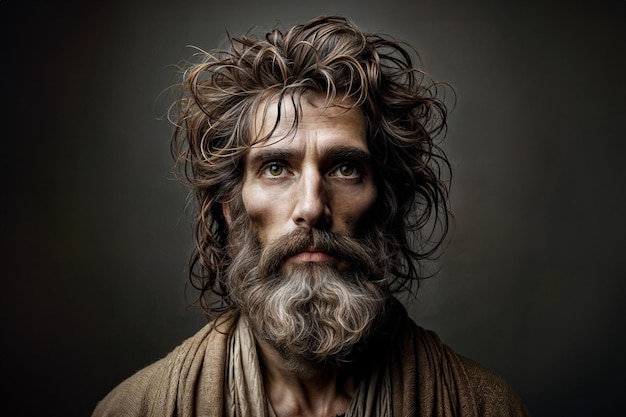
John begins his Gospel before Bethlehem, taking us back to the beginning and revealing Jesus as the Word who was with God and was God. Through Him all things were created, and in Him was Light Of All Mankind. John the Baptist then becomes the witness preparing the way, while Jesus begins calling His disciples. The Light has entered the darkness, and the darkness cannot overcome Him.
Obedience • God’s Covenant • Faith • John the Baptist • Sin • Redemption Plan • Grace • Jesus Christ
📖 John 1:1-4 (NIV)
“1 In the beginning was the Word, and the Word was with God, and the Word was God. 2 He was with God in the beginning. 3 Through him all things were made; without him nothing was made that has been made. 4 In him was life, and that life was the light of all mankind.”
John opens with one of the greatest declarations in Scripture:
“In the beginning was the Word.”
Before Jesus walked on earth, before Bethlehem, before the disciples, the Word already existed.
The Word was with God.
The Word was God.
Through Him all things were made.
Life was in Him, and that life became the light of mankind.
Then John introduces another man sent from God—John the Baptist.
John was not the Light.
He was the witness to the Light.
Then the Word became flesh and made His dwelling among us.
Jesus came full of grace and truth.
He came to reveal God to humanity.
But the world did not recognize Him, and many did not receive Him.
Yet those who received Him and believed in His name were given the right to become children of God.
John the Baptist then identifies Jesus publicly:
“Look, the Lamb of God, who takes away the sin of the world!”
Disciples begin following Jesus.
Andrew brings Simon Peter.
Philip brings Nathanael.
Jesus calls them to follow Him.
And the chapter ends with Jesus identifying Himself as the Son of Man, declaring that His followers will see heaven opened and the angels of God ascending and descending upon Him.
The story has begun.
The Light has come into the world.
📖 John 1:5-10 (NIV)
“5 The light shines in the darkness, and the darkness has not overcome[a] it.”
“6 There was a man sent from God whose name was John. 7 He came as a witness to testify concerning that light, so that through him all might believe. 8 He himself was not the light; he came only as a witness to the light.”
“9 The true light that gives light to everyone was coming into the world. 10 He was in the world, and though the world was made through him, the world did not recognize him.”
John begins his Gospel differently from the other Gospel writers.
He does not begin with Jesus’ birth.
He begins with the beginning.
Jesus is revealed as the Word.
He was with God.
He was God.
This establishes something essential about Jesus.
Jesus is not simply another prophet.
He is not merely a teacher.
He is not simply a good man who appeared in history.
John presents Jesus as eternal.
The One who created life entered the world He created.
The One who was with God came to make God known.
Before Jesus was born in Bethlehem, He already was.
📖 John 1:11-16 (NIV)
“11 He came to that which was his own, but his own did not receive him. 12 Yet to all who did receive him, to those who believed in his name, he gave the right to become children of God— 13 children born not of natural descent, nor of human decision or a husband’s will, but born of God.”
“14 The Word became flesh and made his dwelling among us. We have seen his glory, the glory of the one and only Son, who came from the Father, full of grace and truth.”
“15 (John testified concerning him. He cried out, saying, “This is the one I spoke about when I said, ‘He who comes after me has surpassed me because he was before me.’”) 16 Out of his fullness we have all received grace in place of grace already given.”
John describes Jesus as the Light of all mankind.
Then he gives us an important promise:
The darkness has not overcome the Light.
Darkness represents the world affected by sin, rejection, unbelief, and separation from God.
The Light continues to shine.
Some may reject Him.
Some may refuse to recognize Him.
People may choose darkness.
But the Light remains.
This is part of God’s Redemption Plan.
God did not leave humanity without hope.
He sent the Light into the darkness.
And the Light is Jesus Christ.
The darkness may surround us, but it cannot overcome the Light of Christ.
📖 John 1:17-22 (NIV)
“17 For the law was given through Moses; grace and truth came through Jesus Christ. 18 No one has ever seen God, but the one and only Son, who is himself God and[b] is in closest relationship with the Father, has made him known.”
“19 Now this was John’s testimony when the Jewish leaders[c] in Jerusalem sent priests and Levites to ask him who he was. 20 He did not fail to confess, but confessed freely, “I am not the Messiah.”
“21 They asked him, “Then who are you? Are you Elijah?”
He said, “I am not.”
“Are you the Prophet?”
He answered, “No.”
“22 Finally they said, “Who are you? Give us an answer to take back to those who sent us. What do you say about yourself?”
John the Baptist understood something important about his own calling.
He was not the Messiah.
He was not the Light.
Then he was not the one people were waiting for.
He was a witness.
His responsibility was to prepare the way for the Lord.
He pointed beyond himself.
Then, when he saw Jesus, he declared:
“Look, the Lamb of God, who takes away the sin of the world!”
John understood that his purpose was not to make people follow him.
His purpose was to make people see Jesus.
That is a powerful lesson for every believer.
Our lives should point people toward Christ rather than toward ourselves.
📖 John 1:23- 28 (NIV)
“23 John replied in the words of Isaiah the prophet, “I am the voice of one calling in the wilderness, ‘Make straight the way for the Lord.’”[d]
“24 Now the Pharisees who had been sent 25 questioned him, “Why then do you baptize if you are not the Messiah, nor Elijah, nor the Prophet?”
“26 “I baptize with[e] water,” John replied, “but among you stands one you do not know. 27 He is the one who comes after me, the straps of whose sandals I am not worthy to untie.”
“28 This all happened at Bethany on the other side of the Jordan, where John was baptizing.”
John’s declaration about Jesus changes everything.
He doesn’t simply call Jesus a teacher.
He calls Him the Lamb of God.
Sin creates separation from God.
Humanity needed redemption.
John now identifies Jesus as the One who would deal with the problem at its deepest level.
Jesus came to take away the sin of the world.
This is the heart of God’s Redemption Plan.
Jesus would become the sacrifice.
He would carry what humanity could not remove on its own.
Grace would be offered through Christ.
The Lamb had come.
Jesus did not come merely to teach us how to live. He came to deal with sin and bring us back to God.
📖 John 1:29-34 (NIV)
“29 The next day John saw Jesus coming toward him and said, “Look, the Lamb of God, who takes away the sin of the world! 30 This is the one I meant when I said, ‘A man who comes after me has surpassed me because he was before me.’ 31 I myself did not know him, but the reason I came baptizing with water was that he might be revealed to Israel.”
“32 Then John gave this testimony: “I saw the Spirit come down from heaven as a dove and remain on him. 33 And I myself did not know him, but the one who sent me to baptize with water told me, ‘The man on whom you see the Spirit come down and remain is the one who will baptize with the Holy Spirit.’ 34 I have seen and I testify that this is God’s Chosen One.”[f]”
Jesus begins calling people to follow Him.
Andrew hears John’s testimony and follows Jesus.
Philip follows Jesus and then finds Nathanael.
Philip’s invitation is simple:
“Come and see.”
That is how the Gospel begins spreading.
One person encounters Jesus and tells another.
Andrew brings Peter.
Philip brings Nathanael.
And Jesus begins building His disciples.
Faith can begin with an invitation.
We do not have to have every answer before pointing someone toward Christ.
Sometimes the simplest invitation is the most powerful:
Come and see.
Come see who Jesus is.
Listen, come hear His words.
Come discover what He has done.
The invitation to know Jesus is open to everyone.
📖 John 1:35-42 (NIV)
“35 The next day John was there again with two of his disciples. 36 When he saw Jesus passing by, he said, “Look, the Lamb of God!”
“37 When the two disciples heard him say this, they followed Jesus. 38 Turning around, Jesus saw them following and asked, “What do you want?”
They said, “Rabbi” (which means “Teacher”), “where are you staying?”
“39 “Come,” he replied, “and you will see.”
So they went and saw where he was staying, and they spent that day with him. It was about four in the afternoon.”
“40 Andrew, Simon Peter’s brother, was one of the two who heard what John had said and who had followed Jesus. 41 The first thing Andrew did was to find his brother Simon and tell him, “We have found the Messiah” (that is, the Christ). 42 And he brought him to Jesus.
Jesus looked at him and said, “You are Simon son of John. You will be called Cephas” (which, when translated, is Peter[g]).”
Nathanael is surprised when Jesus tells him that He saw him under the fig tree before Philip called him.
Nathanael realizes that Jesus knows something about him that Jesus could not have learned from Philip.
His response is immediate:
“You are the Son of God; you are the king of Israel.”
That gives this passage a personal dimension.
Jesus does not simply know humanity as a crowd.
He knows individuals.
Jesus knew Nathanael.
Jesus knew Peter.
He knew Andrew.
He knew Philip.
And He knows us.
Our lives are not hidden from Him.
The One who created us knows us completely—and still calls us to follow Him.
📖 John 1:43-51 (NIV)
“43 The next day Jesus decided to leave for Galilee. Finding Philip, he said to him, “Follow me.”
“44 Philip, like Andrew and Peter, was from the town of Bethsaida. 45 Philip found Nathanael and told him, “We have found the one Moses wrote about in the Law, and about whom the prophets also wrote—Jesus of Nazareth, the son of Joseph.”
“46 “Nazareth! Can anything good come from there?” Nathanael asked.
“Come and see,” said Philip.
“47 When Jesus saw Nathanael approaching, he said of him, “Here truly is an Israelite in whom there is no deceit.”
“48 “How do you know me?” Nathanael asked.
Jesus answered, “I saw you while you were still under the fig tree before Philip called you.”
“49 Then Nathanael declared, “Rabbi, you are the Son of God; you are the king of Israel.”
“50 Jesus said, “You believe[h] because I told you I saw you under the fig tree. You will see greater things than that.” 51 He then added, “Very truly I tell you,[i] you[j] will see ‘heaven open, and the angels of God ascending and descending on’[k] the Son of Man.”
John ends this opening chapter by giving us another important name for Jesus:
The Son of Man.
Jesus tells Nathanael that he will see heaven opened and the angels of God ascending and descending on the Son of Man.
Jesus is the connection between heaven and earth.
He came from the Father.
Jesus entered the world.
He revealed God to humanity.
And through Him, humanity can come to God.
John has taken us from eternity to creation, from creation to the incarnation, from the incarnation to John the Baptist, from John to the disciples, and finally to Jesus as the Son of Man.
The One who came from heaven is now calling people to follow Him.
John’s opening chapter shows that God’s Covenant did not begin with the arrival of Jesus on earth.
God’s plan was already moving throughout history.
The prophets pointed forward.
John the Baptist prepared the way.
Jesus arrived at the appointed time.
The Word became flesh.
Grace and truth came through Jesus Christ.
The Old Testament revealed God’s promises, and Jesus came as the fulfillment toward which those promises pointed.
John’s Gospel therefore connects the beginning of creation with the beginning of Christ’s earthly ministry.
God’s plan is not random.
It is not improvised.
It moves according to His purpose.
The same God who spoke creation into existence sent His Son into the world to fulfill His Redemption Plan.
Jesus Christ existed before His earthly birth.
Jesus is the Word who was with God and was God.
All things were created through Him.
Jesus is the Light of all mankind.
Darkness cannot overcome the Light.
John the Baptist understood that his purpose was to point people toward Jesus.
Jesus is the Lamb of God who takes away the sin of the world.
Grace and truth came through Jesus Christ.
Those who receive Christ become children of God.
Faith often begins when someone invites another person to come and see.
Jesus knows us completely.
Jesus calls people to follow Him.
God’s Covenant and Redemption Plan move throughout Scripture.
Jesus is the Son of God, the King, and the Son of Man.
Everything begins pointing toward Jesus Christ.
John does not slowly introduce Jesus.
He places Him at the beginning of everything.
The Word was with God.
The Word was God.
Through Him all things were made.
In Him was life.
That life was the Light of mankind.
Then the Word became flesh.
Jesus entered the world He created.
John the Baptist pointed toward Him.
The disciples followed Him.
And John identifies Him as the Lamb of God who takes away the sin of the world.
This is God’s Redemption Plan unfolding before us.
The Creator became flesh.
There Light entered darkness.
The Lamb came to deal with sin.
Grace and truth came through Jesus Christ.
And the Son of Man opened the way for humanity to see the glory of God.
John begins with the beginning—and immediately leads us to Jesus Christ.
The Light has come. The Lamb has arrived. The Son of Man is calling: “Come and see.”