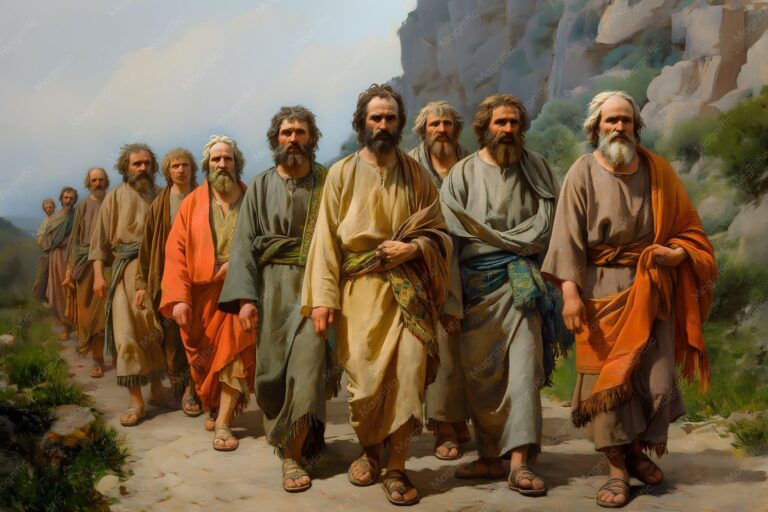
Acts 16, Disciple Named Timothy Lived shows how God can guide His people into places they never expected to go. Timothy joins Paul, the Holy Spirit redirects their journey, Lydia opens her heart, a slave girl is freed, and Paul and Silas are imprisoned. Yet even in prison they pray and worship. Through their obedience, God opens another door for the Gospel and salvation through Jesus Christ.
Obedience, God’s Covenant, Earthquake, Jail, Grace, Belief, Judgment, Encouragement, Redemption Plan, Jesus Christ
📖 Acts 16:1 (NIV)
“16 Paul came to Derbe and then to Lystra, where a disciple named Timothy lived, whose mother was Jewish and a believer but whose father was a Greek.”
Timothy was respected by the believers, and Paul wanted him to join the mission.
As they traveled, the Holy Spirit prevented them from entering certain regions.
Eventually Paul received a vision calling them to Macedonia.
They understood that God had called them to preach the Gospel there.
In Philippi, they met Lydia by the river.
The Lord opened her heart to Paul’s message, and she and her household were baptized.
Her home became a place where believers could gather.
Later, Paul commanded a spirit to leave a slave girl in the name of Jesus Christ.
Her owners, angry because their source of income was gone, had Paul and Silas beaten and imprisoned.
At midnight, they prayed and sang hymns.
An earthquake opened the prison doors and released their chains, but they did not escape.
The jailer asked what he must do to be saved.
Paul and Silas told him to believe in the Lord Jesus.
The jailer and his household believed, were baptized, and rejoiced.
After their release, Paul and Silas returned to Lydia’s house and encouraged the believers.
📖 Acts 16:1-4 (NIV)
“16 Paul came to Derbe and then to Lystra, where a disciple named Timothy lived, whose mother was Jewish and a believer but whose father was a Greek. 2 The believers at Lystra and Iconium spoke well of him. 3 Paul wanted to take him along on the journey, so he circumcised him because of the Jews who lived in that area, for they all knew that his father was a Greek. 4 As they traveled from town to town, they delivered the decisions reached by the apostles and elders in Jerusalem for the people to obey. “
Timothy was already known among the believers before Paul invited him to join the journey.
His mother was a Jewish believer, his father was Greek, and the believers spoke well of him.
Timothy’s story reminds us that preparation for serving God can begin long before a person receives a larger responsibility.
Faithfulness in the small things can prepare someone for greater service.
Paul saw something in Timothy that could be used in God’s work, and Timothy became part of the continuing mission of the Gospel.
📖 Acts 16:5-8 (NIV)
“5 So the churches were strengthened in the faith and grew daily in numbers.”
“6 Paul and his companions traveled throughout the region of Phrygia and Galatia, having been kept by the Holy Spirit from preaching the word in the province of Asia. 7 When they came to the border of Mysia, they tried to enter Bithynia, but the Spirit of Jesus would not allow them to. 8 So they passed by Mysia and went down to Troas. “
Then Paul received the vision of a man from Macedonia asking for help.
They did not continue insisting on their original plan.
They changed direction because they believed God was leading them. Obedience sometimes means being willing to change our plans.
We may not understand immediately why a door closes, but another door may be opening somewhere else.
📖 Acts 16:9-12 (NIV)
“9 During the night Paul had a vision of a man of Macedonia standing and begging him, “Come over to Macedonia and help us.” 10 After Paul had seen the vision, we got ready at once to leave for Macedonia, concluding that God had called us to preach the gospel to them.”
“11 From Troas we put out to sea and sailed straight for Samothrace, and the next day we went on to Neapolis. 12 From there we traveled to Philippi, a Roman colony and the leading city of that district[a] of Macedonia. And we stayed there several days.”
Lydia was already a worshiper of God, but the Lord opened her heart to respond to Paul’s message.
Her response became an important part of the Gospel’s arrival in Macedonia.
God can prepare a person’s heart before we ever meet them.
Our responsibility is to faithfully share the message.
God works within the heart. The Gospel does not depend upon human pressure; it depends upon God’s grace and a person’s response to Him.
📖 Acts 16:13-16 (NIV)
“13 On the Sabbath we went outside the city gate to the river, where we expected to find a place of prayer. We sat down and began to speak to the women who had gathered there. 14 One of those listening was a woman from the city of Thyatira named Lydia, a dealer in purple cloth. She was a worshiper of God. The Lord opened her heart to respond to Paul’s message. 15 When she and the members of her household were baptized, she invited us to her home. “If you consider me a believer in the Lord,” she said, “come and stay at my house.” And she persuaded us.”
“16 Once when we were going to the place of prayer, we were met by a female slave who had a spirit by which she predicted the future. She earned a great deal of money for her owners by fortune-telling. “
Yet the source of her words was a spirit that controlled her.
Paul eventually commanded the spirit to leave her in the name of Jesus Christ.
The power was not Paul’s. It belonged to Jesus.
This reminds us that the name of Jesus is not simply a phrase attached to Christian work.
Jesus Christ is the authority behind the Gospel and the One who brings freedom from spiritual bondage.
📖 Acts 16:17-20 (NIV)
“17 She followed Paul and the rest of us, shouting, “These men are servants of the Most High God, who are telling you the way to be saved.” 18 She kept this up for many days. Finally Paul became so annoyed that he turned around and said to the spirit, “In the name of Jesus Christ I command you to come out of her!” At that moment the spirit left her.”
“19 When her owners realized that their hope of making money was gone, they seized Paul and Silas and dragged them into the marketplace to face the authorities. 20 They brought them before the magistrates and said, “These men are Jews, and are throwing our city into an uproar “
When the girl’s owners realized they could no longer make money from her, they became angry and brought Paul and Silas before the authorities.
Their concern was not the truth of the Gospel. Their concern was the loss of income.
Blessings and possessions are not automatically wrong, but they can become dangerous when money becomes more important than truth.
God’s work should never be measured only by what it produces financially.
📖 Acts 16:21-24 (NIV)
“21 by advocating customs unlawful for us Romans to accept or practice.”
“22 The crowd joined in the attack against Paul and Silas, and the magistrates ordered them to be stripped and beaten with rods. 23 After they had been severely flogged, they were thrown into prison, and the jailer was commanded to guard them carefully. 24 When he received these orders, he put them in the inner cell and fastened their feet in the stocks.”
Paul and Silas had been beaten, placed in stocks, and locked inside the inner prison.
Yet around midnight they were praying and singing hymns to God while the other prisoners listened.
Their circumstances had not changed, but their faith remained.
Worship was not dependent upon comfort.
This is an important lesson for believers: faith is not proven only when everything is going well.
Sometimes our strongest testimony comes when others see that we continue trusting God in difficult circumstances.
📖 Acts 16:25-28 (NIV)
“25 About midnight Paul and Silas were praying and singing hymns to God, and the other prisoners were listening to them. 26 Suddenly there was such a violent earthquake that the foundations of the prison were shaken. At once all the prison doors flew open, and everyone’s chains came loose. 27 The jailer woke up, and when he saw the prison doors open, he drew his sword and was about to kill himself because he thought the prisoners had escaped. 28 But Paul shouted, “Don’t harm yourself! We are all here!”
The earthquake shook the foundations of the prison, the doors opened, and the chains came loose.
Paul and Silas could have escaped, but they stayed.
Their decision protected the jailer from believing that the prisoners had fled.
What appeared to be a miraculous opportunity for escape became an opportunity for someone else to hear about salvation.
Sometimes God’s answer to our situation is bigger than our immediate circumstances.
The door that opens may be intended to reach someone we never expected to meet.
📖 Acts 16:29-32 (NIV)
“29 The jailer called for lights, rushed in and fell trembling before Paul and Silas. 30 He then brought them out and asked, “Sirs, what must I do to be saved?”
“31 They replied, “Believe in the Lord Jesus, and you will be saved—you and your household.” 32 Then they spoke the word of the Lord to him and to all the others in his house.”
The jailer saw what happened and asked the most important question: what must I do to be saved?
Paul and Silas answered by pointing him to Jesus Christ.
They then taught him and his household the word of the Lord.
Salvation was not presented as something earned through human achievement.
He responded with action, caring for their wounds, receiving baptism, and welcoming them into his home.
His faith produced a changed life.
📖 Acts 16:33-36 (NIV)
“33 At that hour of the night the jailer took them and washed their wounds; then immediately he and all his household were baptized. 34 The jailer brought them into his house and set a meal before them; he was filled with joy because he had come to believe in God—he and his whole household.”
“35 When it was daylight, the magistrates sent their officers to the jailer with the order: “Release those men.” 36 The jailer told Paul, “The magistrates have ordered that you and Silas be released. Now you can leave. Go in peace.”
After being released, Paul and Silas did not simply leave Philippi without seeing the believers.
They returned to Lydia’s house, where the brothers and sisters had gathered.
There they encouraged them before leaving.
It is also about strengthening those who already believe.
Lydia’s home had become a gathering place for believers.
Encouragement helped the new community continue growing in faith after Paul and Silas departed.
📖 Acts 16:37-40 (NIV)
“37 But Paul said to the officers: “They beat us publicly without a trial, even though we are Roman citizens, and threw us into prison. And now do they want to get rid of us quietly? No! Let them come themselves and escort us out.”
“38 The officers reported this to the magistrates, and when they heard that Paul and Silas were Roman citizens, they were alarmed. 39 They came to appease them and escorted them from the prison, requesting them to leave the city. 40 After Paul and Silas came out of the prison, they went to Lydia’s house, where they met with the brothers and sisters and encouraged them. Then they left.”
Acts 16 shows God’s Redemption Plan moving through unexpected circumstances.
Timothy joins the mission.
The Holy Spirit redirects Paul. Lydia believes.
A slave girl is freed. Paul and Silas are imprisoned.
An earthquake opens the prison.
A jailer asks about salvation. A household believes and is baptized.
God’s plan was not stopped by closed doors, spiritual opposition, financial interests, imprisonment, or suffering.
Jesus Christ remained at the center of the mission.
God’s Covenant stands through every change in circumstances.
In Acts 16, God directs the missionaries toward Macedonia, opens Lydia’s heart, provides freedom for a woman in bondage, and uses imprisonment to reach a jailer.
The circumstances change, but God’s purpose remains.
The Gospel continues moving to new people and new places.
God’s Covenant is not dependent upon human comfort or perfect circumstances.
His promises continue as people believe, obey, and place their trust in Jesus Christ.
Acts 16 teaches us that obedience may require changing our plans when God redirects us.
It teaches us that God can prepare hearts before we arrive and that our homes, work, and everyday relationships can become places where faith grows.
It also shows that hardship does not mean God’s work has stopped.
Paul and Silas worshiped in prison, and their suffering became an opportunity for the jailer to hear about salvation.
God can use circumstances we would never choose to accomplish something greater than we can see.
Acts 16 repeatedly brings us back to Jesus Christ.
Timothy joins the mission, Lydia responds to the Gospel, the slave girl is freed in Jesus’ name, and the jailer discovers that salvation is found through belief in the Lord Jesus.
The earthquake opened prison doors, but the greater freedom came when the jailer’s heart turned toward Christ.
Physical chains can be broken, but Jesus offers something greater—freedom from sin and the hope of salvation.
Through grace, belief, obedience, and faith, God’s Redemption Plan continues reaching the world.