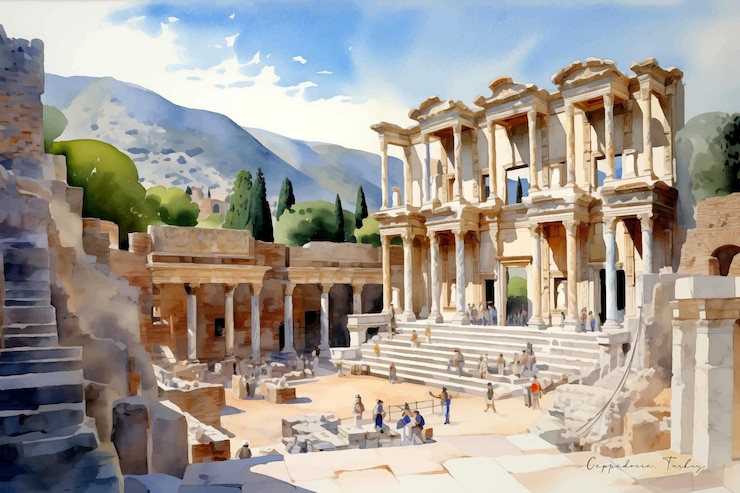
Paul’s journey toward Jerusalem becomes a journey of sacrifice. He knows hardships and imprisonment await him, yet he continues because finishing the task Jesus gave him matters more than protecting his own life. Acts 20 shows us After Encouraging Them, faithful leadership, spiritual deception, hard work, generosity, and trusting God when we do not know what tomorrow will bring.
Obedience, God’s Covenant, Grace, Encouragement, Judgment, Faith, Plotted, Pride, Evil Deeds, Redemption Plan, Jesus Christ
📖 Acts 20:1 (NIV)
“20 When the uproar had ended, Paul sent for the disciples and, after encouraging them, said goodbye and set out for Macedonia. “
After the uproar in Ephesus ended, Paul continued traveling and encouraging believers.
His ministry was not simply about preaching; he strengthened people wherever he went.
In Troas, a young man named Eutychus fell from a third-story window and was picked up dead.
Paul embraced him and declared that he was alive.
The believers were greatly comforted.
Paul eventually reached Miletus and called for the elders from Ephesus.
His message to them reveals the heart of his ministry.
He had served with humility, endured tears and testing, and never hesitated to teach what would help people.
He had proclaimed repentance toward God and faith in Jesus Christ.
Paul knew that Jerusalem would bring uncertainty, prison, and hardship.
Yet he considered completing the race and the task Jesus gave him more important than preserving his own life.
He also warned the elders that false teachers would come and distort the truth.
His final words were not about himself but about protecting the flock, trusting God, working hard, helping the weak, and remembering the words of Jesus.
Then Paul prayed with them.
They wept because they knew they would never see his face again.
📖 Acts 20:1-4 (NIV)
“20 When the uproar had ended, Paul sent for the disciples and, after encouraging them, said goodbye and set out for Macedonia. 2 He traveled through that area, speaking many words of encouragement to the people, and finally arrived in Greece, 3 where he stayed three months. Because some Jews had plotted against him just as he was about to sail for Syria, he decided to go back through Macedonia. 4 He was accompanied by Sopater son of Pyrrhus from Berea, Aristarchus and Secundus from Thessalonica, Gaius from Derbe, Timothy also, and Tychicus and Trophimus from the province of Asia.”
Paul did not allow the end of one part of his journey to become the end of his encouragement.
Along the way, he spoke many words of encouragement.
Faith is not only about receiving encouragement.
It is also about giving it.
People can become tired, discouraged, uncertain, or afraid, and sometimes a word of truth spoken at the right moment can strengthen them.
Paul understood that his journey was changing, but the mission had not changed.
He continued helping believers grow.
📖 Acts 20:5-8 (NIV)
“5 These men went on ahead and waited for us at Troas. 6 But we sailed from Philippi after the Festival of Unleavened Bread, and five days later joined the others at Troas, where we stayed seven days.”
“7 On the first day of the week we came together to break bread. Paul spoke to the people and, because he intended to leave the next day, kept on talking until midnight. 8 There were many lamps in the upstairs room where we were meeting.”
Eutychus was sitting in the window while Paul continued speaking late into the night.
Paul went down, embraced him, and told the people not to be alarmed because he was alive.
The believers then returned upstairs, broke bread, and continued together.
The event brought great comfort to the people.
This reminds us that God can bring hope into moments that appear hopeless.
The believers did not simply remember the frightening fall.
They remembered that the young man was alive and that God had brought comfort to His people.
📖 Acts 20:9-12 (NIV)
“9 Seated in a window was a young man named Eutychus, who was sinking into a deep sleep as Paul talked on and on. When he was sound asleep, he fell to the ground from the third story and was picked up dead. 10 Paul went down, threw himself on the young man and put his arms around him. “Don’t be alarmed,” he said. “He’s alive!” 11 Then he went upstairs again and broke bread and ate. After talking until daylight, he left. 12 The people took the young man home alive and were greatly comforted.:
Paul told the elders that he was going to Jerusalem without knowing exactly what would happen to him.
He only knew that the Holy Spirit was warning him that prison and hardships were ahead.
This was not a desire to suffer for suffering’s sake.
It was a willingness to remain faithful when obedience became costly.
Paul understood that his life belonged to God.
His circumstances could change, but his purpose remained.
📖 Acts 20:13-16 (NIV)
“13 We went on ahead to the ship and sailed for Assos, where we were going to take Paul aboard. He had made this arrangement because he was going there on foot. 14 When he met us at Assos, we took him aboard and went on to Mitylene. 15 The next day we set sail from there and arrived off Chios. The day after that we crossed over to Samos, and on the following day arrived at Miletus. 16 Paul had decided to sail past Ephesus to avoid spending time in the province of Asia, for he was in a hurry to reach Jerusalem, if possible, by the day of Pentecost.”
Paul explained that he had declared to both Jews and Greeks that they must turn to God in repentance and have faith in the Lord Jesus.
The message was not built around Paul himself.
Repentance recognizes that our direction is wrong and that we need to turn toward God.
Faith trusts the One who provides salvation.
The Gospel does not merely tell people that they need to change.
It reveals where true hope is found—through Jesus Christ.
📖 Acts 20:17-20 (NIV)
“17 From Miletus, Paul sent to Ephesus for the elders of the church. 18 When they arrived, he said to them: “You know how I lived the whole time I was with you, from the first day I came into the province of Asia. 19 I served the Lord with great humility and with tears and in the midst of severe testing by the plots of my Jewish opponents. 20 You know that I have not hesitated to preach anything that would be helpful to you but have taught you publicly and from house to house.“
Paul said that he considered his life worth nothing to him compared with completing the task Jesus had given him: testifying to the good news of God’s grace.
It was about faithfulness.
Every person has different responsibilities, different circumstances, and different opportunities.
Comparing our race with someone else’s can distract us from the work God has placed before us.
Paul’s example teaches that obedience means continuing faithfully even when the road becomes difficult.
📖 Acts 20:21-24 (NIV)
“21 I have declared to both Jews and Greeks that they must turn to God in repentance and have faith in our Lord Jesus.”
“22 “And now, compelled by the Spirit, I am going to Jerusalem, not knowing what will happen to me there. 23 I only know that in every city the Holy Spirit warns me that prison and hardships are facing me. 24 However, I consider my life worth nothing to me; my only aim is to finish the race and complete the task the Lord Jesus has given me—the task of testifying to the good news of God’s grace.”
Paul warned the Ephesian elders to keep watch over themselves and over the flock entrusted to them by the Holy Spirit.
Leadership carries responsibility.
Paul also warned that savage wolves would come and that even some from among their own number would distort the truth to draw disciples after themselves.
The warning is important: spiritual leadership is not about building a following around a person.
It is about protecting people and remaining faithful to God’s truth.
📖 Acts 20:25-28 (NIV)
“25 “Now I know that none of you among whom I have gone about preaching the kingdom will ever see me again. 26 Therefore, I declare to you today that I am innocent of the blood of any of you. 27 For I have not hesitated to proclaim to you the whole will of God. 28 Keep watch over yourselves and all the flock of which the Holy Spirit has made you overseers. Be shepherds of the church of God,[a] which he bought with his own blood.[b]”
Paul knew that some people would arise and distort the truth in order to draw disciples after themselves.
This reveals a danger that can begin quietly.
Pride can turn ministry into self-promotion.
Paul’s warning calls believers to remain alert.
We should examine what we are taught, remain grounded in God’s Word, and remember that Jesus Christ—not a human personality—is the center of the Gospel.
📖 Acts 20:29-32 (NIV)
“29 I know that after I leave, savage wolves will come in among you and will not spare the flock. 30 Even from your own number men will arise and distort the truth in order to draw away disciples after them. 31 So be on your guard! Remember that for three years I never stopped warning each of you night and day with tears.”
“32 “Now I commit you to God and to the word of his grace, which can build you up and give you an inheritance among all those who are sanctified”
His own hands had supplied his needs and the needs of his companions.
Then he reminded them of the words of Jesus: “It is more blessed to give than to receive.”
Hard work is not merely about personal gain.
It can become a way to provide for ourselves, support others, and help those who are weak.
Paul’s example connects faith with responsibility.
Belief in Jesus does not remove the value of work.
Instead, our work can become another opportunity to demonstrate generosity and service.
📖 Acts 20:33-35 (NIV)
“33 I have not coveted anyone’s silver or gold or clothing. 34 You yourselves know that these hands of mine have supplied my own needs and the needs of my companions. 35 In everything I did, I showed you that by this kind of hard work we must help the weak, remembering the words the Lord Jesus himself said: ‘It is more blessed to give than to receive.’ ”
Paul knew he would not remain with the Ephesian believers.
Instead of trying to control what would happen after his departure, he committed them to God and to the word of His grace.
That is an important lesson.
We cannot always remain beside the people we care about.
We cannot control every decision they make or every challenge they will face.
The Word of God’s grace can build people up and lead them toward the inheritance promised to those who are sanctified.
📖 Acts 20:36-38 (NIV)
“36 When Paul had finished speaking, he knelt down with all of them and prayed. 37 They all wept as they embraced him and kissed him. 38 What grieved them most was his statement that they would never see his face again. Then they accompanied him to the ship.”
Paul’s farewell was deeply emotional.
He knelt down and prayed with the elders.
The sadness did not mean the ministry had failed.
It showed how deeply people had been connected through years of serving God together.
Paul had encouraged them, warned them, taught them, worked among them, and prayed with them.
Now he had to leave.
Sometimes obedience means moving forward even when leaving people behind is painful.
Paul did not know everything that awaited him in Jerusalem, but he knew the One who had called him.
God’s Covenant does not depend upon one person’s physical presence.
Paul was leaving Ephesus, but God’s work would continue.
The Holy Spirit would remain with the believers, God’s Word would continue to build them up, and Jesus Christ would remain the center of their faith.
The Gospel had moved from person to person, city to city, and generation to generation.
Paul could leave because God’s Covenant did not leave with him.
God’s promises remain stronger than circumstances, persecution, false teaching, or human weakness.
Acts 20 teaches us that faithfulness is measured not only by how we begin but by whether we continue the race God has placed before us. Encourage others.
Watch over yourself.
Guard against pride and distorted truth.
Work hard.
Help the weak.
Give generously.
Remain faithful when the future is uncertain.
Most importantly, do not make a human leader the foundation of your faith.
People come and go, but God’s Word remains. Jesus Christ remains.
Paul’s journey points toward the heart of the Gospel: Jesus Christ gives the task, Jesus Christ gives the grace, and Jesus Christ remains the reason for continuing when the road becomes difficult.
Paul’s willingness to face prison and hardship reflects a life surrendered to Christ.
His message of repentance and faith points directly to salvation through Jesus.
Even the painful farewell reminds us that earthly relationships have limits.
People may leave, circumstances may change, and eventually every earthly journey ends.
But God’s Redemption Plan does not end.
Through Jesus Christ, the Gospel gives hope beyond this life.
Paul continued the race because he trusted the One who called him.
His example leaves us with the same question: Are we willing to remain faithful to Jesus Christ, whatever the road ahead may bring?