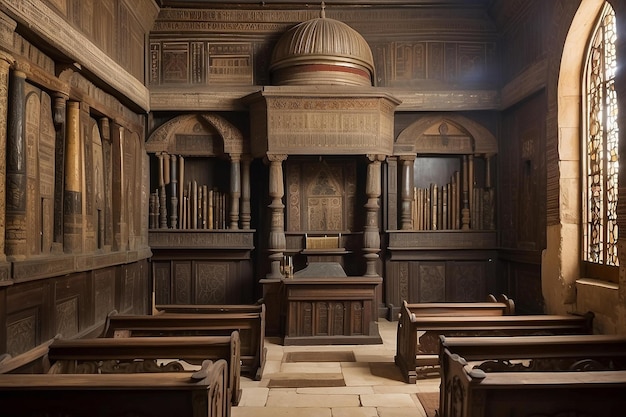
Acts 17 shows the Gospel entering A Jewish Synagogue, marketplaces, homes, and the intellectual center of Athens. Paul reasoned from Scripture, faced envy and opposition, and then spoke to people searching for truth among many beliefs. Some rejected him, some wanted to hear more, and some believed. Among them was a woman named Damaris. The message remained the same: seek God, repent, and believe in Jesus Christ.
Obedience, God’s Covenant, Faith, Envy, Pride, Self-Interest, Grace, Salvation, Redemption Plan, Jesus Christ
📖 Acts 17:1 (NIV)
“17 When Paul and his companions had passed through Amphipolis and Apollonia, they came to Thessalonica, where there was a Jewish synagogue. “
Paul entered Thessalonica and began with Scripture, explaining that the Messiah had to suffer and rise from the dead.
His message was not based on human opinion.
He proclaimed that Jesus was the Messiah promised through God’s Covenant.
Some believed, including Greeks and prominent women.
But others responded with jealousy and stirred up a mob.
Their opposition eventually forced Paul and Silas to leave for Berea.
The Bereans responded differently.
They received the message eagerly, but they also examined the Scriptures every day to determine whether Paul’s teaching was true.
Many believed.
Paul eventually arrived in Athens and saw a city filled with idols.
Instead of ignoring what he saw, he used it as an opportunity to explain who the true God is.
God made the world, gives life and breath, and does not live in temples made by human hands.
He created humanity so people would seek Him.
Paul then proclaimed repentance and judgment, pointing to the resurrection of Jesus as God’s proof.
Some mocked, some wanted to hear more, and some believed.
Among those believers was Damaris.
📖 Acts 17:1-4 (NIV)
“17 When Paul and his companions had passed through Amphipolis and Apollonia, they came to Thessalonica, where there was a Jewish synagogue. 2 As was his custom, Paul went into the synagogue, and on three Sabbath days he reasoned with them from the Scriptures, 3 explaining and proving that the Messiah had to suffer and rise from the dead. “This Jesus I am proclaiming to you is the Messiah,” he said. 4 Some of the Jews were persuaded and joined Paul and Silas, as did a large number of God-fearing Greeks and quite a few prominent women.”
Paul did not simply tell people what to believe.
He reasoned with them from Scripture, explaining that the Messiah had to suffer and rise from the dead.
Faith does not require abandoning truth or refusing to examine God’s Word.
Paul presented the Scriptures and showed how they pointed toward the Messiah.
The Bereans demonstrated the proper response by examining what they heard.
God’s Covenant was not being replaced by a new idea. God’s Redemption Plan was being revealed through Jesus Christ.
📖 Acts 17:5-8 (NIV)
“5 But other Jews were jealous; so they rounded up some bad characters from the marketplace, formed a mob and started a riot in the city. They rushed to Jason’s house in search of Paul and Silas in order to bring them out to the crowd.[a] 6 But when they did not find them, they dragged Jason and some other believers before the city officials, shouting: “These men who have caused trouble all over the world have now come here, 7 and Jason has welcomed them into his house. They are all defying Caesar’s decrees, saying that there is another king, one called Jesus.” 8 When they heard this, the crowd and the city officials were thrown into turmoil. “
Some people in Thessalonica were persuaded by Paul’s message. Others became jealous.
Instead of examining the message, they attacked the people carrying it. They created a mob and stirred up the city.
Envy can become dangerous when another person’s success, influence, or acceptance threatens our own interests.
What begins inside the heart can eventually become outward opposition.
The Gospel exposes the heart because it calls people away from self-interest and toward God.
📖 Acts 17:9-12 (NIV)
“9 Then they made Jason and the others post bond and let them go.”
“10 As soon as it was night, the believers sent Paul and Silas away to Berea. On arriving there, they went to the Jewish synagogue. 11 Now the Berean Jews were of more noble character than those in Thessalonica, for they received the message with great eagerness and examined the Scriptures every day to see if what Paul said was true. 12 As a result, many of them believed, as did also a number of prominent Greek women and many Greek men.”
The Bereans received the message with eagerness, but they did not stop there.
They examined the Scriptures every day to see whether Paul’s teaching was true.
That is an important lesson for anyone seeking God.
Faith is not blind acceptance of every voice.
We can listen, learn, search God’s Word, and examine what we are being taught.
The Bereans became an example of people who were willing to hear while remaining committed to truth.
Their response resulted in many believing.
📖 Acts 17:13-16 (NIV)
“13 But when the Jews in Thessalonica learned that Paul was preaching the word of God at Berea, some of them went there too, agitating the crowds and stirring them up. 14 The believers immediately sent Paul to the coast, but Silas and Timothy stayed at Berea. 15 Those who escorted Paul brought him to Athens and then left with instructions for Silas and Timothy to join him as soon as possible.”
“16 While Paul was waiting for them in Athens, he was greatly distressed to see that the city was full of idols. “
Athens was filled with idols and competing philosophies.
Paul did not run from the conversation.
He entered the synagogue, spoke in the marketplace, and reasoned with philosophers.
His surroundings were different, but the truth he proclaimed remained the same.
People may have different beliefs, philosophies, traditions, and opinions.
Yet the Gospel continues to present the same question: Who is Jesus Christ?
God’s truth does not need to change simply because the audience changes.
📖 Acts 17:17-20 (NIV)
” 17 So he reasoned in the synagogue with both Jews and God-fearing Greeks, as well as in the marketplace day by day with those who happened to be there. 18 A group of Epicurean and Stoic philosophers began to debate with him. Some of them asked, “What is this babbler trying to say?” Others remarked, “He seems to be advocating foreign gods.” They said this because Paul was preaching the good news about Jesus and the resurrection. 19 Then they took him and brought him to a meeting of the Areopagus, where they said to him, “May we know what this new teaching is that you are presenting? 20 You are bringing some strange ideas to our ears, and we would like to know what they mean.”
Paul explained that God made the world and everything in it.
God does not depend upon human hands, buildings, statues, or possessions. Instead, He gives humanity life, breath, and everything else.
This changes how we see ourselves.
Everything we have ultimately depends upon the God who gives life.
Human pride says, “I built this myself.”
God’s truth reminds us that even the ability to build, think, work, create, and live comes from Him.
📖 Acts 17:21-24 (NIV)
“21 (All the Athenians and the foreigners who lived there spent their time doing nothing but talking about and listening to the latest ideas.)”
“22 Paul then stood up in the meeting of the Areopagus and said: “People of Athens! I see that in every way you are very religious. 23 For as I walked around and looked carefully at your objects of worship, I even found an altar with this inscription: to an unknown god. So you are ignorant of the very thing you worship—and this is what I am going to proclaim to you.”
“24 “The God who made the world and everything in it is the Lord of heaven and earth and does not live in temples built by human hands. “
Paul told the Athenians that God created humanity so people would seek Him and reach out for Him.
God is not distant from His creation.
The search for God is not about creating our own version of Him.
It is about discovering the God who has already revealed Himself.
The altar dedicated to an “unknown god” represented humanity’s desire to worship without fully knowing whom they worshiped.
Paul used that opening to proclaim the true God.
God’s Grace gives people an opportunity to seek Him.
📖 Acts 17:25-28 (NIV)
“25 And he is not served by human hands, as if he needed anything. Rather, he himself gives everyone life and breath and everything else. 26 From one man he made all the nations, that they should inhabit the whole earth; and he marked out their appointed times in history and the boundaries of their lands. 27 God did this so that they would seek him and perhaps reach out for him and find him, though he is not far from any one of us. 28 ‘For in him we live and move and have our being.’[b] As some of your own poets have said, ‘We are his offspring.’[c]”
Paul’s message eventually reached a direct point: God commands all people everywhere to repent.
That message applies across every culture, position, background, and generation.
Repentance means turning away from the path that separates us from God and turning toward Him.
Pride, envy, selfish ambition, and self-interest can keep people from seeing what God is offering.
But God’s Grace provides an opportunity to change direction.
Salvation is not earned through human perfection. It comes through God’s Redemption Plan and faith in Jesus Christ.
📖 Acts 17:29-32 (NIV)
“29 “Therefore since we are God’s offspring, we should not think that the divine being is like gold or silver or stone—an image made by human design and skill. 30 In the past God overlooked such ignorance, but now he commands all people everywhere to repent. 31 For he has set a day when he will judge the world with justice by the man he has appointed. He has given proof of this to everyone by raising him from the dead.”
“32 When they heard about the resurrection of the dead, some of them sneered, but others said, “We want to hear you again on this subject.”
Paul told the Athenians that God had appointed a day when He would judge the world with justice.
But Paul did not leave them with judgment alone.
He gave them the evidence: God raised Jesus from the dead.
Jesus Christ is at the center of both salvation and judgment.
The resurrection demonstrates that Jesus is not simply another teacher or philosopher.
Humanity is accountable to God, yet God has provided the way of salvation through Jesus Christ.
The message is both serious and hopeful: judgment is real, but so is God’s Grace.
📖 Acts 17:33-34 (NIV)
“33 At that, Paul left the Council. 34 Some of the people became followers of Paul and believed. Among them was Dionysius, a member of the Areopagus, also a woman named Damaris, and a number of others.”
Not everyone in Athens rejected Paul’s message.
Some mocked. Others wanted to hear more. And some believed.
Among them was Damaris, a woman whose name is recorded in Scripture.
We are not given many details about her, but her inclusion matters.
She heard the message and became a follower of Christ.
Damaris reminds us that one person’s decision to believe can become part of God’s larger story.
She was not required to become famous.
She simply responded to the truth she heard.
God knows every person who turns toward Him.
Acts 17 shows that God’s Covenant was never limited to one city, one synagogue, or one group of people.
Paul carried the message from Thessalonica to Berea and then to Athens.
The same God who created humanity was calling humanity back to Himself.
The Scriptures pointed toward Jesus.
The resurrection provided proof of God’s appointed Savior.
Repentance was commanded to all people, and the Gospel continued moving forward despite envy, pride, opposition, and competing beliefs.
God’s Covenant stands because God remains faithful.
His Redemption Plan continues through Jesus Christ.
Acts 17 teaches us to listen carefully, examine God’s Word, recognize the difference between truth and human opinion, and remain willing to seek God.
Envy can create opposition.
Pride can prevent repentance. Self-interest can keep us focused on ourselves instead of our Creator.
But God’s Grace continues to reach people.
Some may reject the message. Some may want to hear more. Others may believe.
Our responsibility is not to control another person’s response.
It is to faithfully seek God, know His Word, and live according to the truth He has revealed.
Acts 17 ultimately leads us back to Jesus Christ.
Paul entered the synagogue and proved from Scripture that the Messiah had to suffer and rise from the dead.
In Athens, he proclaimed the resurrection again as God’s proof of the One appointed to judge the world.
The message did not depend upon the culture, the city, or the audience.
It remained centered on Jesus.
Some mocked. Some questioned. Some believed.
Damaris was among those who believed.
Her brief appearance reminds us that God’s Redemption Plan reaches individual people.
In the middle of a city filled with idols, philosophies, pride, and competing ideas, one woman heard the Gospel and believed.
The Gospel keeps moving forward because Jesus Christ is the center of God’s Redemption Plan.