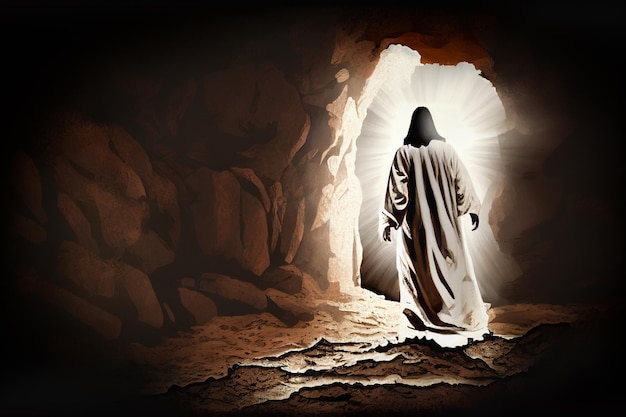
Mark 16 Dont Be Alarmed, changes everything. The women came to the tomb expecting to find Jesus’ body, but instead they found an empty tomb and a message of hope. Jesus had risen, just as He told them. Fear became a call to believe. The Resurrection confirmed God’s Covenant, opened the message of Salvation to the world, and moved the Redemption Plan forward through Jesus Christ.
Obedience, God’s Covenant, Salvation, Mercy, Believe, Judgment, Grace, Redemption Plan, Jesus Christ
📖 Mark 16:1 (NIV)
“16 When the Sabbath was over, Mary Magdalene, Mary the mother of James, and Salome bought spices so that they might go to anoint Jesus’ body.”
The women came early in the morning to care for Jesus’ body.
They were carrying spices, but they were also carrying a question: Who would roll the stone away?
When they arrived, the stone had already been rolled away.
Inside the tomb, they encountered a messenger who told them not to be alarmed.
Jesus, who had been crucified, had risen.
He was not there.
The message was simple:
“Just as he told you.”
Jesus had already told His disciples what would happen.
The Resurrection demonstrated that His words could be trusted.
The women were frightened and bewildered, but the message was bigger than their fear.
Jesus later appeared to Mary Magdalene.
He appeared to two others walking in the country.
Eventually He appeared to the Eleven and confronted their lack of faith.
Then Jesus gave them a mission:
Go into all the world and preach the gospel.
The message that began around an empty tomb would now travel throughout the world.
Jesus had completed the work of the cross.
Now His followers were being called to carry the Gospel.
And then Jesus was taken up into heaven.
The disciples went out and preached, while the Lord worked with them.
The tomb was empty, Jesus was alive, and the mission had begun.
📖 Mark 16:2-3 (NIV)
“2 Very early on the first day of the week, just after sunrise, they were on their way to the tomb 3 and they asked each other, “Who will roll the stone away from the entrance of the tomb?”
The women arrived at the tomb expecting a problem.
They knew the stone was large.
Jesus had died.
His body had been placed inside.
Were wondering who could move the stone.
But when they arrived, the problem they had been discussing had already been taken care of.
This is a powerful lesson.
Sometimes we spend our time worrying about tomorrow while God is already working in circumstances we cannot see.
God had already gone before them.
Their expectation was death.
God’s message was life.
Their concern was the stone.
God’s answer was the empty tomb.
There will be moments when we look at circumstances and think, “How will this ever work out?”
Mark 16 reminds us that God can be working ahead of us.
We may not know how.
We may not know when.
But we can trust Him.
📖 Mark 16:4-5 (NIV)
“4 But when they looked up, they saw that the stone, which was very large, had been rolled away. 5 As they entered the tomb, they saw a young man dressed in a white robe sitting on the right side, and they were alarmed.”
The messenger at the tomb reminded the women that Jesus had already told them what would happen.
This is important because faith is not simply believing something we wish would happen.
Jesus had spoken.
Then what He said came true.
The Resurrection demonstrates the reliability of His words.
Jesus had told His followers that He would suffer, die, and rise again.
Just as He told you.
That phrase can become a foundation for faith.
God’s Word does not depend on our ability to understand everything immediately.
There are things we may not understand today that may become clearer later.
The disciples struggled to believe the reports they were receiving.
Yet Jesus was already alive.
Sometimes belief must come before understanding.
Faith means trusting God even when we do not yet see the entire picture.
📖 Mark 16:6-7 (NIV)
“6 “Don’t be alarmed,” he said. “You are looking for Jesus the Nazarene, who was crucified. He has risen! He is not here. See the place where they laid him. 7 But go, tell his disciples and Peter, ‘He is going ahead of you into Galilee. There you will see him, just as he told you.’”
The cross showed the sacrifice.
The tomb showed the victory.
Jesus was not simply remembered as a great teacher who died.
He rose.
The Gospel became a message of Salvation centered on a living Savior.
Christian faith is not built only around remembering what Jesus did in the past.
It is built around believing that Jesus Christ is alive.
The Resurrection points toward God’s Redemption Plan reaching beyond death.
Humanity faces sin, failure, suffering, and death.
Jesus entered into that reality and overcame death.
That is why the empty tomb is so important.
Salvation is not about following a dead teacher.
It is about trusting the living Jesus Christ.
📖 Mark 16:8-9 (NIV)
“8 Trembling and bewildered, the women went out and fled from the tomb. They said nothing to anyone, because they were afraid.[a]”
“9 When Jesus rose early on the first day of the week, he appeared first to Mary Magdalene, out of whom he had driven seven demons. “
The message delivered to the women specifically included Peter.
That detail matters.
Peter had denied Jesus.
He had failed when Jesus needed His disciples around Him.
Yet Jesus did not tell the women to leave Peter behind.
He wanted Peter to know that the message of the Resurrection included him.
Peter’s failure did not erase him from God’s plan.
His sin did not become the end of his story.
Jesus knew Peter’s weakness.
Jesus also knew Peter’s future.
This gives us hope.
Our failures do not have to define our entire lives.
We should take responsibility for our choices, learn from them, and seek God’s forgiveness and direction.
But we should also understand God’s Mercy.
Jesus does not call only perfect people.
There are no perfect human beings.
God and Jesus Christ are perfect. We are not.
That is why Grace and Mercy are central to Salvation.
📖 Mark 16:10-11 (NIV)
“10 She went and told those who had been with him and who were mourning and weeping. 11 When they heard that Jesus was alive and that she had seen him, they did not believe it.”
Mary Magdalene told the disciples that Jesus was alive.
They did not believe her.
Two others reported what they had experienced.
They were not believed either.
Jesus eventually appeared to the Eleven and rebuked them for their lack of faith.
This shows something important about the disciples.
There not perfect.
They struggled.
They questioned.
Were afraid.
Yet Jesus still used them.
That should encourage us.
Faith does not mean we never struggle with questions.
Faith means we continue moving toward God.
The disciples eventually became witnesses who carried the Gospel into the world.
Their earlier doubts did not have to become their permanent identity.
Jesus transformed them from frightened followers into people willing to proclaim His message.
📖 Mark 16:12-13 (NIV)
“12 Afterward Jesus appeared in a different form to two of them while they were walking in the country. 13 These returned and reported it to the rest; but they did not believe them either.”
Jesus connected belief with Salvation and unbelief with condemnation.
That introduces the reality of Judgment.
God’s Grace should never be separated from God’s truth.
The Gospel is an invitation, but it is also a decision.
Humanity must decide how it will respond.
There is Mercy.
There is Grace.
But there is also Judgment.
This is why the Gospel matters so much.
The message is not simply:
“Jesus was a good man.”
The message is:
Jesus Christ is the Son of God, He died for humanity’s sins, He rose from the dead, and He offers Salvation.
That message deserves a response.
📖 Mark 16:14-15 (NIV)
“14 Later Jesus appeared to the Eleven as they were eating; he rebuked them for their lack of faith and their stubborn refusal to believe those who had seen him after he had risen.”
“15 He said to them, “Go into all the world and preach the gospel to all creation. “
Jesus did not tell His disciples to keep the Resurrection to themselves.
He told them to go.
The Gospel was meant to move outward.
From a small group of frightened disciples to people throughout the world.
This is where Obedience becomes action.
Knowing about Jesus is one thing.
Following Jesus is another.
The disciples were instructed to preach the Gospel.
Their mission required courage.
It required travel.
Demanded sacrifice.
Demanded faith.
And eventually, the message would reach generations they would never meet.
That is the power of obedience.
When God gives us something to do, we may not see the complete result.
We may only see the first step.
But the first step can become part of something much larger.
📖 Mark 16:16-17 (NIV)
“16 Whoever believes and is baptized will be saved, but whoever does not believe will be condemned. 17 And these signs will accompany those who believe: In my name they will drive out demons; they will speak in new tongues;”
The disciples were imperfect.
Misunderstood Jesus.
Struggled with faith.
They had scattered when He was arrested.
Peter had denied Him.
Yet Jesus still entrusted them with the Gospel.
Why?
This is one of the most important lessons in Mark 16.
If God only used perfect people, nobody could participate.
Instead, God works through people who are willing to believe, learn, repent, obey, and continue.
Grace does not mean sin does not matter.
Grace means our failures do not have to be the final word.
Jesus was the perfect Savior.
The disciples were imperfect messengers.
That distinction matters.
The Gospel belongs to Jesus.
The people carrying the message are simply servants.
📖 Mark 16:18-20 (NIV)
“18 they will pick up snakes with their hands; and when they drink deadly poison, it will not hurt them at all; they will place their hands on sick people, and they will get well.”
“19 After the Lord Jesus had spoken to them, he was taken up into heaven and he sat at the right hand of God. 20 Then the disciples went out and preached everywhere, and the Lord worked with them and confirmed his word by the signs that accompanied it.”
Mark 16 centers on Jesus Christ.
Crucified.
Buried.
He rose.
Appeared to His followers.
He gave them their mission.
And then He was taken up into heaven.
The Resurrection confirms that Jesus was not defeated by death.
Cross was not the end.
Jesus Christ lives.
That is the heart of the Gospel.
His earthly ministry had reached a major turning point, but His work continued through His followers.
Jesus would no longer walk the roads of Galilee in the same earthly way.
His disciples would now carry His message.
But they would not be alone.
The chapter tells us that the Lord worked with them and confirmed His Word.
They went.
Jesus worked.
Mark 16 demonstrates that God’s Covenant does not end at the tomb.
The Resurrection is the great confirmation that God’s promises are trustworthy.
Jesus had told His followers what would happen.
Then it happened.
The stone was rolled away.
The tomb was empty.
Jesus appeared.
The disciples were commissioned.
Jesus ascended into heaven.
God’s plan continued.
This is what makes God’s Covenant different from human promises.
People sometimes make promises they cannot keep.
Circumstances change.
People change.
Plans fail.
But God remains faithful.
The Resurrection is a powerful reminder that God’s Word can be trusted even when circumstances appear impossible.
Just as He told you.
The women were alarmed, but God’s message was greater than their fear.
The women wondered who would move the stone.
When they arrived, it had already been moved.
Jesus had told them what would happen.
The Resurrection confirmed His words.
Peter had failed, but Jesus still called him.
The disciples were imperfect, yet Jesus entrusted them with the Gospel.
The Gospel requires a response.
Belief leads toward Salvation; rejection carries the reality of Judgment.
Jesus told His followers to go into all the world.
The empty tomb is the central declaration of Mark 16.
Jesus rose from the dead and was taken up into heaven.
Mark 16 begins with a tomb and ends with a mission.
The women came looking for a dead body.
Instead, they received a message of life.
“He has risen! He is not here.”
That single truth changes the entire story.
Mark 15 showed Jesus going to the cross.
Mark 16 shows the tomb is empty.
Cross demonstrated His sacrifice.
Resurrection demonstrated His victory.
Empty tomb showed that death had not won.
Message to Peter demonstrated Mercy.
Commission demonstrated Obedience.
Gospel demonstrated God’s continuing Redemption Plan.
And Jesus ascending into heaven demonstrated that His earthly ministry had reached a new stage.
The disciples were now responsible for carrying the message.
But they were not carrying it alone.
“The Lord worked with them.”
That is the hope of Mark 16.
God does not ask imperfect people to become perfect before they can serve Him.
He asks them to believe, follow, obey, learn, and share the Gospel.
We will make mistakes.
Have moments of doubt.
Sometimes be afraid.
But Jesus Christ remains perfect.
Grace remains available.
Mercy remains powerful.
Covenant stands.
And His Redemption Plan continues.
The women came to the tomb expecting death.
They discovered life.
The disciples struggled to believe.
They eventually carried the Gospel into the world.
And the message that began with an empty tomb continues to call humanity today:
Believe.
Follow.
Obey.
Share the Gospel.
Because Jesus Christ is risen.
Just as He told you.
[The earliest manuscripts and some other ancient witnesses do not have verses 9–20.)