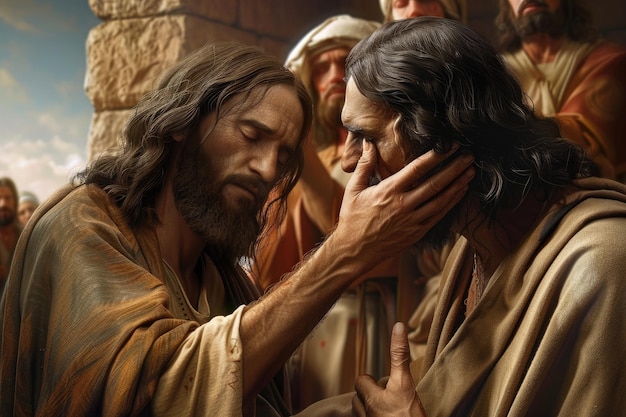
Jesus uses the picture of a vine and branches to explain the relationship between Himself, His followers, and the Father. The Father Is The Gardener, Jesus is the true vine, and believers are the branches. Fruit comes from remaining in Christ. Jesus also warns that following Him may bring hatred from the world, just as He was hated without reason.
Obedience, God’s Covenant, Faith, Mercy, Grace, Sin, Love, Redemption Plan, Jesus Christ
📖 John 15:1-3 (NIV)
“15 “I am the true vine, and my Father is the gardener. 2 He cuts off every branch in me that bears no fruit, while every branch that does bear fruit he prunes[a] so that it will be even more fruitful. 3 You are already clean because of the word I have spoken to you. “
John 15 shows us that God’s work in our lives is not finished when we believe.
Jesus calls us to remain in Him, allowing God to shape us, prune us, and produce lasting fruit through our lives.
Jesus declares that He is the true vine and His Father is the gardener.
The branch cannot produce fruit by itself. It must remain connected to the vine.
This gives us an important picture of faith.
We are not the source of spiritual life. Jesus is.
The Father removes what is unproductive and prunes what is producing fruit so that it can produce even more.
Sometimes God’s work in us involves removing things we would rather keep. His correction is not abandonment. It is part of His work.
Then Jesus moves from the vine to love.
He commands His disciples to love one another as He has loved them.
But Jesus also prepares them for something difficult: the world may hate them because it hated Him first.
📖 John 15:4-6 (NIV)
“4 Remain in me, as I also remain in you. No branch can bear fruit by itself; it must remain in the vine. Neither can you bear fruit unless you remain in me.”
“5 “I am the vine; you are the branches. If you remain in me and I in you, you will bear much fruit; apart from me you can do nothing. 6 If you do not remain in me, you are like a branch that is thrown away and withers; such branches are picked up, thrown into the fire and burned.”
Jesus says, “Remain in me, as I also remain in you.”
A branch separated from the vine cannot continue producing fruit. In the same way, our spiritual strength does not come from ourselves.
We can work harder, make plans, and try to become better people, but Jesus makes the central point clear: apart from Him we can do nothing.
Remaining in Christ means continuing to trust Him, listen to His words, obey His commands, and allow His presence to guide our lives.
Faith is not simply something we claim once.
It is a relationship we continue to live.
📖 John 15:7-9 (NIV)
.” 7 If you remain in me and my words remain in you, ask whatever you wish, and it will be done for you. 8 This is to my Father’s glory, that you bear much fruit, showing yourselves to be my disciples.”
“9 “As the Father has loved me, so have I loved you. Now remain in my love. “
Jesus gives the Father the role of gardener.
The gardener knows what needs to be removed and what needs to be strengthened. He sees what the branch cannot see.
Pruning can hurt, but pruning has a purpose.
God may use trials, correction, circumstances, and His Word to remove things that prevent spiritual growth. What feels like loss may sometimes be God’s preparation for greater fruit.
The goal is not simply that we survive.
The goal is that our lives produce fruit that brings glory to God.
📖 John 15:10-13 (NIV)
“10 If you keep my commands, you will remain in my love, just as I have kept my Father’s commands and remain in his love. 11 I have told you this so that my joy may be in you and that your joy may be complete. 12 My command is this: Love each other as I have loved you. 13 Greater love has no one than this: to lay down one’s life for one’s friends.”
Jesus says that bearing much fruit shows that we are His disciples.
Fruit is evidence that something is alive.
Our words, choices, obedience, love, mercy, forgiveness, faith, and willingness to serve can become evidence of Christ working through us.
This does not mean we become perfect.
The only perfect One is Jesus Christ.
Instead, we remain connected to Him and allow Him to continue changing us.
The Father receives the glory because the fruit ultimately comes from the vine.
📖 John 15:14-18 (NIV)
” 14 You are my friends if you do what I command. 15 I no longer call you servants, because a servant does not know his master’s business. Instead, I have called you friends, for everything that I learned from my Father I have made known to you. 16 You did not choose me, but I chose you and appointed you so that you might go and bear fruit—fruit that will last—and so that whatever you ask in my name the Father will give you. 17 This is my command: Love each other.”
“18 “If the world hates you, keep in mind that it hated me first. “
Jesus gives His followers a command that reaches to the heart of Christian living:
Love each other as I have loved you.
Jesus defines the greatest expression of love as laying down one’s life for friends.
He does not describe love merely as an emotion. He demonstrates love through obedience, sacrifice, mercy, and service.
Jesus even calls His disciples friends because He has made known to them what He received from the Father.
We are called to carry that same love into the world.
📖 John 15:19-21 (NIV)
“19 If you belonged to the world, it would love you as its own. As it is, you do not belong to the world, but I have chosen you out of the world. That is why the world hates you. 20 Remember what I told you: ‘A servant is not greater than his master.’[b] If they persecuted me, they will persecute you also. If they obeyed my teaching, they will obey yours also. 21 They will treat you this way because of my name, for they do not know the one who sent me. “
Jesus does not promise His followers that everyone will accept them.
He says something much harder:
“If the world hates you, keep in mind that it hated me first.”
Following Christ can put us in opposition to values that reject God.
Jesus explains that His followers do not ultimately belong to the world. They have been chosen out of it.
That does not mean Christians should hate the world.
Quite the opposite.
Jesus commands love.
But love does not require us to compromise truth.
We can show mercy without approving sin. We can love people without abandoning God’s truth. We can forgive without pretending that wrong is right.
📖 John 15:22-24 (NIV)
“22 If I had not come and spoken to them, they would not be guilty of sin; but now they have no excuse for their sin. 23 Whoever hates me hates my Father as well. 24 If I had not done among them the works no one else did, they would not be guilty of sin. As it is, they have seen, and yet they have hated both me and my Father. “
Jesus points back to Scripture and says:
“They hated me without reason.”
Jesus had performed works that revealed God’s power. He spoke truth. He showed mercy. He brought light into darkness.
Yet some still rejected Him.
This teaches us that rejection does not necessarily mean we are doing something wrong.
He was rejected.
Jesus was hated.
Jesus was persecuted.
And yet He remained obedient to the Father.
Our responsibility is not to make everyone approve of us.
Our responsibility is to remain connected to Christ and faithfully live what He teaches.
📖 John 15:25-27 (NIV)
” 25 But this is to fulfill what is written in their Law: ‘They hated me without reason.’[c]”
“26 “When the Advocate comes, whom I will send to you from the Father—the Spirit of truth who goes out from the Father—he will testify about me. 27 And you also must testify, for you have been with me from the beginning.”
Jesus promises that the Advocate—the Spirit of truth—will come from the Father and testify about Him.
The disciples would also testify because they had been with Jesus from the beginning.
The message was never supposed to stop with the disciples.
Those who know Christ are called to testify about Him.
The Holy Spirit points people toward Jesus, and our lives can become another testimony of what Christ is doing.
The vine and branches remind us that God’s Covenant is based on a relationship with Him.
Jesus tells His disciples to remain in Him. He promises that those who remain will bear fruit and that their lives can bring glory to the Father.
God does not abandon His work because the world rejects Him.
The Covenant continues.
The Father remains the gardener.
Jesus remains the true vine.
And those who remain in Christ are called to bear fruit that lasts.
Even when the world changes, God’s purpose does not.
John 15 gives us several questions to consider.
Are we remaining in Christ?
Were allowing the Father to prune our lives?
Is our faith producing fruit?
Are we loving others as Jesus commanded?
Will we remain faithful when people reject the truth?
The Christian life is not about becoming independent from God.
It is about becoming more dependent upon Him.
A branch does not become stronger by separating from the vine.
It becomes stronger by remaining connected.
John 15 points directly toward Jesus Christ as the source of life, truth, love, and spiritual fruit.
The Father is the gardener.
Jesus is the true vine.
We are the branches.
The Holy Spirit testifies about Christ.
And God’s Redemption Plan continues even when the world rejects the One who came to save it.
Jesus knew He would be hated.
He knew He would be rejected.
He knew the cross was coming.
Yet He remained obedient.
They hated Him without reason, but their hatred could not stop God’s plan.
The gardener was still working.
The vine was still alive.
And through Jesus Christ, God’s fruit would continue to grow.