
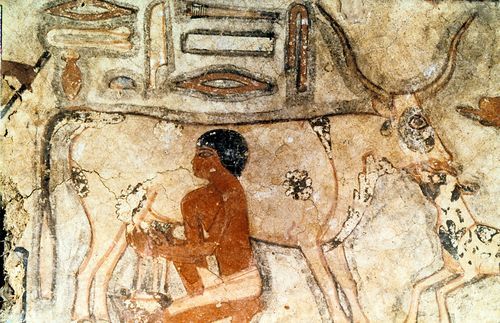
Livestock Land for Food: “I Will Do as You Say”
As the famine tightened its grip on Egypt and Canaan Livestock Land for Food, people exchanged their money, livestock, and even their land simply to survive. Yet through Joseph’s wisdom, God preserved countless lives and provided stability during a desperate time. While nations struggled, God’s covenant family continued to grow and prosper in Goshen under His protection. Near the end of his life, Jacob looked beyond famine and earthly possessions, focusing instead on God’s promises. Through every hardship, God’s plan continued moving forward.
God’s Plan, Famine, Pharaoh, Provision, Stewardship, Goshen, Jacob’s Final Request, God’s Blessings
📖 Genesis 47:13 (NIV)
“13 There was no food, however, in the whole region because the famine was severe; both Egypt and Canaan wasted away because of the famine:”
God Sustains His People During Difficult Times
📖 Genesis 47:14 (NIV)
“14 Joseph collected all the money that was to be found in Egypt and Canaan in payment for the grain they were buying, and he brought it to Pharaoh’s palace.”
Severe famine continued across Egypt and Canaan, affecting every aspect of life. Yet even during this crisis, God’s plan continued moving forward. Through Joseph’s wisdom and leadership, food remained available while nations struggled to survive. At the same time, God’s covenant family prospered in Goshen and grew in number. Genesis 47 reveals that while circumstances may become difficult, God’s purposes remain unchanged. He provides, preserves, and faithfully guides His people according to His plan.
The Famine Intensifies – Livestock Land for Food
📖 Genesis 47:15–17 (NIV)
“15 When the money of the people of Egypt and Canaan was gone, all Egypt came to Joseph and said, “Give us food. Why should we die before your eyes? Our money is all gone.”
“16 “Then bring your livestock,” said Joseph. “I will sell you food in exchange for your livestock, since your money is gone.” 17 So they brought their livestock to Joseph, and he gave them food in exchange for their horses, their sheep and goats, their cattle and donkeys. And he brought them through that year with food in exchange for all their livestock.”
The famine became so severe that both Egypt and Canaan were wasting away.
At first, people used money to buy grain.
Joseph collected the money and brought it to Pharaoh.
Eventually, the money ran out.
The people cried:
“Give us food. Why should we die before your eyes?”
Joseph then exchanged food for livestock.
Horses, sheep, goats, cattle, and donkeys were traded for grain.
Through Joseph’s administration, lives were preserved.
God had provided a leader with wisdom long before the crisis reached its worst point.
Land for Food – Livestock Land for Food
📖 Genesis 47:18–21 (NIV)
“18 When that year was over, they came to him the following year and said, “We cannot hide from our lord the fact that since our money is gone and our livestock belongs to you, there is nothing left for our lord except our bodies and our land. 19 Why should we perish before your eyes—we and our land as well? Buy us and our land in exchange for food, and we with our land will be in bondage to Pharaoh. Give us seed so that we may live and not die, and that the land may not become desolate.”
“20 So Joseph bought all the land in Egypt for Pharaoh. The Egyptians, one and all, sold their fields, because the famine was too severe for them. The land became Pharaoh’s, 21 and Joseph reduced the people to servitude,[c] from one end of Egypt to the other.”
When their livestock was gone, the people returned again.
This time they offered their land and themselves in exchange for food.
The famine had become desperate.
Joseph purchased the land for Pharaoh and provided seed so the people could continue farming when conditions improved.
He established a system where one-fifth of future harvests would belong to Pharaoh.
The people responded:
“You have saved our lives.”
Joseph’s leadership was not designed to exploit the people but to preserve them through a national disaster.
God’s preparation through Joseph protected countless lives.
Israel Flourishes in Goshen
📖 Genesis 47:22-27 (NIV)
“22 However, he did not buy the land of the priests, because they received a regular allotment from Pharaoh and had food enough from the allotment Pharaoh gave them. That is why they did not sell their land.23 Joseph said to the people, “Now that I have bought you and your land today for Pharaoh, here is seed for you so you can plant the ground. 24 But when the crop comes in, give a fifth of it to Pharaoh. The other four-fifths you may keep as seed for the fields and as food for yourselves and your households and your children.”
25 “You have saved our lives,” they said. “May we find favor in the eyes of our lord; we will be in bondage to Pharaoh.”
26 So Joseph established it as a law concerning land in Egypt—still in force today—that a fifth of the produce belongs to Pharaoh. It was only the land of the priests that did not become Pharaoh’s.
27 Now the Israelites settled in Egypt in the region of Goshen. They acquired property there and were fruitful and increased greatly in number
While famine consumed much of the land, Israel’s family experienced God’s blessing.
Scripture says:
“They acquired property there and were fruitful and increased greatly in number.”
This is a direct reminder of God’s covenant promises.
Years earlier God had promised Abraham that his descendants would become a great nation.
Now, even in Egypt, God was fulfilling that promise.
The location had changed, but the covenant had not.
God’s blessings continued exactly as He said they would.
Seventeen Years of Grace – Livestock Land for Food
📖 Genesis 47:28 (NIV)
“28 Jacob lived in Egypt seventeen years, and the years of his life were a hundred and forty-seven. ‘
Jacob lived seventeen years in Egypt.
The years that began with famine ended with family restoration.
For seventeen years he enjoyed life with Joseph again.
The son he once believed dead now cared for him.
God gave Jacob a season of peace after decades of hardship.
His life had been marked by struggles, but God’s faithfulness remained constant through every chapter.
Jacob’s Final Request
📖 Genesis 47:29–31 (NIV)
“29 When the time drew near for Israel to die, he called for his son Joseph and said to him, “If I have found favor in your eyes, put your hand under my thigh and promise that you will show me kindness and faithfulness. Do not bury me in Egypt, 30 but when I rest with my fathers, carry me out of Egypt and bury me where they are buried.”
“I will do as you say,” he said.
31 “Swear to me,” he said. Then Joseph swore to him, and Israel worshiped as he leaned on the top of his staff.[d]”
As Jacob approached death at 147 years old, he called Joseph to him.
He made an important request:
“Do not bury me in Egypt.”
Jacob wanted to be buried with Abraham, Isaac, and his ancestors in the land God had promised.
This request was an act of faith.
Even though his family was living comfortably in Egypt, Jacob believed God’s covenant promises still pointed toward the Promised Land.
Joseph responded:
“I will do as you say.”
Then Joseph swore an oath to fulfill his father’s request.
Jacob worshiped God as he leaned upon his staff.
His final thoughts were not focused on Egypt but on the faithfulness of God.
God’s Covenant Never Changes – Livestock Land for Food
Throughout this chapter, God’s covenant remains the central theme.
The famine was severe.
Economic conditions changed.
People traded money, livestock, and land for survival.
Yet God’s promises never changed.
While nations struggled, God’s covenant family was protected.
While Jacob grew old, God’s plan continued.
While Egypt became their temporary home, God’s promises still pointed toward a greater future.
The Lord remained faithful in every circumstance.
What This Teaches Us
God prepares solutions before crises arrive.
Wise stewardship can preserve lives during difficult seasons.
God’s blessings continue even during widespread hardship.
The Lord’s covenant promises are not limited by location.
Faith looks beyond present circumstances to future promises.
Family restoration is one of God’s great blessings.
God’s plans continue through every generation.
Worship remains important even near the end of life.
Final Thought
Genesis 47 shows two powerful realities working side by side. The famine grew worse, yet God’s blessings continued. Nations struggled to survive, yet Israel’s family flourished in Goshen. Jacob spent his final seventeen years surrounded by family and witnessing God’s faithfulness.
When the time came for Jacob to die, his confidence remained in God’s covenant promises. His request to be buried in the land of his fathers revealed that his faith was still fixed on what God had promised long ago.
The chapter reminds us that circumstances may change, but God’s plan does not. He provides during famine, blesses during hardship, and remains faithful to every promise He has made.