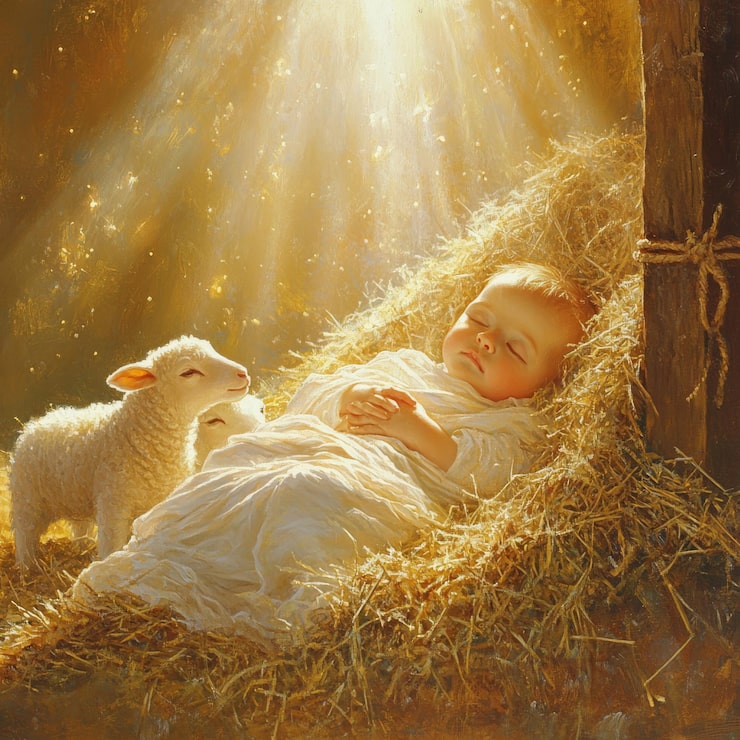
Matthew begins by connecting Jesus Christ to the promises God made generations before His birth. The Genealogy Of Jesus is more than a record of names; it reveals a history of faith, failure, redemption, and God’s faithfulness. Then we witness the beginning of Jesus’ earthly life through Mary and Joseph. What generations had waited for was now coming into the world. The promised Savior would be called Immanuel, meaning God with us.
Obedience, Grace, Promises, God’s Covenant, Plan In Motion, Satan, Sin, Repentance, Joseph, Mary, Redemption Plan, Jesus Christ.
📖 Matthew 1:1 (NIV)
“1This is the genealogy[a] of Jesus the Messiah[b] the son of David, the son of Abraham”
Matthew opens with Abraham and follows the family line through King David, the kings of Judah, the Babylonian exile, and the generations leading to Joseph, the husband of Mary.
Every name represents a place in a history that was moving toward God’s promised Messiah.
This family history includes faithful people, imperfect people, unexpected circumstances, and painful chapters.
There are stories of courage and faith, but also stories of sin, disobedience, and consequences.
Yet God’s promises continued.
Then Matthew moves from the genealogy to the birth of Jesus.
Mary is found to be pregnant through the Holy Spirit before she and Joseph come together.
Joseph, faced with a situation he does not yet understand, considers how to respond without bringing public disgrace upon Mary.
An angel appears to Joseph in a dream and explains that the child is from the Holy Spirit.
Joseph is told to name Him Jesus because He will save His people from their sins.
Matthew connects this moment to the prophecy of Immanuel: God with us.
The generations had led to this moment.
God’s plan was in motion, and the promised Savior had come.
📖 Matthew 1:2-5(NIV)
“2 Abraham was the father of Isaac,
Isaac the father of Jacob,
Jacob the father of Judah and his brothers,”
“3 Judah the father of Perez and Zerah, whose mother was Tamar,
Perez the father of Hezron,
Hezron the father of Ram,”
“4 Ram the father of Amminadab,
Amminadab the father of Nahshon,
Nahshon the father of Salmon,
“5 Salmon the father of Boaz, whose mother was Rahab,
Boaz the father of Obed, whose mother was Ruth,
Obed the father of Jesse,”
The genealogy then moves through Isaac,
Jacob, Judah, and the generations leading to Jesse and King David.
This history reminds us that God’s promises often unfold over generations.
Abraham did not see everything God promised come to completion during his lifetime.
Yet the promise continued through his descendants.
The genealogy also includes Tamar, Rahab, Ruth, and the woman who had been Uriah’s wife, Bathsheba.
Their presence is significant.
These women came from different circumstances and backgrounds, and their stories remind us that God’s purposes are not limited by human expectations.
Rahab demonstrated faith when she helped the Israelite spies.
Ruth showed loyalty and faithfulness.
Tamar’s story involved injustice within Judah’s family.
Bathsheba’s story is connected to David’s serious sin and the consequences that followed.
Matthew does not hide the complicated parts of this family history.
The Messiah’s human ancestry includes people whose lives were far from perfect.
God can work through imperfect people and difficult histories without approving every choice they make.
Our past does not have to define our future.
God’s faithfulness is greater than human failure, and His promises continue to move forward.
📖 Matthew 1:6-11(NIV)
“6 and Jesse the father of King David.
David was the father of Solomon, whose mother had been Uriah’s wife,”
“7 Solomon the father of Rehoboam,
Rehoboam the father of Abijah,
Abijah the father of Asa,”
“8 Asa the father of Jehoshaphat,
Jehoshaphat the father of Jehoram,
Jehoram the father of Uzziah,”
“9 Uzziah the father of Jotham,
Jotham the father of Ahaz,
Ahaz the father of Hezekiah,”
“10 Hezekiah the father of Manasseh,
Manasseh the father of Amon,
Amon the father of Josiah,”
“11 and Josiah the father of Jeconiah[c] and his brothers at the time of the exile to Babylon.”
This section includes generations of kings who experienced both faithfulness and failure.
Solomon began with wisdom, but later allowed his heart to turn away from God.
Other kings followed, some seeking the Lord and others leading the people into disobedience.
Their decisions affected not only their own lives but the nation entrusted to their leadership.
Eventually, Judah experienced the Babylonian exile.
Jerusalem was conquered, the people were taken from their homeland, and the kingdom faced the consequences of generations of rebellion.
The exile could have appeared to be the end of the promises associated with David’s royal family.
But God’s covenant was not forgotten.
Matthew includes this painful period because it is part of the history leading to Jesus Christ.
God’s plan continued even when the people experienced the consequences of their choices.
Our decisions matter. Pride, sin, and disobedience can bring consequences that affect others.
But even during difficult seasons, we should not assume that God has abandoned His promises.
The exile was a painful chapter, not the end of God’s Redemption Plan.
📖 Matthew 1:12-16(NIV)
“12 After the exile to Babylon:
Jeconiah was the father of Shealtiel,
Shealtiel the father of Zerubbabel,”
“13 Zerubbabel the father of Abihud,
Abihud the father of Eliakim,
Eliakim the father of Azor,”
“14 Azor the father of Zadok,
Zadok the father of Akim,
Akim the father of Elihud,”
“15 Elihud the father of Eleazar,
Eleazar the father of Matthan,
Matthan the father of Jacob,”
“16 and Jacob the father of Joseph, the husband of Mary, and Mary was the mother of Jesus who is called the Messiah.”
The names may seem distant from our own lives, but they represent generations that carried forward a family history connected to God’s promises.
Matthew brings the genealogy to an important distinction.
Joseph is identified as Mary’s husband, but Jesus is described as being born of Mary.
The passage does not present Joseph as Jesus’ biological father. Instead, Joseph stands within the family line of David and becomes the earthly guardian of the child.
This distinction prepares us to understand the next part of the chapter.
Jesus’ birth is not presented as an ordinary human conception.
Matthew explains that Mary became pregnant through the Holy Spirit.
The genealogy establishes Jesus’ connection to Abraham and David, while the account of His birth reveals the divine origin of His conception.
God works through generations, and we may not always see how our place in history connects to His greater purpose.
What seems like an ordinary family story can be part of something much greater.
Matthew brings us to Joseph and Mary because the promised Messiah is about to enter the world.
📖 Matthew 1:17-21 (NIV)
“17 Thus there were fourteen generations in all from Abraham to David, fourteen from David to the exile to Babylon, and fourteen from the exile to the Messiah.”
“18 This is how the birth of Jesus the Messiah came about[d]: His mother Mary was pledged to be married to Joseph, but before they came together, she was found to be pregnant through the Holy Spirit. 19 Because Joseph her husband was faithful to the law, and yet[e] did not want to expose her to public disgrace, he had in mind to divorce her quietly.”
“20 But after he had considered this, an angel of the Lord appeared to him in a dream and said, “Joseph son of David, do not be afraid to take Mary home as your wife, because what is conceived in her is from the Holy Spirit. 21 She will give birth to a son, and you are to give him the name Jesus,[f] because he will save his people from their sins.”
This arrangement highlights the major turning points in Israel’s history and directs our attention toward Jesus.
Matthew then explains how the birth of Jesus came about.
Mary was pledged to be married to Joseph, but before they came together, she was found to be pregnant through the Holy Spirit.
Joseph was described as faithful to the law.
He did not want to expose Mary to public disgrace, so he considered ending the marriage quietly.
Imagine Joseph’s position. He faced something he could not explain.
He had to make a decision without knowing the full story.
Then an angel appeared to him in a dream.
Joseph was told not to be afraid to take Mary as his wife because the child was conceived through the Holy Spirit.
The angel also gave him a responsibility: name the child Jesus, because He would save His people from their sins.
Joseph responded by accepting the instruction he had received.
His decision required faith, courage, and obedience.
The name Jesus carries the purpose of His coming.
He did not enter the world simply to become another king in a long family line.
He came to save people from sin and bring them back to God.
Sometimes we face circumstances we do not understand.
Joseph’s example reminds us not to let fear, pride, or public opinion make our decisions for us.
He listened, trusted, and acted.
Faith becomes meaningful when we are willing to respond with obedience.
📖 Matthew 1:22-25 (NIV)
“22 All this took place to fulfill what the Lord had said through the prophet: 23 “The virgin will conceive and give birth to a son, and they will call him Immanuel”[g] (which means “God with us”).”
“24 When Joseph woke up, he did what the angel of the Lord had commanded him and took Mary home as his wife. 25 But he did not consummate their marriage until she gave birth to a son. And he gave him the name Jesus.”
“The virgin will conceive and give birth to a son, and they will call him Immanuel.”
Immanuel means God with us.
This is one of the most important messages in the opening chapter of Matthew.
God had promised a Savior, and now the promise was being fulfilled. Jesus Christ was entering human history, bringing the hope of salvation.
Joseph woke from his dream and did what the angel commanded.
He took Mary as his wife and, after Jesus was born, named Him Jesus.
Joseph’s obedience is an important part of this story.
He did not need to understand every detail before responding to what God had revealed to him.
The chapter brings together God’s promises, the Holy Spirit, Mary’s faith, Joseph’s obedience, and the birth of Jesus Christ.
The name Immanuel reminds us that God did not leave humanity without hope.
Jesus came to save His people from their sins.
His birth begins the earthly journey that will lead to His teachings, His sacrifice on the cross, and His resurrection.
God’s promise was not simply that a child would be born.
It was that the Savior would come. Jesus Christ is the center of the Redemption Plan.
Through Him, we are offered forgiveness, reconciliation, and the hope of eternal life.
God with us is the message that changes everything.
Matthew 1 demonstrates the faithfulness of God across generations.
From Abraham to David, through the kings and the Babylonian exile, and finally to Joseph and Mary, God’s promises continued toward their fulfillment.
Human beings made mistakes. Kings failed. Nations experienced judgment.
Families faced difficult circumstances. Yet God did not abandon His purpose.
The promise connected to Abraham and the royal line of David finds its fulfillment in Jesus Christ.
His birth through the Holy Spirit reveals that God’s plan was moving beyond human expectations.
God’s Covenant stands because God is faithful.
Jesus came to save His people from their sins, opening the way for forgiveness and eternal life.
This chapter teaches us that our history does not have to determine our future.
We see generations of people who made good decisions and others who made serious mistakes.
We see the consequences of sin, but we also see God’s patience and faithfulness.
Joseph teaches us that obedience sometimes requires courage when circumstances are difficult.
Mary reminds us that God’s purposes can reach beyond what we understand.
Their place in this story points us toward the greatest gift: Jesus Christ.
We should examine our own lives.
Are we allowing fear, pride, or the opinions of others to guide us?
Are we willing to recognize our mistakes and repent?
Do we believe that God’s promises are greater than our imperfections?
God does not ask us to pretend we have never failed.
He calls us to turn toward Him, believe in Jesus Christ, and continue growing in faith.
Matthew begins with a genealogy because the story of Jesus did not begin in Bethlehem.
It was connected to promises made generations earlier.
Abraham, David, the kings, the exile, Joseph, and Mary all have a place in the history that leads us to the birth of the Messiah.
But the greatest message is found in the name given to this child.
Jesus means He will save His people from their sins. Immanuel means God with us.
These names reveal the purpose and hope of His coming.
Humanity needed more than another earthly leader. We needed a Savior who could bring us back to God.
The genealogy shows us the history. Joseph and Mary show us faith and obedience.
The birth of Jesus reveals God’s promise moving into fulfillment.
As we begin Matthew, we are reminded that God’s Redemption Plan is not a collection of disconnected events.
It is a journey leading to Jesus Christ, His sacrifice, His resurrection, and the promise of eternal life.
The invitation remains open to every generation: believe, repent, follow Jesus, and grow in the grace God has provided.
All Glory Belongs To God.
Amen.