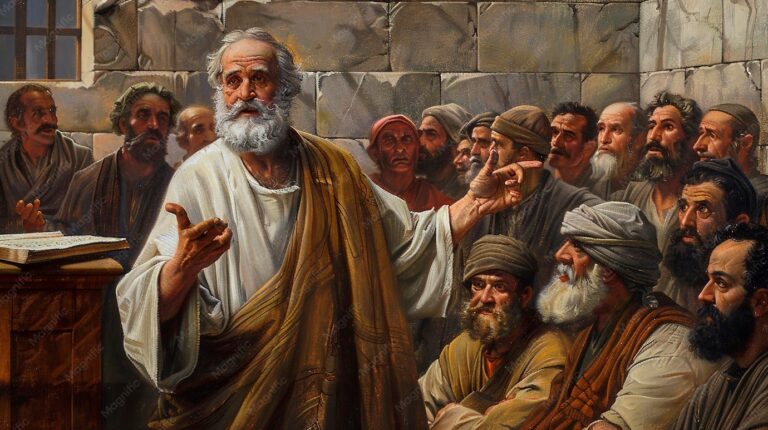
Peter gives one of his strongest warnings about False Prophets Among The People, and the danger of returning to a life controlled by sin. Their words may sound convincing, but their lives reveal the truth. Peter reminds believers that God sees deception, judges wickedness, rescues the faithful, and calls His people to remain on the straight path. Knowing Christ should lead us away from corruption—not back into it.
Obedience • God’s Covenant • Faith • False Teachings • Humility • Judgment • Repentance • Redemption Plan • Jesus Christ
📖 2 peter 2:1 (NIV)
“2 But there were also false prophets among the people, just as there will be false teachers among you. They will secretly introduce destructive heresies, even denying the sovereign Lord who bought them—bringing swift destruction on themselves.”
Peter warns that false prophets existed among God’s people in the past, and false teachers would also arise among Christians.
Their danger would be especially serious because they would secretly introduce destructive teachings and even deny the Lord who bought them.
Peter says many would follow their sinful behavior, causing the way of truth to be disrespected.
Greed would motivate these teachers, and they would exploit people with fabricated stories.
But Peter makes something very clear:
God sees what is happening.
He points back to several moments in history.
God judged angels who sinned.
God judged Sodom and Gomorrah while rescuing Lot.
These examples demonstrate two things:
God knows how to rescue the godly from trials, and He knows how to hold the unrighteous for judgment.
Peter then describes the character of false teachers—arrogant, immoral, greedy, rebellious, and controlled by sinful desires.
He compares them to springs without water and mists driven by storms.
They promise freedom while being slaves themselves.
Their message may sound attractive, but it cannot provide what it promises.
Peter ends with a disturbing picture.
Those who escape the world’s corruption through knowing Christ but then return to it are compared to a dog returning to its vomit and a washed sow returning to the mud.
The warning is unmistakable:
Do not return to the corruption from which Christ called you.
📖 2 peter 2:2-4 (NIV)
“2 Many will follow their depraved conduct and will bring the way of truth into disrepute. 3 In their greed these teachers will exploit you with fabricated stories. Their condemnation has long been hanging over them, and their destruction has not been sleeping.”
“4 For if God did not spare angels when they sinned, but sent them to hell,[a] putting them in chains of darkness[b] to be held for judgment;”
Peter does not describe false teachers as people who openly announce that they are against God.
Their danger is that they work secretly.
They introduce destructive ideas while appearing to have something valuable to offer.
They use fabricated stories.
When they appeal to people’s desires.
They promise freedom.
But their teaching leads people away from truth.
This is why believers need more than simply hearing religious words.
We need to know God’s Word.
They need discernment.
We need to compare what we hear with what God has revealed.
A message can sound attractive and still be destructive.
Truth is not determined by how convincing a teacher sounds. Truth is determined by whether the teaching agrees with God.
📖 2 peter 2:5-7 (NIV)
” 5 if he did not spare the ancient world when he brought the flood on its ungodly people, but protected Noah, a preacher of righteousness, and seven others; 6 if he condemned the cities of Sodom and Gomorrah by burning them to ashes, and made them an example of what is going to happen to the ungodly; 7 and if he rescued Lot, a righteous man, who was distressed by the depraved conduct of the lawless “
Peter reaches back into history to show that God has always seen the difference between righteousness and wickedness.
The flood came upon an ungodly world, but Noah was protected.
Sodom and Gomorrah were judged, but Lot was rescued.
These examples remind us that God is never confused by the circumstances around His people.
Sometimes the righteous live in the middle of a corrupt society.
They may see things that trouble their souls.
They may feel surrounded by wrongdoing.
But God knows His people.
He knows who belongs to Him.
He knows who is deceiving others.
And He knows how to rescue those who trust Him.
God’s judgment is never blind, and His rescue is never accidental.
📖 2 peter 2:8-10 (NIV)
” 8 (for that righteous man, living among them day after day, was tormented in his righteous soul by the lawless deeds he saw and heard)— 9 if this is so, then the Lord knows how to rescue the godly from trials and to hold the unrighteous for punishment on the day of judgment. 10 This is especially true of those who follow the corrupt desire of the flesh[c] and despise authority.”
Bold and arrogant, they are not afraid to heap abuse on celestial beings;
Peter repeatedly describes the false teachers as arrogant and bold.
They despise authority.
When They boast.
They speak about things they do not understand.
Their problem is not simply lack of knowledge.
It is pride.
Humility recognizes that God knows more than we do.
Pride assumes that we know better.
That distinction matters spiritually.
A humble believer remains willing to listen, learn, repent, and submit to God’s truth.
A proud person can become so convinced of their own understanding that they reject correction.
Peter’s warning therefore reaches beyond false teachers.
It reminds all of us to examine our hearts.
Faith requires humility because God—not humanity—is the final authority.
📖 2 peter 2:11-13 (NIV)
“11 yet even angels, although they are stronger and more powerful, do not heap abuse on such beings when bringing judgment on them from[d] the Lord. 12 But these people blaspheme in matters they do not understand. They are like unreasoning animals, creatures of instinct, born only to be caught and destroyed, and like animals they too will perish.”
“13 They will be paid back with harm for the harm they have done. Their idea of pleasure is to carouse in broad daylight. They are blots and blemishes, reveling in their pleasures while they feast with you.[e] “
Peter exposes one of the great lies of sin.
False teachers promised freedom while they themselves were slaves to depravity.
Sin often presents itself as freedom.
It says:
“Do whatever you want.”
But eventually the desire becomes the master.
Greed controls the greedy.
Lust controls the lustful.
Pride controls the proud.
Addiction controls the addicted.
Peter says people become slaves to whatever has mastered them.
True freedom is different.
Jesus does not free us so that we can become slaves to another sinful desire.
He frees us so that we can live according to God’s will.
The world may call sin freedom, but Christ offers the freedom to live in truth.
📖 2 peter 2:14-17 (NIV)
“14 With eyes full of adultery, they never stop sinning; they seduce the unstable; they are experts in greed—an accursed brood! 15 They have left the straight way and wandered off to follow the way of Balaam son of Bezer,[f] who loved the wages of wickedness. 16 But he was rebuked for his wrongdoing by a donkey—an animal without speech—who spoke with a human voice and restrained the prophet’s madness.”
“17 These people are springs without water and mists driven by a storm. Blackest darkness is reserved for them. “
Peter’s final comparison is intentionally shocking.
A dog returns to its vomit.
A washed sow returns to the mud.
Peter uses these images to describe someone who returns to the corruption from which they had escaped.
The lesson is not that someone who struggles with sin has no hope.
The message is a warning against deliberately turning back and embracing the old way of life.
Repentance means turning around.
Grace gives us the opportunity to leave sin behind.
Faith gives us a new direction.
Christ gives us a new identity.
When God brings us out of darkness, we should not willingly walk back into it.
Do not confuse returning to sin with falling while trying to follow Christ. When you fall, repent and return to Him.
📖 2 peter 2:18-22 (NIV)
“18 For they mouth empty, boastful words and, by appealing to the lustful desires of the flesh, they entice people who are just escaping from those who live in error. 19 They promise them freedom, while they themselves are slaves of depravity—for “people are slaves to whatever has mastered them.'”
“20 If they have escaped the corruption of the world by knowing our Lord and Savior Jesus Christ and are again entangled in it and are overcome, they are worse off at the end than they were at the beginning. 21 It would have been better for them not to have known the way of righteousness, than to have known it and then to turn their backs on the sacred command that was passed on to them. 22 Of them the proverbs are true: “A dog returns to its vomit,”[g] and, “A sow that is washed returns to her wallowing in the mud.”
Peter gives us a powerful balance throughout this chapter.
There is judgment.
But there is also rescue.
There are false teachers.
But there are faithful believers.
There is corruption.
But there is righteousness.
There is deception.
But there is truth.
Peter specifically says that the Lord knows how to rescue the godly from trials.
That means believers do not have to become overwhelmed by the darkness around them.
We can remain faithful even when the world is not.
But can reject false teaching.
We can resist temptation.
We can continue walking with Christ.
And when trials come, we can trust God to know the way through them.
God does not promise that His people will never face darkness. He promises that He knows how to lead them through it.
Peter’s warnings about judgment are connected to God’s faithfulness.
God judged the angels who sinned.
And God judged the ancient world.
God judged Sodom and Gomorrah.
But God also protected Noah and rescued Lot.
These events demonstrate that God’s character has not changed.
He does not ignore sin.
God does not forget righteousness.
He does not overlook deception.
And He does not abandon those who trust Him.
God’s covenant includes both promise and accountability.
His grace should never be used as permission to return to sin.
Only His patience should lead us toward repentance.
His salvation should lead us toward obedience.
God’s promises remain secure, but Peter reminds us that our response to those promises matters.
False teaching can appear attractive while leading people away from God.
We must know God’s Word so we can recognize deception.
God sees both righteousness and wickedness.
God knows how to rescue His people from trials.
Pride can make people reject God’s authority.
Humility keeps our hearts open to correction.
Sin promises freedom but can become slavery.
Knowing about Christ should produce a changed life.
God’s grace is not permission to return to corruption.
Repentance means turning away from sin and returning to God.
We should examine what has control over our lives.
God’s judgment is real.
God’s rescue is also real.
Jesus Christ is the source of true freedom.
We should remain on the straight path rather than returning to the old life.
Peter’s warning ultimately points us back to the reason we need Jesus Christ.
Humanity is easily deceived.
Sin can become our master.
False promises can lead us away from truth.
But Jesus offers something the false teachers cannot provide:
true freedom, forgiveness, grace, and salvation.
Christ paid the price for our sins.
He calls us out of darkness.
And he gives us a new direction.
He does not promise that following Him will mean we never struggle. He gives us the grace to repent when we fall and the strength to continue walking with Him.
Peter warns us not to return to the corruption from which we have been rescued.
The answer is not simply trying harder.
But the answer is remaining connected to Christ.
The world promises freedom through sin. Jesus Christ offers freedom from sin.
Do not return to the mud. Keep walking with Jesus.