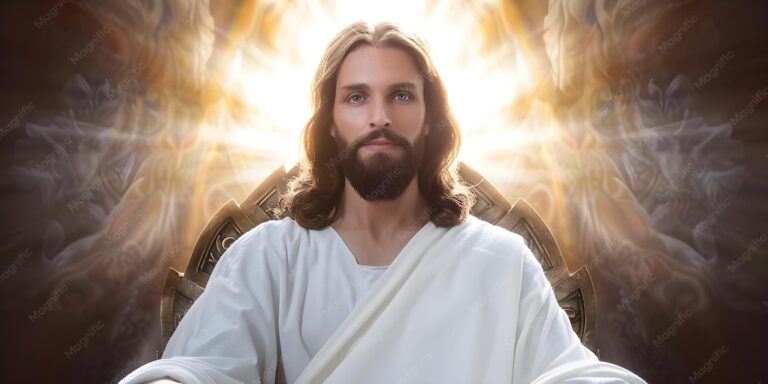
Hebrews 9 teaches us to look beyond the Earthly Sanctuary and understand what its ceremonies were preparing us to see. The Holy Place, the Most Holy Place, and the blood of sacrifices revealed the seriousness of sin and the need for cleansing. But Jesus Christ came as our perfect High Priest, offering His own blood once for all to secure eternal redemption and bring salvation.
Obedience, God’s Covenant, Most Holy Place, Salvation, Blood, Mercy, Judgment, Face Judgment, Redemption Plan, Jesus Christ
📖 Hebrews 9:1 (NIV)
“9 Now the first covenant had regulations for worship and also an earthly sanctuary.”
Under the first covenant, God gave Israel regulations for worship and an earthly sanctuary.
Its rooms, furnishings, and ceremonies taught the people about His holiness and the separation sin creates.
Priests entered the outer room regularly, but only the high priest entered the Most Holy Place, once a year, with blood offered for his own sins and those of the people.
These arrangements served a purpose, but they could not fully cleanse the worshiper’s conscience or provide the final answer to sin.
They pointed forward to a greater work God would accomplish through Jesus Christ.
Christ entered the greater sanctuary—not one made by human hands—and offered His own blood rather than the blood of animals.
His sacrifice secured eternal redemption and opened the way for a new covenant and the promised eternal inheritance.
Unlike the high priests who returned year after year, Jesus offered Himself once for all.
God’s story moves from earthly symbols toward the completed work of Jesus, giving us a reason to understand the past, trust His mercy, and prepare our lives in faith.
📖 Hebrews 9:1-4 (NIV)
“9 Now the first covenant had regulations for worship and also an earthly sanctuary. 2 A tabernacle was set up. In its first room were the lampstand and the table with its consecrated bread; this was called the Holy Place. 3 Behind the second curtain was a room called the Most Holy Place, 4 which had the golden altar of incense and the gold-covered ark of the covenant. This ark contained the gold jar of manna, Aaron’s staff that had budded, and the stone tablets of the covenant.”
The earthly sanctuary was more than a structure containing sacred objects.
Its lampstand, consecrated bread, curtain, ark of the covenant, and atonement cover helped Israel understand that approaching God was not an ordinary matter.
God is holy, and His covenant called His people to worship Him with reverence and obedience.
The manna recalled His provision in the wilderness, Aaron’s budding staff recalled His confirmation of priestly service, and the covenant tablets recalled His commands.
These reminders connected worship with God’s guidance, provision, and expectations.
Yet the earthly sanctuary was not the final destination.
Its meaning pointed beyond the objects themselves.
We learn from the past when we ask what God was teaching through it—and how those lessons prepare us to understand Jesus Christ, the greater High Priest and the center of God’s Redemption Plan.
📖 Hebrews 9:5-8 (NIV)
“5 Above the ark were the cherubim of the Glory, overshadowing the atonement cover. But we cannot discuss these things in detail now.”
“6 When everything had been arranged like this, the priests entered regularly into the outer room to carry on their ministry. 7 But only the high priest entered the inner room, and that only once a year, and never without blood, which he offered for himself and for the sins the people had committed in ignorance. 8 The Holy Spirit was showing by this that the way into the Most Holy Place had not yet been disclosed as long as the first tabernacle was still functioning.”
The priests entered the outer room regularly, but the high priest entered the Most Holy Place only once a year and never without blood.
The gifts and sacrifices served as signs of worship and ceremonial cleansing, but they could not clear the conscience completely.
External regulations could teach, guide, and set apart the people for worship, yet they could not accomplish the deeper redemption humanity needed.
This passage invites us to consider the difference between outward observance and inward transformation. Religious actions cannot substitute for a heart that trusts God.
The ceremonies had a purpose in their time, but Hebrews points us toward the new order established through Jesus Christ.
Through Him, God provides what the earlier arrangements could only anticipate: a lasting answer to sin and a way to approach Him through the work of our perfect High Priest.
📖 Hebrews 9:9-12 (NIV)
“9 This is an illustration for the present time, indicating that the gifts and sacrifices being offered were not able to clear the conscience of the worshiper. 10 They are only a matter of food and drink and various ceremonial washings—external regulations applying until the time of the new order.”
“11 But when Christ came as high priest of the good things that are now already here,[a] he went through the greater and more perfect tabernacle that is not made with human hands, that is to say, is not a part of this creation. 12 He did not enter by means of the blood of goats and calves; but he entered the Most Holy Place once for all by his own blood, thus obtaining[b] eternal redemption. “
When Jesus Christ came as High Priest of the good things promised, He entered the greater and more perfect sanctuary.
He did not bring the blood of goats and calves.
The contrast is essential. Earlier sacrifices provided ceremonial cleansing, but Christ’s sacrifice reaches the conscience and calls people away from acts that lead to death so they may serve the living God.
His work is not temporary or repeated; it is sufficient and complete.
Jesus is also the mediator of the new covenant.
Through His death, He sets people free from sins committed under the first covenant and opens the way to receive the promised eternal inheritance.
God’s mercy does not make sin unimportant. Instead, it reveals the great cost of redemption and the love shown through Christ’s willing sacrifice.
Our response is to believe in Him, receive the promise with humility, and let our faith shape how we live.
We serve the living God because Jesus has done what we could never accomplish through our own perfection.
📖 Hebrews 9:13-16 (NIV)
“13 The blood of goats and bulls and the ashes of a heifer sprinkled on those who are ceremonially unclean sanctify them so that they are outwardly clean. 14 How much more, then, will the blood of Christ, who through the eternal Spirit offered himself unblemished to God, cleanse our consciences from acts that lead to death,[c] so that we may serve the living God!”
“15 For this reason Christ is the mediator of a new covenant, that those who are called may receive the promised eternal inheritance—now that he has died as a ransom to set them free from the sins committed under the first covenant.”
“16 In the case of a will,[d] it is necessary to prove the death of the one who made it, “
Hebrews uses the example of a will to explain why death matters in putting an inheritance into effect.
It then recalls how Moses used blood when the first covenant was established and the tabernacle and its articles were dedicated.
The chapter states that without the shedding of blood there is no forgiveness.
In the biblical sacrificial system, blood represented life given in sacrifice.
The repeated ceremonies prepared the way for understanding the greater sacrifice of Jesus Christ.
This is not a call to focus only on the physical details of ancient rituals.
It is a call to understand what they revealed: sin has consequences, forgiveness is costly, and humanity needs God’s provision for reconciliation.
Jesus’ blood establishes the new covenant through His own sacrifice.
We cannot purchase forgiveness through good deeds or claim that our mistakes do not matter. Instead, we depend on God’s mercy and respond through repentance, faith, and obedience.
The covenant rests on God’s provision, not human boasting.
📖 Hebrews 9:17-20 (NIV)
“17 because a will is in force only when somebody has died; it never takes effect while the one who made it is living. 18 This is why even the first covenant was not put into effect without blood. 19 When Moses had proclaimed every command of the law to all the people, he took the blood of calves, together with water, scarlet wool and branches of hyssop, and sprinkled the scroll and all the people. 20 He said, “This is the blood of the covenant, which God has commanded you to keep.”[e] “
The earthly sanctuary was a copy of the true sanctuary, but Christ did not enter a place made by human hands.
He entered heaven itself to appear in God’s presence for us.
The earlier sanctuary was part of Israel’s worship, but it could not contain the full scope of God’s Redemption Plan.
Jesus’ work reaches beyond earthly structures and ceremonies.
He stands in God’s presence on behalf of those He came to redeem.
This gives believers a secure reason for hope. Our relationship with God does not rest on the perfection of a building, the repetition of ceremonies, or the ability of a human priest to remove sin.
Our hope rests in Jesus Christ and what He has accomplished.
We should honor the lessons of the past while placing our trust in the One who fulfills them. The earthly sanctuary taught reverence; Christ gives us the greater assurance of redemption through His completed sacrifice.
📖 Hebrews 9:21-24 (NIV)
“21 In the same way, he sprinkled with the blood both the tabernacle and everything used in its ceremonies. 22 In fact, the law requires that nearly everything be cleansed with blood, and without the shedding of blood there is no forgiveness.”
“23 It was necessary, then, for the copies of the heavenly things to be purified with these sacrifices, but the heavenly things themselves with better sacrifices than these. 24 For Christ did not enter a sanctuary made with human hands that was only a copy of the true one; he entered heaven itself, now to appear for us in God’s presence.”
The high priest entered the Most Holy Place year after year with blood that was not his own. Jesus, however, did not enter heaven to offer Himself repeatedly.
He appeared once for all to do away with sin through the sacrifice of Himself.
If Christ’s sacrifice had to be repeated, His work would not stand apart from the earlier pattern.
Instead, His once-for-all offering marks the decisive moment in God’s plan of redemption.
The perfect Son of God gave Himself willingly, and His sacrifice is sufficient.
We should not treat salvation as something we must continually earn by proving that we are flawless.
We are imperfect, but Jesus Christ’s sacrifice is perfect.
That truth should not lead us to care less about sin; it should move us toward gratitude, repentance, and faithful living.
Because Christ has completed His sacrifice, believers can look forward with confidence.
The past helps us understand the cost of forgiveness, while Jesus’ completed work gives us hope for the future.
📖 Hebrews 9:25-28 (NIV)
“25 Nor did he enter heaven to offer himself again and again, the way the high priest enters the Most Holy Place every year with blood that is not his own. 26 Otherwise Christ would have had to suffer many times since the creation of the world. But he has appeared once for all at the culmination of the ages to do away with sin by the sacrifice of himself. 27 Just as people are destined to die once, and after that to face judgment, 28 so Christ was sacrificed once to take away the sins of many; and he will appear a second time, not to bear sin, but to bring salvation to those who are waiting for him.”
Hebrews reminds us that people are destined to die once and after that to face judgment.
It then draws a comparison with Jesus Christ, who was sacrificed once to take away the sins of many and will appear a second time to bring salvation to those waiting for Him.
This is a serious message, but it is not meant to leave us without hope.
Christ’s sacrifice shows that God has provided a way for forgiveness and redemption rather than leaving humanity to overcome sin through its own strength.
Jesus’ return is not described here as another offering for sin.
His sacrifice has already been made.
He will appear to bring salvation to those who wait for Him, completing the hope secured through His first coming.
We do not know the day or hour of His return, so our task is not to predict the timing.
Our task is to live faithfully, trust His promises, and keep our eyes on Jesus Christ.
God’s mercy gives us hope;
His judgment reminds us to take that hope seriously.
God’s Covenant stands through His faithfulness and the work He accomplished through Jesus Christ.
The earthly sanctuary and its sacrifices served a purpose, teaching Israel about holiness, sin, cleansing, and the seriousness of approaching God.
But these arrangements were not the final answer to humanity’s need for redemption.
Jesus entered heaven itself and offered His own blood once for all.
Through His sacrifice, He secured eternal redemption, became mediator of the new covenant, and opened the way to the promised inheritance.
God’s promise does not depend on human perfection; it rests on the perfect work of His Son.
The covenant also reminds us that mercy and judgment belong together.
Sin matters, and people will face judgment, but God has provided salvation through Jesus Christ.
We respond by believing His promise, turning away from wickedness, and living in obedience—not to earn redemption, but because we trust the One who has redeemed us.
Hebrews 9 teaches us to look beyond outward appearances and understand the purpose behind God’s instructions.
The earthly sanctuary helped people recognize His holiness, but it could not fully cleanse the conscience.
We should learn from those ceremonies without mistaking the symbol for the fulfillment.
The chapter also teaches us to take sin, forgiveness, and judgment seriously.
Our choices matter, and we are accountable to God.
Yet we do not have to rely on our own perfection.
Jesus Christ offered Himself once for all, securing eternal redemption and opening the way to salvation.
That truth should change how we live today.
We can approach God with humility, seek forgiveness when we fail, and serve Him with grateful hearts.
We can also prepare for the future without living in fear, because our hope rests in Christ’s completed sacrifice and His promise to appear again.
The earthly sanctuary, the Most Holy Place, the priests, and the blood of sacrifices all belong to the history through which God taught His people about holiness and the need for redemption.
Their purpose becomes clearer when we see how they point toward Jesus Christ.
Jesus is the perfect High Priest who entered heaven itself.
He is the mediator of the new covenant, the One who takes away sin, and the One who will appear again to bring salvation to those waiting for Him.
The story moves from earthly symbols to God’s fulfilled promise.
We learn from the past, understand the seriousness of sin, and place our faith in Jesus.
We cannot save ourselves through human effort or perfection.
Our hope is in the mercy of God and the completed work of His Son.
To God be the glory.
Amen.