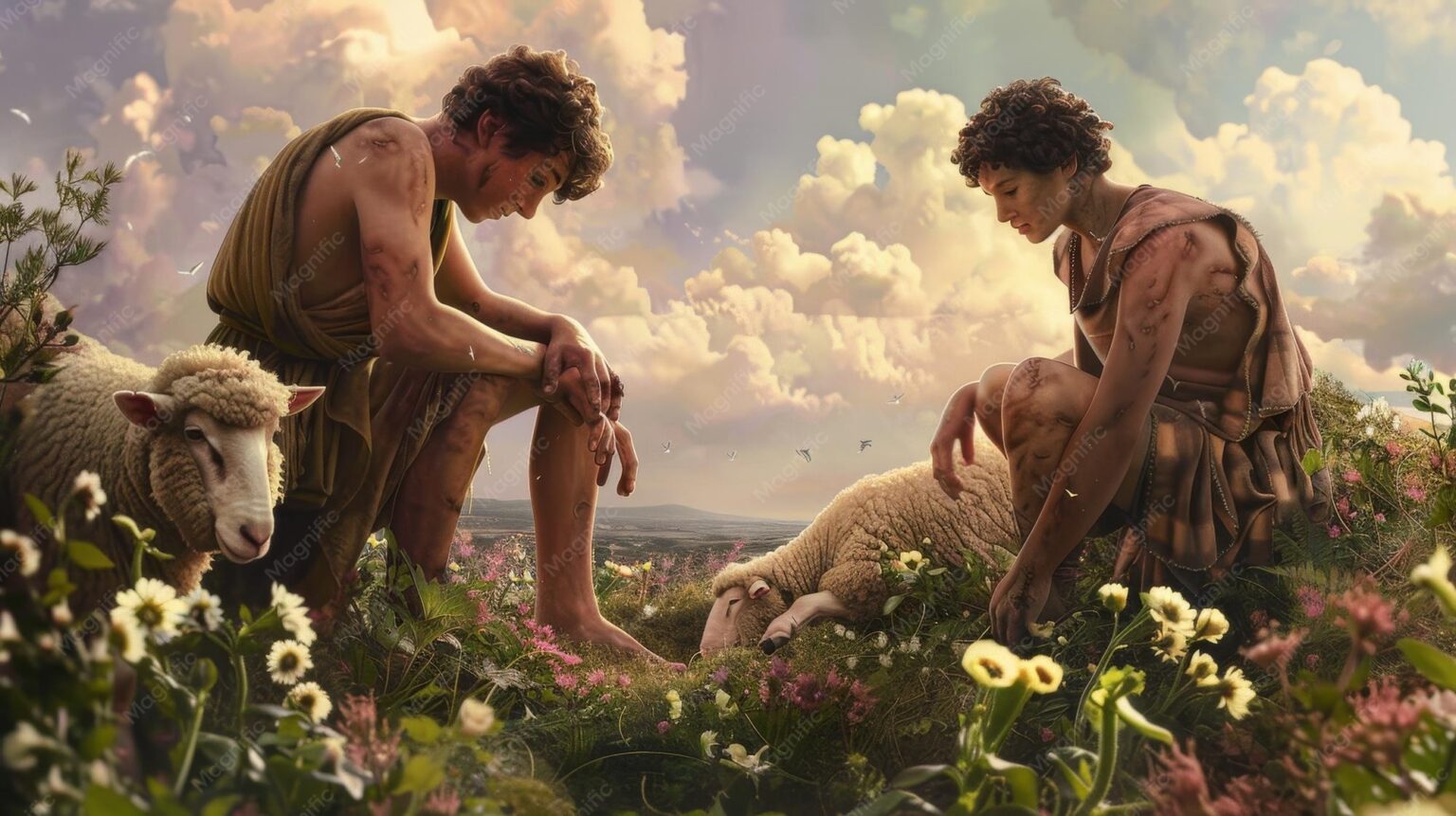
After the fall of mankind, Cain & Abel sin continued spreading into the hearts and relationships of future generations. Cain and Abel, the sons of Adam and Eve, both brought offerings before God, yet their attitudes and actions revealed important differences within their hearts. While Abel’s offering found favor with God, Cain became angry and downcast. Jealousy and resentment began growing within him instead of reflection and humility. This moment reveals how unchecked emotions, comparison, and pride can influence actions and create deeper separation from peace, obedience, and relationship with God.
Anger, Jealousy, and the Condition of the Heart
📖 Genesis 4:1 (NIV)
“4 Adam[a] made love to his wife Eve, and she became pregnant and gave birth to Cain.[b] She said, “With the help of the Lord I have brought forth[c] a man.”
After Adam and Eve were driven from the Garden of Eden, humanity continued forward outside the garden.
Adam and Eve had children, beginning the next generation of mankind.
📖 Genesis 4:1–2 (NIV)
“2 Later she gave birth to his brother Abel.
Now Abel kept flocks, and Cain worked the soil.”
Cain became a worker of the soil, while Abel kept flocks.
Both brothers worked and lived differently, yet both understood the importance of bringing offerings before God.
This moment reveals humanity continuing:
worship
labor
family life
and relationship with God after the fall
📖 Genesis 4:3–4 (NIV)
“3 In the course of time Cain brought some of the fruits of the soil as an offering to the Lord. 4 And Abel also brought an offering—fat portions from some of the firstborn of his flock. The Lord looked with favor on Abel and his offering, “
Cain brought:
“some of the fruits of the soil as an offering to the Lord.”
Abel brought:
“fat portions from some of the firstborn of his flock.”
Both brothers gave offerings, but Genesis explains:
“The Lord looked with favor on Abel and his offering.”
Abel’s offering reflected:
faith
sincerity
giving God the best he had
The condition of the heart mattered.
📖 Genesis 4:5 (NIV)
“5 but on Cain and his offering he did not look with favor. So Cain was very angry, and his face was downcast.”
Genesis says:
“Cain was very angry, and his face was downcast.”
Instead of correcting his heart or reflecting on his actions, jealousy began growing within Cain.
His outward appearance revealed inward struggle:
anger
disappointment
jealousy
resentment
Sin was now affecting humanity more deeply beyond the Garden of Eden.
Jealousy often begins quietly.
Instead of focusing on:
personal growth
obedience
faithfulness
people may begin comparing themselves to others.
Cain became focused on:
Abel’s favor
instead of:
his own relationship with God
This emotional shift became dangerous.
The phrase:
“his face was downcast”
reveals more than temporary disappointment.
Cain allowed:
anger
pride
jealousy
to affect his thoughts and attitude.
Genesis shows how inner emotions can eventually influence outward actions if left unchecked.
This passage teaches that God sees beyond outward appearance alone.
Offerings themselves were not the only issue.
God also looks at:
sincerity
faith
obedience
the condition of the heart
Abel approached God differently than Cain did.
After the fall in Eden:
shame entered humanity
blame entered relationships
pain entered creation
Now jealousy and anger were growing within the human heart.
Genesis continues showing the expanding effects of sin through future generations.
This part of Genesis reminds us:
jealousy can become dangerous
attitude matters
God sees the heart
anger can grow when unchecked
comparison can weaken spiritual focus
Cain and Abel reveal how quickly jealousy and anger can take root within the human heart.
Instead of responding with humility and reflection, Cain allowed disappointment to become resentment.
Genesis reminds us that outward actions often begin with inward attitudes, and unchecked jealousy can lead humanity further away from peace, obedience, and relationship with God.