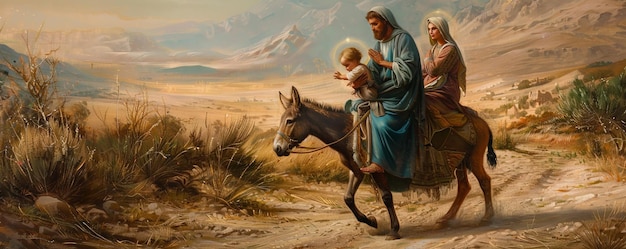
Matthew 2 Time Of King Herod reveals the early challenges surrounding the birth of Jesus Christ. While the Magi travel from the east to worship the newborn King, Herod sees the news as a threat to his power. Through dreams, warnings, and Joseph’s obedience, God protects the child and continues His promises. This chapter reminds us that earthly power cannot overcome God’s purpose, and that Jesus’ journey is part of a plan established long before His birth.
Obedience, God’s Covenant, Mercy, Herod, Magi, Child, Egypt, Escape, Nazarene, Gifts, Overjoyed, Star, Angel, Redemption Plan, Jesus Christ.
📖 Matthew 2:1 (NIV)
“2 After Jesus was born in Bethlehem in Judea, during the time of King Herod, Magi[a] from the east came to Jerusalem”
They had seen His star and wanted to worship Him.
Their arrival disturbed King Herod, who viewed the news as a threat rather than a reason to rejoice.
Herod questioned the religious leaders and learned that the Messiah was to be born in Bethlehem.
He secretly questioned the Magi about the star and sent them to find the child, pretending that he also wanted to worship Him.
The Magi followed the star, found Jesus with Mary, bowed down, and presented gifts of gold, frankincense, and myrrh.
Warned in a dream not to return to Herod, they went home by another route.
An angel then warned Joseph to escape to Egypt because Herod intended to kill the child. Joseph obeyed immediately.
Herod’s violence brought terrible suffering to families in Bethlehem, but Jesus was protected.
After Herod died, Joseph was instructed to return.
Because of the danger under Archelaus, the family settled in Nazareth.
The chapter shows us a world filled with fear, jealousy, danger, and grief.
Yet God’s promises continued.
The child who had come to save humanity would grow up to reveal God’s love and complete His Redemption Plan.
📖 Matthew 2:1-4 (NIV)
“2 After Jesus was born in Bethlehem in Judea, during the time of King Herod, Magi[a] from the east came to Jerusalem 2 and asked, “Where is the one who has been born king of the Jews? We saw his star when it rose and have come to worship him.”
“3 When King Herod heard this he was disturbed, and all Jerusalem with him. 4 When he had called together all the people’s chief priests and teachers of the law, he asked them where the Messiah was to be born.“
The Magi came from the east asking where the newborn King of the Jews could be found.
Their arrival created a contrast between two responses to Jesus.
The Magi were willing to travel and seek the child, while Herod was disturbed by the possibility of another king.
Herod gathered the chief priests and teachers of the law to ask where the Messiah was to be born.
They pointed to the prophecy identifying Bethlehem as the place from which a ruler would come to shepherd God’s people Israel.
This is an important connection to God’s promises.
The birth of Jesus was not an unexpected event outside God’s plan. Scripture had pointed toward the coming Messiah long before the Magi arrived.
The religious leaders knew the prophecy, but knowing Scripture and responding to its message are not always the same thing.
The Magi were seeking the King, while Herod was already concerned about protecting his position.
We should ask ourselves what we are seeking in life.
Are we looking for recognition, power, and control, or are we seeking God’s truth?
The Magi remind us that faith moves us toward Jesus Christ.
Knowing about God’s promises is important, but believing and responding to them is where our journey begins.
📖 Matthew 2:5-8 (NIV)
“5 “In Bethlehem in Judea,” they replied, “for this is what the prophet has written:”
“6
“‘But you, Bethlehem, in the land of Judah,
are by no means least among the rulers of Judah;
for out of you will come a ruler
who will shepherd my people Israel.’[b]”
“7 Then Herod called the Magi secretly and found out from them the exact time the star had appeared. 8 He sent them to Bethlehem and said, “Go and search carefully for the child. As soon as you find him, report to me, so that I too may go and worship him.”
He then sent them to Bethlehem, telling them to search carefully for the child and report back to him.
His words sounded respectful, but his intentions were not sincere.
He wanted information for his own purposes.
The Magi continued their journey, and the star led them to the place where Jesus was.
When they saw it, they were overjoyed.
They entered the house, saw Jesus with Mary, bowed down, and worshiped Him.
They opened their treasures and presented gold, frankincense, and myrrh.
These were valuable gifts, but the most important part of their visit was their recognition of Jesus as King.
After being warned in a dream not to return to Herod, they obeyed and traveled home by another route.
Their response gives us a lesson about the difference between appearance and sincerity.
Herod spoke of worship but intended harm.
The Magi demonstrated their worship through humility, generosity, and obedience.
Worship is not about appearances or what others think of us.
It begins in the heart.
We can offer God our time, attention, gratitude, and faith.
The greatest gift we bring is a heart willing to recognize Jesus Christ and follow His teachings.
📖 Matthew 2:9-12 (NIV)
“9 After they had heard the king, they went on their way, and the star they had seen when it rose went ahead of them until it stopped over the place where the child was. 10 When they saw the star, they were overjoyed. 11 On coming to the house, they saw the child with his mother Mary, and they bowed down and worshiped him. Then they opened their treasures and presented him with gifts of gold, frankincense and myrrh. 12 And having been warned in a dream not to go back to Herod, they returned to their country by another route.”
Joseph was told to take Jesus and Mary to Egypt because Herod was going to search for the child to kill Him.
Joseph did not delay.
He got up during the night, took the child and His mother, and left for Egypt.
This was not an easy journey.
Joseph had to protect his family, leave the place where they had been living, and trust the instruction he had received.
Matthew explains that this fulfilled the words spoken through the prophet: “Out of Egypt I called my son.”
This connects Jesus’ story to Israel’s history.
God had called Israel out of Egypt, and now Matthew shows another important connection between the history of God’s people and the life of His Son.
Joseph’s actions demonstrate that obedience sometimes requires movement, sacrifice, and decisions made before we understand everything that lies ahead.
Joseph teaches us that faith is not simply agreeing with God’s Word.
It means being willing to act.
There are times when the right decision requires courage and a change in direction.
We should not allow fear or uncertainty to prevent us from doing what is right.
📖 Matthew 2:13-16 (NIV)
“13 When they had gone, an angel of the Lord appeared to Joseph in a dream. “Get up,” he said, “take the child and his mother and escape to Egypt. Stay there until I tell you, for Herod is going to search for the child to kill him.”
“14 So he got up, took the child and his mother during the night and left for Egypt, 15 where he stayed until the death of Herod. And so was fulfilled what the Lord had said through the prophet: “Out of Egypt I called my son.”[c]”
“16 When Herod realized that he had been outwitted by the Magi, he was furious, and he gave orders to kill all the boys in Bethlehem and its vicinity who were two years old and under, in accordance with the time he had learned from the Magi.“
He ordered the killing of boys in Bethlehem and its surrounding area who were two years old and under, based on the time he had learned from the Magi.
This is one of the darkest passages in Matthew.
Innocent children and grieving families suffered because a king allowed fear, jealousy, and the desire for control to rule his decisions.
Matthew connects this tragedy to the words of the prophet Jeremiah, describing Rachel weeping for her children and refusing to be comforted.
We should not overlook the suffering described here.
These families experienced a terrible loss, and Scripture does not ask us to treat their grief lightly.
The passage reminds us how destructive human evil can become when power is placed above the value of human life.
Herod’s actions did not stop God’s promises, but that does not make the suffering of those families any less real.
Pride and envy can become dangerous when we allow them to control our choices.
Herod saw the child as a threat because he valued his own power above everything else.
We must be careful not to let fear, jealousy, or selfish ambition guide our decisions.
God calls us to value life, show mercy, and turn away from evil.
📖 Matthew 2:17-20 (NIV)
“17 Then what was said through the prophet Jeremiah was fulfilled:”
“18
“A voice is heard in Ramah,
weeping and great mourning,
Rachel weeping for her children
and refusing to be comforted,
because they are no more.”[d]
“19 After Herod died, an angel of the Lord appeared in a dream to Joseph in Egypt 20 and said, “Get up, take the child and his mother and go to the land of Israel, for those who were trying to take the child’s life are dead.”
Joseph was told to take Jesus and Mary back to the land of Israel because those who wanted to take the child’s life were dead.
Once again, Joseph obeyed. He took his family and returned.
But when he learned that Archelaus was reigning in Judea in place of his father, Joseph was afraid to go there.
After receiving another warning in a dream, he withdrew to Galilee.
This part of the story shows that obedience does not mean ignoring danger or refusing to use judgment.
Joseph followed God’s direction while responding carefully to the circumstances around him.
The family was not simply returning to the place they had left.
Their next steps required attention, trust, and a willingness to follow the direction given to them.
God’s guidance does not always mean the road will be simple.
We may need to make changes as circumstances change. Faith requires both trust and wise action.
Joseph’s example reminds us to remain attentive, protect those entrusted to our care, and continue seeking God’s direction.
📖 Matthew 2:21-23 (NIV)
21 So he got up, took the child and his mother and went to the land of Israel. 22 But when he heard that Archelaus was reigning in Judea in place of his father Herod, he was afraid to go there. Having been warned in a dream, he withdrew to the district of Galilee, 23 and he went and lived in a town called Nazareth. So was fulfilled what was said through the prophets, that he would be called a Nazarene.
Matthew concludes the chapter by connecting this move with the prophetic words that Jesus would be called a Nazarene.
Nazareth was not a place that people commonly associated with greatness.
Yet this became the town where Jesus would grow up.
There is an important detail here: Matthew refers to what was spoken through the prophets, using the plural, but he does not identify one specific verse.
The phrase “called a Nazarene” is not a direct quotation from a single surviving Old Testament passage.
It is generally understood as a summary of prophetic themes concerning the Messiah’s humble and overlooked standing.
This gives us another reminder that God’s work does not always appear the way people expect.
The promised King did not arrive through earthly wealth, political influence, or royal display.
He came into the world in humility.
The chapter began with a star announcing the birth of a King and ends with that King growing up in an ordinary town.
God’s plan was continuing, even when the setting appeared unexpected.
We should never judge the value of a person or God’s work by appearances.
Jesus’ early life reminds us that greatness in God’s purpose is not measured by earthly recognition.
The Savior came in humility, and His life would reveal a different kind of King.
Matthew 2 reminds us that God’s promises continued through circumstances that included opposition, danger, and great suffering.
The Magi recognized the significance of the newborn King. Herod tried to protect his own power.
Joseph obeyed the warnings he received and cared for the child and His mother.
Through each change in circumstance, God’s plan continued moving forward.
The connections to Bethlehem, Egypt, and the prophetic words about the Messiah show how Matthew understands Jesus’ life in light of God’s earlier promises.
God’s Covenant was not defeated by earthly rulers or human decisions.
Jesus Christ came to fulfill God’s purpose and bring salvation to humanity.
This chapter asks us to consider what guides our decisions.
The Magi teach us to seek Jesus with sincere hearts. Herod warns us about pride, envy, and the destructive desire for control.
Joseph shows us the importance of obedience, courage, and protecting those entrusted to our care.
We also learn that God’s work can continue during difficult circumstances.
That does not mean suffering is unimportant or that every painful event is easy to understand.
It means we can continue to seek God even when the road ahead is uncertain.
Our faith should lead us toward humility, mercy, repentance, and trust.
We are not asked to be perfect, but we are called to recognize our mistakes and keep growing in the truth of God’s Word.
Matthew 2 takes us from the arrival of the Magi to the escape into Egypt, the tragedy under Herod, and the family’s return to Nazareth.
Each event becomes part of the early history of Jesus Christ.
We see that Jesus’ coming brought hope, but it also exposed the fear and pride of those who refused to welcome Him.
The contrast between the Magi and Herod reminds us that each person must consider how they respond to the King.
Joseph’s obedience shows us the importance of faith in action.
His care for Mary and Jesus reminds us that responsibility sometimes requires sacrifice and courage.
Most importantly, this chapter shows that God’s Redemption Plan continued despite the actions of earthly rulers.
Jesus was protected through His early years so that He would grow and fulfill the mission for which He came.
The child in Bethlehem would become the Savior who gave His life for humanity and rose again.
His journey would lead to the cross, the resurrection, and the promise of eternal life.
The King had come, not to rule through fear, but to save through love, grace, and truth.
All Glory Belongs To God.
Amen.