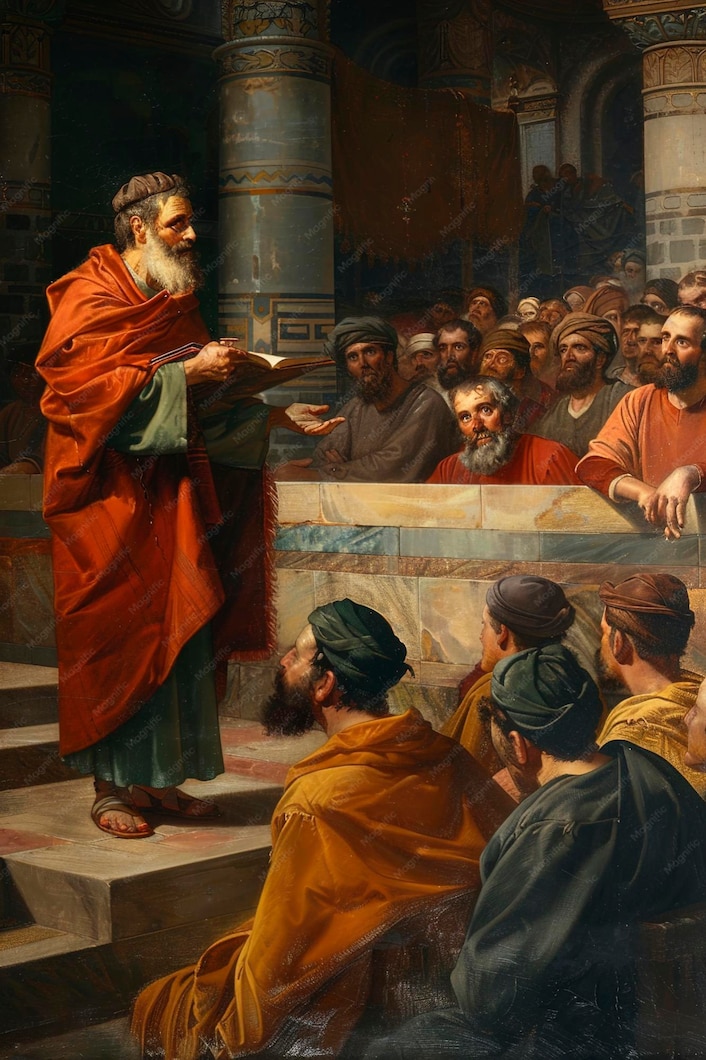
Paul teaches the Corinthians that I Follow The Example of Christ, and it means more than remembering traditions or gathering together. Our faith should be reflected in how we honor God, respect one another, and share in fellowship. This chapter addresses head coverings, divisions within the church, and the Lord’s Supper, reminding us that our actions should reflect Christ’s example and the love He demonstrated through His sacrifice.
Obedience, God’s Covenant, Grace, Head, Eternity, Envy, Faith, Eat, Serve, Redemption Plan, Jesus Christ
📖 1 Corinthians 11:1 (NIV)
“11 1 Follow my example, as I follow the example of Christ.”
In 1 Corinthians 11, Paul addresses the behavior and relationships of believers when they gather to worship.
He begins by encouraging them to follow his example as he follows Christ’s example.
He then discusses headship, worship practices, and the responsibilities of men and women within the church.
These instructions reflect the customs and circumstances of the Corinthian congregation, while reminding believers that worship should honor God rather than become an occasion for pride or conflict.
Paul then confronts a serious problem: their gatherings have become divided.
Some eat plentifully while others go hungry, humiliating those who have little.
Their behavior contradicts the meaning of the Lord’s Supper, which remembers Jesus giving His body and shedding His blood for humanity.
Paul reminds them of the night Jesus was betrayed.
Jesus took bread, gave thanks, and shared it with His disciples.
He also shared the cup as a sign of the new covenant in His blood.
Whenever believers partake of the bread and cup, they proclaim the Lord’s death until He comes.
Paul calls the Corinthians to examine themselves and recognize the sacred meaning of this remembrance.
Their gathering should reflect unity, humility, gratitude, and love—not selfishness or division.
The chapter closes with a practical instruction: when believers come together to eat, they should wait for one another and share with consideration.
📖 1 Corinthians 11:1-4 (NIV)
“11 1 Follow my example, as I follow the example of Christ.”
“2 I praise you for remembering me in everything and for holding to the traditions just as I passed them on to you. 3 But I want you to realize that the head of every man is Christ, and the head of the woman is man,[a] and the head of Christ is God. 4 Every man who prays or prophesies with his head covered dishonors his head.”
Paul tells the Corinthians to follow his example as he follows the example of Christ.
Paul does not ask believers to place him above Jesus; he points them toward the One he serves.
We all learn by observing others. Parents, teachers, friends, church members, and leaders can influence the way we live.
But every human example must be measured against the teachings and character of Jesus Christ.
Paul also commends the Corinthians for remembering what he taught them.
Holding to sound teaching matters, but traditions should help people honor God rather than become a substitute for genuine faith.
We should strive to be good examples while remembering that we are imperfect.
We can encourage others through our actions, admit our mistakes, and keep returning to Jesus Christ as our example.
📖 1 Corinthians 11:5-8 (NIV)
“5 But every woman who prays or prophesies with her head uncovered dishonors her head—it is the same as having her head shaved. 6 For if a woman does not cover her head, she might as well have her hair cut off; but if it is a disgrace for a woman to have her hair cut off or her head shaved, then she should cover her head.”
“7 A man ought not to cover his head,[b] since he is the image and glory of God; but woman is the glory of man. 8 For man did not come from woman, but woman from man;”
Paul describes a relationship of headship involving Christ, men, women, and God.
He then discusses head coverings during prayer and prophecy, practices that carried meaning in the Corinthian community.
This passage has been interpreted differently across Christian traditions, particularly concerning whether head coverings remain a required practice today.
We should study the passage carefully rather than assume that every cultural practice must be applied identically in every setting.
Paul’s concern includes how believers present themselves during worship and whether their behavior honors the Lord.
Worship should not become a contest over appearance, status, or personal preference.
We should seek to honor God, respect one another, and understand Scripture in its historical and spiritual context.
📖 1 Corinthians 11:9-12 (NIV)
“9 neither was man created for woman, but woman for man. 10 It is for this reason that a woman ought to have authority over her own[c] head, because of the angels. 11 Nevertheless, in the Lord woman is not independent of man, nor is man independent of woman. 12 For as woman came from man, so also man is born of woman. But everything comes from God.”
Paul discusses humanity’s creation and the relationship between men and women.
He refers to the biblical account in which woman was created from man, but he also makes an essential point: in the Lord, neither man nor woman is independent of the other.
Every man is born of a woman, and both men and women ultimately depend on God.
These verses should lead us toward humility, not pride or the mistreatment of others.
The passage recognizes relationships and distinctions while reminding the church that everyone stands within God’s greater purpose.
We should not use our position, gender, abilities, or responsibilities to make others feel inferior.
God is the source of life, and we need one another.
Faith should lead us to serve with humility and recognize the value of others before Him.
📖 1 Corinthians 11:13-16 (NIV)
“13 Judge for yourselves: Is it proper for a woman to pray to God with her head uncovered? 14 Does not the very nature of things teach you that if a man has long hair, it is a disgrace to him, 15 but that if a woman has long hair, it is her glory? For long hair is given to her as a covering. 16 If anyone wants to be contentious about this, we have no other practice—nor do the churches of God.”
Paul asks the Corinthians to consider the appropriateness of their worship practices within their community.
Hair length and head coverings carried social meaning in that historical setting.
Some churches maintain particular head-covering practices, while others understand the details as addressing cultural expectations in Corinth.
We should acknowledge these differences without losing sight of the passage’s larger concern: worship should be conducted with reverence and consideration for others.
Outward appearance can communicate respect, but appearance alone cannot prove the condition of the heart.
God calls us to examine not only what people see but also the attitudes behind our choices.
We should approach God with humility and avoid turning differences in appearance into reasons for division.
Let our worship reflect sincere faith, respect, and a desire to honor God.
📖 1 Corinthians 11:17-20 (NIV)
“17 In the following directives I have no praise for you, for your meetings do more harm than good. 18 In the first place, I hear that when you come together as a church, there are divisions among you, and to some extent I believe it. 19 No doubt there have to be differences among you to show which of you have God’s approval. 20 So then, when you come together, it is not the Lord’s Supper you eat,”
Paul strongly corrects the Corinthians because their gatherings are doing more harm than good.
Instead of sharing fellowship, they are allowing divisions to grow.
Some eat their own meals while others remain hungry, and those with less are humiliated.
A church gathering should not become a place where wealth, influence, or social standing determine who receives respect.
People should not be made to feel unwanted because they have little to contribute materially.
We must look beyond ourselves.
When we gather with other believers, we should notice who is being overlooked, who needs encouragement, and whether our actions are building unity or creating division.
Faith becomes visible when we treat others with dignity.
📖 1 Corinthians 11:21-24 (NIV)
“21 for when you are eating, some of you go ahead with your own private suppers. As a result, one person remains hungry and another gets drunk. 22 Don’t you have homes to eat and drink in? Or do you despise the church of God by humiliating those who have nothing? What shall I say to you? Shall I praise you? Certainly not in this matter!”
“23 For I received from the Lord what I also passed on to you: The Lord Jesus, on the night he was betrayed, took bread, 24 and when he had given thanks, he broke it and said, “This is my body, which is for you; do this in remembrance of me.”
Paul reminds the Corinthians of what Jesus did on the night He was betrayed.
Jesus took bread, gave thanks, broke it, and told His disciples to remember Him.
He then took the cup and identified it with the new covenant in His blood.
The Lord’s Supper directs our attention to the sacrifice Jesus made for humanity.
The bread and cup are not merely items shared during a religious gathering; they proclaim the meaning of His death and the hope believers have in Him.
The remembrance connects the sacrifice of the past with the promise of Christ’s return and the hope of eternity.
We should never allow the Lord’s Supper to become an empty routine.
We remember Jesus with gratitude, recognize the cost of our redemption, and renew our commitment to live according to His teachings.
Our hope rests in Jesus Christ and God’s promise of salvation.
📖 1 Corinthians 11:25-28 (NIV)
“25 In the same way, after supper he took the cup, saying, “This cup is the new covenant in my blood; do this, whenever you drink it, in remembrance of me.” 26 For whenever you eat this bread and drink this cup, you proclaim the Lord’s death until he comes.”
“27 So then, whoever eats the bread or drinks the cup of the Lord in an unworthy manner will be guilty of sinning against the body and blood of the Lord. 28 Everyone ought to examine themselves before they eat of the bread and drink from the cup.”
Paul warns believers against taking part in the Lord’s Supper in an unworthy manner.
He tells them to examine themselves and discern the body of Christ rather than participate carelessly.
This is not a call for people to pretend they are perfect before approaching God.
If perfection were required, none of us could stand before Him.
Instead, Paul challenges believers to take the meaning of Christ’s sacrifice seriously and confront attitudes and actions that contradict it.
In Corinth, selfishness and division had turned a sacred remembrance into an occasion for humiliating others.
Paul describes the Lord’s discipline as a warning intended to prevent final condemnation with the world.
We should be careful not to assume that every illness or hardship is a direct punishment from God; this passage specifically addresses the circumstances of the Corinthian church.
Before participating in the Lord’s Supper, we should examine our hearts, confess wrongdoing, seek reconciliation where possible, and remember the grace offered through Jesus Christ.
Self-examination should lead us toward repentance and renewed faith, not despair.
📖 1 Corinthians 11:29-32 (NIV)
“29 For those who eat and drink without discerning the body of Christ eat and drink judgment on themselves. 30 That is why many among you are weak and sick, and a number of you have fallen asleep. 31 But if we were more discerning with regard to ourselves, we would not come under such judgment. 32 Nevertheless, when we are judged in this way by the Lord, we are being disciplined so that we will not be finally condemned with the world.”
Paul ends with a simple but powerful instruction: when believers gather to eat, they should wait for one another.
Anyone who is hungry should eat beforehand so the gathering does not become an occasion for selfishness and judgment.
The issue is not merely food.
Some Corinthians were satisfying their own desires while disregarding the needs of others.
Sharing a meal can express welcome, friendship, and belonging.
When people are excluded or left hungry while others have more than enough, the gathering no longer reflects the love of Christ.
We should consider others before ourselves.
Whether sharing food, time, resources, or encouragement, we can make room for people who might otherwise be overlooked.
We honor Jesus when our fellowship reflects generosity and care.
📖 1 Corinthians 11:33-34 (NIV)
“33 So then, my brothers and sisters, when you gather to eat, you should all eat together. 34 Anyone who is hungry should eat something at home, so that when you meet together it may not result in judgment.”
And when I come I will give further directions..
The chapter begins with Paul pointing to the example of Christ and ends with instructions about how believers should treat one another.
Between those points, Paul addresses worship, relationships, the Lord’s Supper, self-examination, and fellowship.
The connection is clear: remembering Jesus Christ should change how we live.
His sacrifice reveals the depth of God’s love, while His example calls us away from selfishness and toward humble service.
We are not perfect, and our gatherings will not always be free from disagreement.
But we can learn to listen, correct our mistakes, show respect, and place the good of others ahead of our desire for recognition or comfort.
Following Jesus is more than knowing Scripture or participating in religious traditions.
It means allowing His teachings to shape our choices, relationships, worship, and treatment of others.
God’s Covenant reveals His continuing purpose to bring humanity into a restored relationship with Him.
In this chapter, Paul points to the new covenant established through the blood of Jesus Christ.
The Lord’s Supper reminds believers that redemption is not achieved through human pride, wealth, status, or outward appearance. It rests on what Jesus has done.
God’s promises call us to remember His faithfulness and respond with sincere faith.
The bread and cup proclaim Christ’s death until He comes, keeping both His sacrifice and the hope of His return before us.
God’s Covenant also shapes how believers live together.
We cannot honor the meaning of Christ’s sacrifice while deliberately humiliating others or treating their needs as unimportant.
We are called to remember Jesus with gratitude and demonstrate His love through humility, fellowship, and service.
First Corinthians 11 teaches us that our faith should be visible in our actions.
We should follow the example of Jesus Christ, approach worship with understanding, and treat others with dignity.
Traditions can help us remember important truths, but they must never become excuses for pride or division.
Paul’s correction of the Corinthians reminds us to examine ourselves honestly.
We all have room to grow, and recognizing our shortcomings is part of learning to live faithfully.
The Lord’s Supper invites us to remember Jesus’ sacrifice, appreciate the grace offered through Him, and consider whether our behavior reflects His love.
We should also remember that unity does not require everyone to look, think, or practice every tradition identically.
It calls us to put Christ first, study God’s Word carefully, and treat one another with respect.
When we gather, let us make room for others, share what we have, and seek the good of the whole community.
Our faith grows when understanding leads to action and remembrance leads to a changed life.
The heart of 1 Corinthians 11 is the example and sacrifice of Jesus Christ.
Paul directs believers toward Christ because Jesus shows us how to live in obedience to God and love others without making ourselves the center of attention.
At the Lord’s Supper, the bread reminds believers of His body given for them, and the cup points to the new covenant in His blood.
His death is the foundation of the redemption plan, and His promised return gives believers hope beyond this present life.
We cannot earn eternal life by perfect behavior, and none of us can claim to be without fault.
We need God’s grace and the salvation made known through Jesus Christ.
Yet genuine faith should lead us to grow, repent, serve, and care for others.
As we remember Christ, may our worship become more sincere, our fellowship more generous, and our choices more faithful.
Let us follow His example, proclaim His sacrifice, and live with the hope of eternity.
All glory belongs to God through Jesus Christ.
Amen.