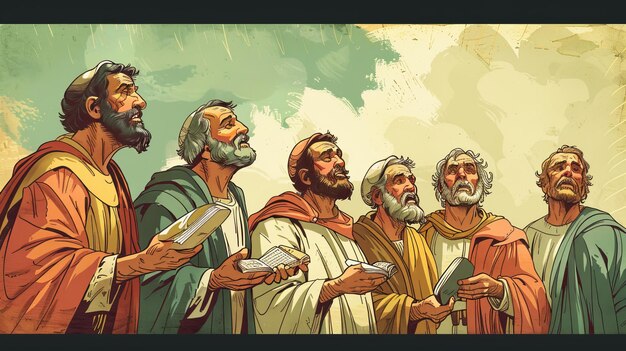
Faith is made to show we are Infants In Christ. In 1 Corinthians 3, Paul challenges believers to grow beyond jealousy, quarrels, and pride in human leaders. He reminds them that people may plant and water the seeds of faith, but God makes them grow. Jesus Christ is the only foundation for our lives, and what we build upon Him matters. God calls us to grow in wisdom, serve faithfully, and remember that we belong to Christ.
Obedience, God’s Covenant, Grace, Wisdom, Saved, Sin, Foundation, Makes Things Grow, Redemption Plan, Jesus Christ
📖 Corinthians 3:1 (NIV)
“3 Brothers and sisters, I could not address you as people who live by the Spirit but as people who are still worldly—mere infants in Christ.“
Paul begins by explaining that the believers in Corinth are still like infants in Christ.
Although they have received the message of the gospel, their jealousy and disagreements show that they have not yet matured in the way they treat one another.
Some claim to follow Paul, while others follow Apollos.
Paul reminds them that neither man is the source of their salvation.
They are servants carrying out the work God has given them, while God Himself makes faith grow.
Paul then describes believers as God’s field and God’s building.
He laid the foundation through his ministry, but that foundation is Jesus Christ.
Others continue building, and each person must take care how the work is done.
One day, the quality of that work will be revealed.
What is built with lasting value will endure, while work without lasting value will be lost.
Paul also reminds the church that together they are God’s temple and that God’s Spirit dwells among them.
They must not destroy the unity and holiness of what belongs to God. Finally, Paul warns against boasting in human wisdom or leaders.
Believers belong to Christ, and Christ belongs to God.
Their identity and hope must rest in Him, not in human pride.
📖 Corinthians 3:1-4 (NIV)
“3 Brothers and sisters, I could not address you as people who live by the Spirit but as people who are still worldly—mere infants in Christ. 2 I gave you milk, not solid food, for you were not yet ready for it. Indeed, you are still not ready. 3 You are still worldly. For since there is jealousy and quarreling among you, are you not worldly? Are you not acting like mere humans? 4 For when one says, “I follow Paul,” and another, “I follow Apollos,” are you not mere human beings?”
Paul speaks honestly to the believers in Corinth.
They have begun their journey with Christ, but their jealousy, arguments, and divisions show that they still need to grow.
They are behaving according to worldly attitudes rather than allowing their faith to shape their relationships.
Spiritual growth is more than gaining knowledge.
Maturity becomes visible when we learn to treat others with patience, humility, and love.
Paul’s comparison to milk and solid food reminds us that growth takes time.
New believers need foundational teaching, while growing believers must learn to apply God’s Word more deeply. Neither stage is a reason for pride.
We all remain students who need God’s guidance.
When disagreements arise, we should examine our own hearts before blaming others.
Are we seeking truth, or are we trying to win? Are we building peace, or adding to division?
Obedience includes how we treat one another.
God calls us to grow beyond jealousy and pride so that our lives increasingly reflect Jesus Christ.
📖 Corinthians 3:5-8 (NIV)
“5 What, after all, is Apollos? And what is Paul? Only servants, through whom you came to believe—as the Lord has assigned to each his task. 6 I planted the seed, Apollos watered it, but God has been making it grow. 7 So neither the one who plants nor the one who waters is anything, but only God, who makes things grow. 8 The one who plants and the one who waters have one purpose, and they will each be rewarded according to their own labor.”
Paul explains that he planted the seed of faith and Apollos watered it, but God made it grow.
Each servant had a role, yet neither could take credit for the life and growth that belonged to God.
This is an important lesson for anyone helping others understand God’s Word.
But we cannot force another person to believe or control how God’s work develops in their heart.
Paul describes believers as God’s field and God’s building.
This means our lives are not simply personal projects.
We belong to God, and we are called to contribute to His work with the gifts and opportunities He provides.
The same principle applies to our own growth.
We can make time to study Scripture, practice obedience, and learn from our mistakes, but we should remain thankful for God’s grace and guidance.
Growth is not a reason to boast over someone who is still learning.
We are responsible for faithfully doing the work God gives us, while recognizing that He is the One who makes things grow.
Every believer has a role, and all glory belongs to God.
📖 Corinthians 3:9-12 (NIV)
“9 For we are co-workers in God’s service; you are God’s field, God’s building.”
“10 By the grace God has given me, I laid a foundation as a wise builder, and someone else is building on it. But each one should build with care. 11 For no one can lay any foundation other than the one already laid, which is Jesus Christ. 12 If anyone builds on this foundation using gold, silver, costly stones, wood, hay or straw, “
Paul describes himself as a builder who laid a foundation through the grace God gave him.
He then gives a warning to everyone who continues the work: build with care.
The foundation has already been established, and no one can replace it with another.
That foundation is Jesus Christ.
People may build their lives around popularity, wealth, success, human leaders, or their own understanding.
These things may have a place in everyday life, but none can replace Jesus as the foundation of our faith and hope for salvation.
Building on Christ means taking His words seriously.
We learn from His example, trust what He has done for us, and seek to live according to His teaching.
We recognize that salvation is a gift of God’s grace, not something we can earn through achievements or good works.
A strong foundation does not mean that life will never bring hardship.
It means our hope rests on the One who remains faithful when circumstances change.
We must build our faith on Jesus Christ, not on human pride or temporary success.
Every part of our spiritual life should be connected to Him and to the truth of God’s Word.
📖 Corinthians 3:13-16 (NIV)
“13 their work will be shown for what it is, because the Day will bring it to light. It will be revealed with fire, and the fire will test the quality of each person’s work. 14 If what has been built survives, the builder will receive a reward. 15 If it is burned up, the builder will suffer loss but yet will be saved—even though only as one escaping through the flames.”
“16 Don’t you know that you yourselves are God’s temple and that God’s Spirit dwells in your midst?”
Paul describes different building materials: gold, silver, costly stones, wood, hay, and straw.
These materials represent the differing quality of what people build on the foundation of Jesus Christ.
The Day of judgment will reveal the true value of each person’s work.
Our outward appearance may impress people, but God sees what lies beneath it.
Paul teaches that work which survives the test will receive a reward, while work that is burned up will result in loss.
He also explains that a person may suffer the loss of their work while still being saved.
This passage distinguishes the value of our service from the foundation of salvation, which is Jesus Christ.
It is not permission to live carelessly; it is a warning to build wisely.
We should therefore ask what our choices are producing.
Are we helping others grow in faith?
Are we treating people fairly?
And are we using our opportunities to serve God and others?
We cannot hide the true quality of our lives from God.
Build with care, serve sincerely, and remember that our actions matter even though salvation rests on Jesus Christ rather than our ability to earn it.
📖 Corinthians 3:17-20 (NIV)
“17 If anyone destroys God’s temple, God will destroy that person; for God’s temple is sacred, and you together are that temple.”
“18 Do not deceive yourselves. If any of you think you are wise by the standards of this age, you should become “fools” so that you may become wise. 19 For the wisdom of this world is foolishness in God’s sight. As it is written: “He catches the wise in their craftiness”[a]; 20 and again, “The Lord knows that the thoughts of the wise are futile.”[b] “
Paul reminds the Corinthians that they together are God’s temple and that God’s Spirit dwells among them.
The divisions and jealousy Paul addressed earlier were not small matters.
When believers tear one another down, create destructive divisions, or deliberately damage the community of faith, they harm something sacred to God.
This teaching calls us to consider how we use our words, influence, and choices.
Do we encourage others, or do we discourage them?
And do we work toward unity in truth, or do we use our differences to create hostility?
Do our actions help people see the character of Jesus Christ?
Unity does not require pretending that wrongdoing is acceptable.
Sometimes correction is necessary.
But correction should seek truth and restoration rather than personal revenge or the destruction of another person.
God’s presence among His people should lead us to humility and reverence.
We must take seriously our responsibility to care for the community God has brought together.
God’s people are precious to Him.
We should protect the unity and holiness of the church by practicing truth, love, accountability, and respect for what belongs to God.
📖 Corinthians 3:21-23 (NIV)
“21 So then, no more boasting about human leaders! All things are yours, 22 whether Paul or Apollos or Cephas[c] or the world or life or death or the present or the future—all are yours, 23 and you are of Christ, and Christ is of God.”
Paul closes the chapter by challenging worldly ideas of wisdom.
Someone who believes they are wise by the standards of the age must be willing to recognize the limits of human understanding.
God sees through pride, and the thoughts people consider impressive may ultimately prove futile.
Paul therefore tells the believers to stop boasting about human leaders.
Paul, Apollos, and Cephas were servants, not the owners of the gospel.
Their different gifts served the same purpose, and none deserved to take the place of Jesus Christ.
Paul then explains that believers belong to Christ, and Christ is of God.
This gives the church a stronger identity than any human name or following.
We are not called to build our faith around personalities or compete over who has the most impressive teacher.
This also teaches us humility in our own lives.
Whatever wisdom, ability, opportunity, or success we receive should lead us to gratitude rather than pride.
We can learn from others without making them the foundation of our faith.
True wisdom begins by recognizing that we belong to God through Jesus Christ.
We should honor faithful servants, but our trust, worship, and confidence belong to God and His Son.
God’s purpose has never depended on human greatness.
Throughout Scripture, He works through imperfect people, gives them responsibilities, and calls them to trust His promises.
In Corinth, Paul and Apollos served in different ways, but God was the One who made the church grow.
The foundation of God’s Redemption Plan is Jesus Christ.
His death and resurrection provide the way of salvation, and no human leader can replace what He has done.
God calls believers to build their lives on Christ, grow in faith, and serve with care.
God also takes seriously how His people treat one another.
The church belongs to Him, and its members are called to protect its unity, practice holiness, and encourage spiritual growth.
Our hope is not in our perfection.
We are imperfect people who need God’s grace and mercy.
His faithfulness gives us reason to keep learning, correcting our mistakes, and following Jesus Christ.
God’s Covenant points us toward the One who makes our faith grow and holds our future in His hands.
First Corinthians 3 teaches us that spiritual maturity is revealed by the way we live.
Jealousy, quarrels, pride, and the desire to elevate human leaders can keep us from growing as God intends.
We must be willing to examine our attitudes and allow Scripture to correct us.
We also learn that everyone has a role.
Some plant seeds, others water them, and others continue building.
We should respect the work of others without competing for recognition.
God gives different responsibilities, and He deserves the glory for the growth that follows.
Our own lives are also being built.
Every choice gives us an opportunity to practice truth, kindness, responsibility, and obedience.
We should ask whether our actions will produce something that honors God and helps others.
Most importantly, Jesus Christ must remain our foundation.
We cannot earn salvation by being perfect builders, but we can respond to God’s grace by living faithfully.
We are still learning, and God gives us opportunities to grow in wisdom, strengthen our faith, and serve Him better.
From the beginning of the Bible, God’s Redemption Plan reveals His desire to bring humanity back into a right relationship with Him.
Sin brought separation, but God did not abandon His purpose.
Through Jesus Christ, God provided the foundation upon which our hope for forgiveness and eternal life rests.
First Corinthians 3 reminds us that no apostle, teacher, or human achievement can take the place of Christ.
Paul planted, Apollos watered, and God made things grow.
In the same way, people may help us understand Scripture, but Jesus Christ is the One at the center of our salvation.
Jesus lived without sin, gave His life for humanity, and rose again.
Through faith in Him, we receive God’s grace and the hope of eternal life.
Our good works do not replace His sacrifice; they become a response to the grace we have received.
As we grow from spiritual infancy toward maturity, we learn to build on Christ, serve others, and care for the people God places around us.
We will remain imperfect, but we can keep learning and following His Word.
We are God’s students, learning to build our lives on Jesus Christ.
God makes faith grow, Jesus Christ is our foundation, and all glory belongs to God.
Amen.