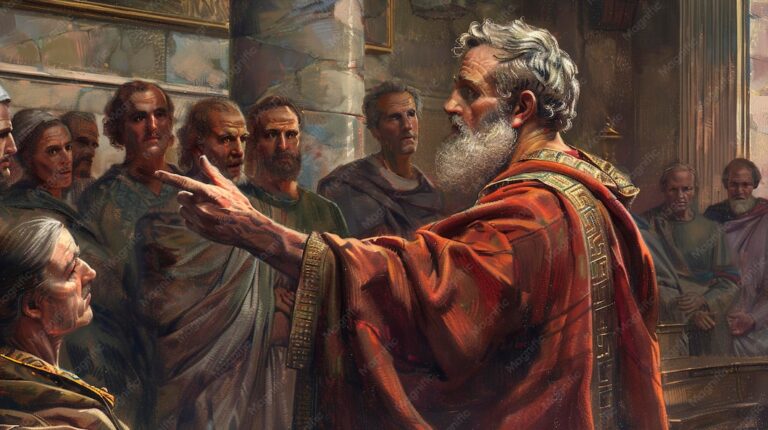
Peter A Witness Of Christs Sufferings, closes his letter by speaking directly to leaders and believers about how to live faithfully while waiting for Christ’s return. He calls leaders to shepherd God’s people through service and example, calls everyone to humility, and reminds suffering believers that they are not alone. God sees their struggles, cares for them, and promises to restore them through His grace.
Obedience • God’s Covenant • Eternity • Faith • Suffering • Humility • Kindness • Serving • Redemption Plan • Jesus Christ
📖 1 peter 5:1 (NIV)
“5 To the elders among you, I appeal as a fellow elder and a witness of Christ’s sufferings who also will share in the glory to be revealed: “
Peter identifies himself as a fellow elder and a witness of Christ’s sufferings. He knows personally what it means to follow Jesus through difficult circumstances.
He begins with those responsible for caring for God’s people.
Peter tells elders to shepherd God’s flock willingly, not because they are forced to do it. They are not to pursue dishonest gain or use authority to control others. Instead, they are to serve and become examples to the people God has entrusted to them.
The reason is greater than earthly recognition.
When the Chief Shepherd appears, faithful servants will receive a crown of glory that will never fade.
Peter then addresses younger believers and calls everyone to practice humility toward one another.
God opposes pride but gives grace to the humble.
Peter encourages believers to place themselves under God’s mighty hand and trust Him to lift them up at the proper time.
He then gives a beautiful invitation:
Cast all your anxiety on Him because He cares for you.
But Peter also warns believers to remain alert.
The devil prowls like a roaring lion, looking for someone to devour.
The answer is not fear.
It is resistance.
Believers are to stand firm in faith, remembering that Christians throughout the world are experiencing suffering as well.
Then Peter gives them hope.
The God of all grace has called them to eternal glory in Christ. After suffering for a little while, God Himself will restore, strengthen, and establish them.
Peter’s final message is simple:
Stand fast in the true grace of God.
📖 1 peter 5:2–3 (NIV)
“2 Be shepherds of God’s flock that is under your care, watching over them—not because you must, but because you are willing, as God wants you to be; not pursuing dishonest gain, but eager to serve; 3 not lording it over those entrusted to you, but being examples to the flock.’
Peter gives leaders an important responsibility: shepherd God’s flock.
A shepherd does not own the sheep.
The sheep belong to God.
That changes the way spiritual leadership should work.
Peter warns leaders not to serve because they are forced to, not to seek dishonest gain, and not to control the people entrusted to them.
Instead, they should willingly serve and become examples.
Leadership in God’s kingdom is not about demanding importance.
It is about accepting responsibility.
The greatest leaders are willing to serve.
And Peter points toward the ultimate Shepherd—the One who will return and reward those who faithfully served His people.
Christ is the Chief Shepherd, and every earthly shepherd serves under Him.
📖 1 peter 5:4–5 (NIV)
“4 And when the Chief Shepherd appears, you will receive the crown of glory that will never fade away.”
“5 In the same way, you who are younger, submit yourselves to your elders. All of you, clothe yourselves with humility toward one another, because,
“God opposes the proud
but shows favor to the humble.”[a]
Peter tells believers to clothe themselves with humility.
That means humility should become part of who we are.
Pride says, “I can do this myself.”
Humility says, “I need God.”
Peter reminds us that God opposes the proud but shows favor to the humble.
Humility does not mean believing we have no value.
It means recognizing that our value and strength ultimately come from God.
Peter says to humble ourselves under God’s mighty hand and trust Him to lift us up in due time.
God’s timing may not be our timing.
But faith allows us to wait.
Humility trusts God with both the timing and the outcome.
📖 1 peter 5:6–7 (NIV)
“6 Humble yourselves, therefore, under God’s mighty hand, that he may lift you up in due time. 7 Cast all your anxiety on him because he cares for you.”
Peter gives believers one of the most comforting instructions in Scripture:
Cast all your anxiety on Him because He cares for you.
Peter does not say that believers will never experience anxiety.
He tells them what to do with it.
Give it to God.
The burdens we carry can become overwhelming when we believe everything depends upon us.
Peter reminds us that God cares.
He is not distant from our struggles.
He knows what we are carrying.
God sees the suffering.
God understands the fear.
And He invites us to place those burdens in His hands.
Faith does not mean pretending problems do not exist.
Faith means trusting God with the problems we cannot control.
📖 1 peter 5:8–9 (NIV)
“8 Be alert and of sober mind. Your enemy the devil prowls around like a roaring lion looking for someone to devour. “9 Resist him, standing firm in the faith, because you know that the family of believers throughout the world is undergoing the same kind of sufferings.”
Peter warns believers to remain alert and sober-minded because the devil prowls like a roaring lion.
The warning is serious.
Spiritual warfare is real, and Christians should not become careless.
But Peter does not tell believers to live in terror.
He tells them to resist the devil and stand firm in the faith.
There is strength in knowing that we are not alone.
Peter reminds believers that Christians throughout the world are experiencing similar sufferings.
Your struggle does not mean God has abandoned you.
Other believers are standing through trials too.
The enemy wants isolation.
God gives us a family.
Stand firm in faith, remain alert, and remember that the people of God are standing together.
📖 1 peter 5:10–11 (NIV)
“10 And the God of all grace, who called you to his eternal glory in Christ, after you have suffered a little while, will himself restore you and make you strong, firm and steadfast. 11 To him be the power for ever and ever. Amen.”
Peter’s message does not end with suffering.
It ends with restoration.
The God of all grace has called believers to His eternal glory in Christ.
Peter acknowledges that suffering may last for a little while.
But “a little while” is not eternity.
That distinction matters.
Our present suffering has an expiration.
God’s glory does not.
Peter says God Himself will restore, strengthen, make firm, and establish His people.
This is God’s promise.
He does not simply watch His people suffer from a distance.
He works through their trials and ultimately brings them into His eternal purposes.
Suffering may be part of the journey, but restoration is part of God’s promise.
📖 1 peter 5:12–14 (NIV)
“12 With the help of Silas,[b] whom I regard as a faithful brother, I have written to you briefly, encouraging you and testifying that this is the true grace of God. Stand fast in it.”
“13 She who is in Babylon, chosen together with you, sends you her greetings, and so does my son Mark. 14 Greet one another with a kiss of love.”
Peace to all of you who are in Christ.
Peter closes by encouraging believers to stand firm in God’s grace.
This is the message he has carried throughout the letter.
God’s Grace saves.
God’s Grace strengthens.
Grace that teaches.
Grace that sustains.
Mercy and Grace carries God’s people through suffering.
Peter had witnessed Christ’s suffering.
He understood that following Jesus could be costly.
But he also knew where the story was going.
Glory was coming.
Peter’s final words are therefore not words of defeat.
They are words of encouragement.
Stand firm.
Remain faithful.
Trust God.
Serve others.
Stay humble.
Resist the enemy.
And never forget that God’s grace is greater than the trial.
Peter’s final chapter rests upon the faithfulness of God.
The Lord God called His people.
God gave them grace.
God sustained them through suffering.
And God promised eternal glory in Christ.
The covenant does not depend upon our circumstances.
Leaders may fail.
People may disappoint us.
The enemy may attack.
Suffering may come.
Anxiety may become heavy.
But God remains faithful.
Peter says that after suffering for a little while, God Himself will restore you and make you strong, firm and steadfast.
That is the promise.
Our earthly circumstances are temporary.
God’s covenant is eternal.
The God who called us is the God who sustains us, restores us, and brings us toward His eternal glory.
God’s people need leaders who serve rather than control.
Spiritual leadership requires humility and responsibility.
We should lead by example.
Humility allows God to work through us.
God’s timing is worth trusting.
We can give our anxieties to God because He cares for us.
We must remain alert to spiritual danger.
The devil should be resisted, not feared.
Believers around the world are connected through faith and suffering.
Suffering does not mean God has abandoned us.
God’s grace sustains us through difficult seasons.
Our present suffering is temporary compared with eternal glory.
God promises to restore and strengthen His people.
We are called to stand fast in the true grace of God.
Peter begins this chapter as a witness of Christ’s sufferings and ends by pointing believers toward Christ’s eternal glory.
Jesus is the Chief Shepherd.
Earthly leaders serve under Him.
He is the One who suffered.
Jesus is the One through whom God’s grace reaches us.
Jesus is the One who calls us to eternal glory.
And Jesus is the One who will ultimately return.
Peter’s message is not that believers will never suffer.
It is that suffering does not have the final word.
The enemy may attack.
The world may reject us.
Anxiety may burden us.
But Christ remains our Shepherd.
And God’s grace remains sufficient.
The suffering is temporary. The restoration is coming. The glory is eternal.
Stand firm in the grace of God and keep your eyes on Jesus Christ, the Chief Shepherd of His people.