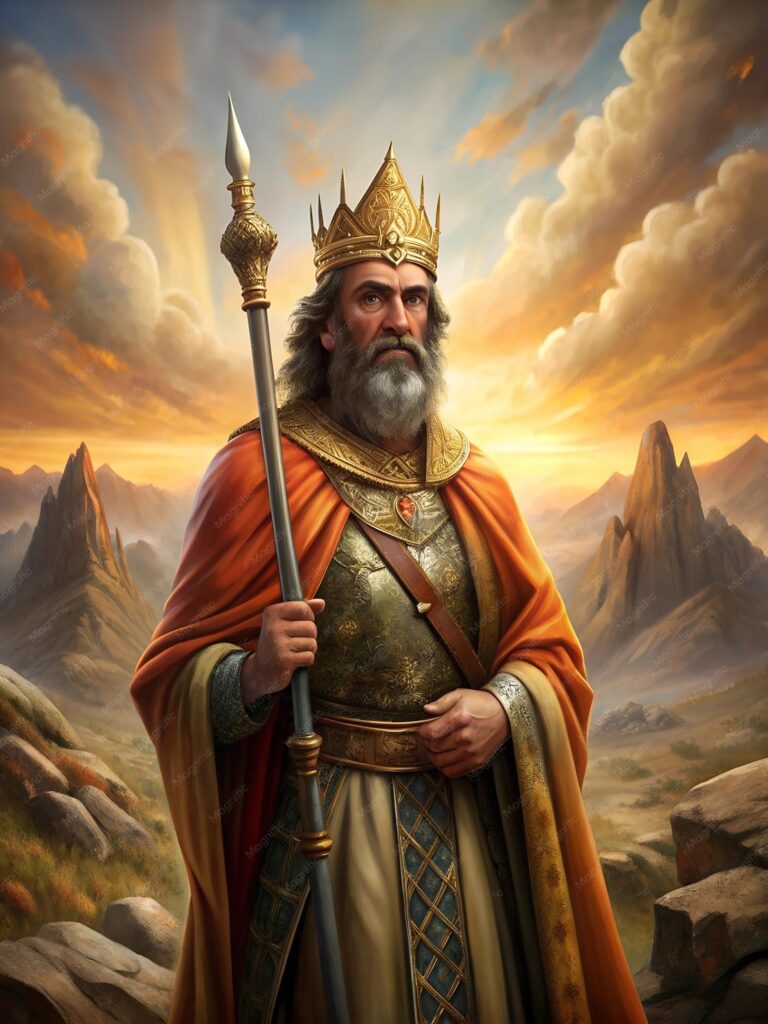
The closing chapter of 1 Samuel is both tragic and sobering. The Israelites Fled, Israel’s first king reached the end of his reign exactly as God had foretold. Yet even in judgment, God’s covenant continued moving forward. While Saul’s kingdom ended on Mount Gilboa, God’s eternal plan of redemption remained alive through the king He had already chosen.
Obedience, God’s Covenant, Judgment, Faith, Response, Redemption Plan, Jesus Christ
📖 1 Samuel 31:1–2 (NIV)
“31 Now the Philistines fought against Israel; the Israelites fled before them, and many fell dead on Mount Gilboa. 2 The Philistines were in hot pursuit of Saul and his sons, and they killed his sons Jonathan, Abinadab and Malki-Shua.“
📖 1 Samuel 31:3–5 (NIV)
“3 The fighting grew fierce around Saul, and when the archers overtook him, they wounded him critically.”
“4 Saul said to his armor-bearer, “Draw your sword and run me through, or these uncircumcised fellows will come and run me through and abuse me.”
But his armor-bearer was terrified and would not do it; so Saul took his own sword and fell on it. 5 When the armor-bearer saw that Saul was dead, he too fell on his sword and died with him.”
The Israelite army fled.
Many soldiers were killed, including Saul’s sons Jonathan, Abinadab, and Malki-Shua.
Soon the battle closed in around Saul himself.
Badly wounded by the Philistine archers, Saul asked his armor-bearer to end his life before the enemy captured him.
When the armor-bearer refused, Saul fell upon his own sword.
His armor-bearer followed, and both died that same day.
With Saul’s death, Israel’s first kingdom came to an end just as the Lord had declared through Samuel.
The consequences of years of disobedience had reached their final chapter.
📖 1 Samuel 31:6–10 (NIV)
“6 So Saul and his three sons and his armor-bearer and all his men died together that same day.”
“7 When the Israelites along the valley and those across the Jordan saw that the Israelite army had fled and that Saul and his sons had died, they abandoned their towns and fled. And the Philistines came and occupied them.”
“8 The next day, when the Philistines came to strip the dead, they found Saul and his three sons fallen on Mount Gilboa. 9 They cut off his head and stripped off his armor, and they sent messengers throughout the land of the Philistines to proclaim the news in the temple of their idols and among their people. 10 They put his armor in the temple of the Ashtoreths and fastened his body to the wall of Beth Shan.”
They dishonored Saul’s body by removing his armor, displaying it in the temple of their idols, and fastening his body to the wall of Beth Shan.
From a human perspective, it appeared that Israel had been completely defeated.
Yet appearances did not change God’s promises.
Although Saul’s reign ended in judgment, God’s covenant had already moved to David.
God’s plan was never dependent upon one man.
His Redemption Plan continued exactly as He intended.
📖 1 Samuel 31:11–13 (NIV)
“11 When the people of Jabesh Gilead heard what the Philistines had done to Saul, 12 all their valiant men marched through the night to Beth Shan. They took down the bodies of Saul and his sons from the wall of Beth Shan and went to Jabesh, where they burned them. 13 Then they took their bones and buried them under a tamarisk tree at Jabesh, and they fasted seven days.”
They marched through the night, recovered the bodies of Saul and his sons, and brought them home.
There they honored them with burial beneath a tamarisk tree.
They fasted for seven days in mourning.
Their actions remind us that gratitude and honor should not disappear because someone has failed.
They remembered Saul’s acts of courage while recognizing that God alone is the final Judge.
The book of 1 Samuel begins with Hannah praying for a son.
It ends with the death of Israel’s first king.
Between those two events, God demonstrated that He alone raises leaders and removes them according to His perfect will.
Saul’s kingdom ended.
God’s covenant did not.
David was already being prepared.
The promised King was still coming.
God’s purposes are never defeated by human failure.
Obedience always matters.
Saul’s downfall did not happen in a single battle.
It began years earlier when he chose his own will over God’s commands.
Every decision either draws us closer to God or farther from Him.
At the same time, this chapter reminds us to respond with honor and compassion, even when others fail.
God calls His people to leave judgment in His hands while continuing to act with integrity and grace.
Saul’s reign ended in defeat because no imperfect king could fully save God’s people.
David would soon become king, yet even David would prove imperfect.
Both kings pointed forward to the One Israel truly needed.
Jesus Christ is the perfect King who never failed the Father, never sinned, and never lost a battle against evil.
Where Saul’s kingdom ended in death, Jesus’ kingdom began with His resurrection.
Where Saul’s disobedience brought judgment, Jesus’ perfect obedience brought salvation.
Every story leads to Jesus Christ—the eternal King who fulfills God’s covenant, conquers sin and death, and completes God’s Redemption Plan forever.