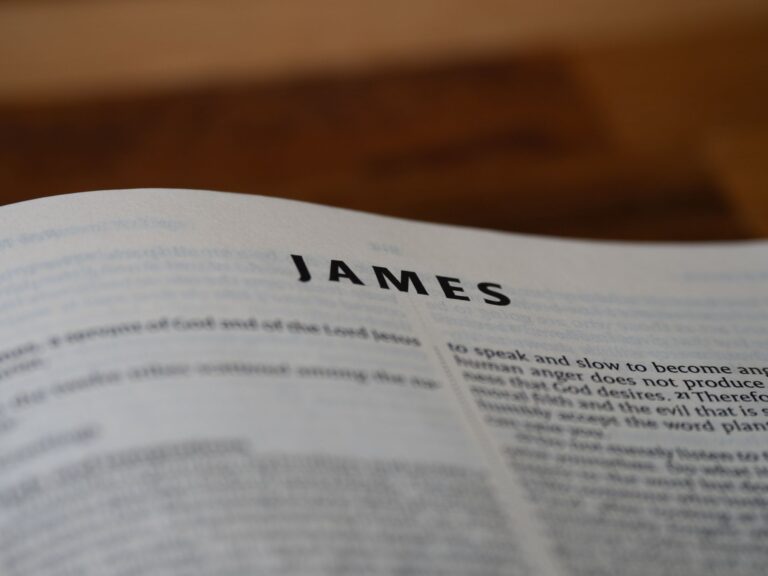
James teaches that our words reveal the condition of our hearts. Cannot Tame the Tongue, although it is small, it has the power to build up or destroy. Through God’s wisdom, humility, and self-control, believers can sow peace and reap a lasting harvest of righteousness.
Compassion, Teaching, Tongue, Self-Control, God’s Likeness, Humility, Wisdom, Patience, Obedience, Peacemakers, Harvest of Righteousness
📖 James 3:1–2 (NIV)
“3 Not many of you should become teachers, my fellow believers, because you know that we who teach will be judged more strictly. 2 We all stumble in many ways. Anyone who is never at fault in what they say is perfect, able to keep their whole body in check.”
James continues his practical teaching by focusing on one of the most powerful parts of the human body—the tongue.
Although small, our words influence relationships, shape reputations, encourage faith, or cause lasting harm.
James reminds believers that spiritual maturity is often revealed by the way they speak. The same mouth that praises God should never be used to tear down people who are made in His image.
Godly wisdom produces humble hearts, peaceful lives, and words that build others up.
📖 James 3:3-4 (NIV)
3 When we put bits into the mouths of horses to make them obey us, we can turn the whole animal. 4 Or take ships as an example. Although they are so large and are driven by strong winds, they are steered by a very small rudder wherever the pilot wants to go.”
James begins with a warning to those who teach God’s Word.
Teaching is a privilege, but it also carries greater accountability.
Teachers influence others.
Their words shape understanding, encourage faith, and help believers grow.
James reminds us that everyone stumbles at times, especially in what they say.
Learning to control our speech is one of the greatest signs of spiritual maturity.
📖 James 3:5-8 (NIV)
“5 Likewise, the tongue is a small part of the body, but it makes great boasts. Consider what a great forest is set on fire by a small spark. 6 The tongue also is a fire, a world of evil among the parts of the body. It corrupts the whole body, sets the whole course of one’s life on fire, and is itself set on fire by hell.”
“7 All kinds of animals, birds, reptiles and sea creatures are being tamed and have been tamed by mankind, 8 but no human being can tame the tongue. It is a restless evil, full of deadly poison.”
James gives three illustrations.
A small bit guides a powerful horse.
A tiny rudder steers a large ship.
A small spark can ignite an entire forest.
Likewise, the tongue is small, yet its influence is enormous.
James compares the tongue to a fire because careless words often create damage far beyond what we imagine.
📖 James 3:9–12 (NIV)
“9 With the tongue we praise our Lord and Father, and with it we curse human beings, who have been made in God’s likeness. 10 Out of the same mouth come praise and cursing. My brothers and sisters, this should not be. 11 Can both fresh water and salt water flow from the same spring? 12 My brothers and sisters, can a fig tree bear olives, or a grapevine bear figs? Neither can a salt spring produce fresh water.”
Human beings have learned to tame many creatures.
Yet James says:
“No human being can tame the tongue.”
Without God’s help, controlling our speech remains impossible.
James also points out an important contradiction.
With the same mouth we praise God and curse people who are created in God’s likeness.
This should never characterize the life of a believer.
Just as fresh water and salt water cannot flow from the same spring, our words should consistently reflect the new life God has given us.
📖 James 3:13–16 (NIV)
“13 Who is wise and understanding among you? Let them show it by their good life, by deeds done in the humility that comes from wisdom. 14 But if you harbor bitter envy and selfish ambition in your hearts, do not boast about it or deny the truth. 15 Such “wisdom” does not come down from heaven but is earthly, unspiritual, demonic. 16 For where you have envy and selfish ambition, there you find disorder and every evil practice.”
James shifts from speech to wisdom.
True wisdom is demonstrated by humble living.
False wisdom is driven by envy, selfish ambition, and pride.
Earthly wisdom produces confusion and conflict.
It focuses on self rather than God.
When selfish ambition controls the heart, disorder follows.
James reminds believers that our attitudes often reveal the source of our wisdom.
📖 James 3:17 (NIV)
“17 But the wisdom that comes from heaven is first of all pure; then peace-loving, considerate, submissive, full of mercy and good fruit, impartial and sincere.”
God’s wisdom is completely different.
James describes heavenly wisdom as:
Pure.
Peace-loving.
Considerate.
Submissive.
Full of mercy.
Full of good fruit.
Impartial.
Sincere.
These qualities reflect the character of Jesus Christ.
Godly wisdom produces compassion instead of conflict.
Humility instead of pride.
Peace instead of division.
Believers who seek God’s wisdom become instruments of His love wherever they serve.
📖 James 3:18 (NIV)
“18 Peacemakers who sow in peace reap a harvest of righteousness.”
James concludes the chapter with a beautiful promise.
“Peacemakers who sow in peace reap a harvest of righteousness.”
Every word we speak plants a seed.
God invites believers to become peacemakers whose lives produce a harvest that honors Him.
Throughout Scripture, God calls His people to reflect His character.
Jesus taught that words reveal what fills the heart.
James builds upon that teaching by reminding believers that heavenly wisdom transforms both attitudes and actions.
God’s wisdom is not measured by knowledge alone.
It is demonstrated through humility, compassion, obedience, and peaceful living.
As believers grow in Christ, their words increasingly reflect the One who created them in His likeness.
Words have the power to build up or destroy.
Teachers carry greater responsibility before God.
Spiritual maturity is revealed by self-control.
Every person is created in God’s likeness and deserves respect.
Earthly wisdom produces pride, envy, and conflict.
Heavenly wisdom produces humility, mercy, peace, and sincerity.
Peacemakers plant seeds that produce lasting righteousness.
Obedience begins with allowing God to transform the heart.
God’s wisdom should guide both our speech and our actions.
Every conversation is an opportunity to reflect the character of Christ.
James reminds believers that although the tongue is small, its influence is immense. Left unchecked, words can spread hurt, division, and destruction. Guided by God’s wisdom, however, our speech can encourage, heal, and bring peace. As our hearts are transformed by Christ, our words begin to reflect His compassion, humility, and truth.
When believers choose heavenly wisdom over selfish ambition and become peacemakers, they sow seeds that produce a lasting harvest of righteousness—bringing glory to God and pointing others toward His love.