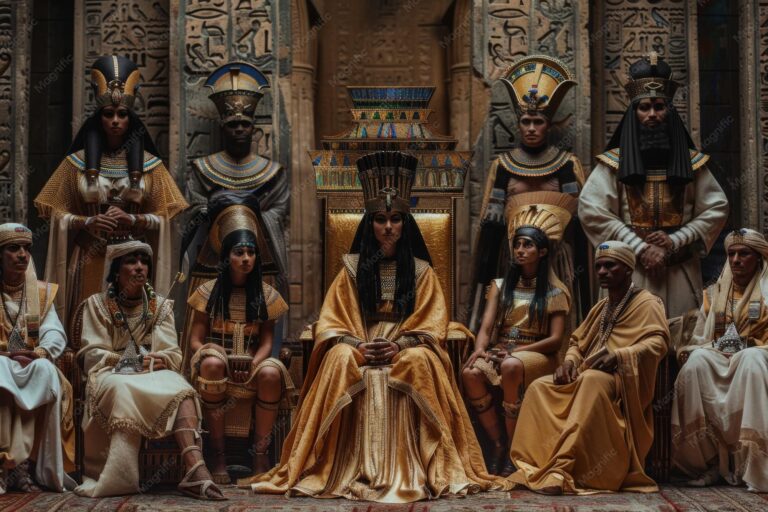
The final chapter of Genesis reveals the power of God’s covenant,forgiveness, Dignitaries of Egypt and faithfulness. As Jacob dies, Joseph honors his father’s wishes with a funeral attended by Egypt’s highest dignitaries, demonstrating how far God had elevated him from slavery and prison. Yet the greater story unfolds when Joseph’s fearful brothers expect judgment and receive mercy instead. Refusing to hold a grudge, Joseph recognizes God’s hand at work through every trial, proving that God’s purposes are greater than human failures and sins.
God’s Covenant, Joseph’s Burial of Jacob, Dignitaries of Egypt, Seven Days of Mourning, Forgiveness, Family Restoration, God’s Sovereignty, Joseph’s Death
📖 Genesis 50:1-2 (NIV)
“50 Joseph threw himself on his father and wept over him and kissed him. 2 Then Joseph directed the physicians in his service to embalm his father Israel. So the physicians embalmed him, “
📖 Genesis 50:3-8 (NIV)
“3 taking a full forty days, for that was the time required for embalming. And the Egyptians mourned for him seventy days.”
“4 When the days of mourning had passed, Joseph said to Pharaoh’s court, “If I have found favor in your eyes, speak to Pharaoh for me. Tell him, 5 ‘My father made me swear an oath and said, “I am about to die; bury me in the tomb I dug for myself in the land of Canaan.” Now let me go up and bury my father; then I will return.’”
“6 Pharaoh said, “Go up and bury your father, as he made you swear to do.”
“7 So Joseph went up to bury his father. All Pharaoh’s officials accompanied him—the dignitaries of his court and all the dignitaries of Egypt— 8 besides all the members of Joseph’s household and his brothers and those belonging to his father’s household. Only their children and their flocks and herds were left in Goshen”.
The book of Genesis closes with both mourning and hope. Jacob has died, but God’s covenant remains alive. Joseph honors his father’s final wishes, leading a remarkable funeral procession from Egypt to Canaan. After the burial, Joseph’s brothers once again fear the consequences of their past sins. Yet instead of judgment, they receive mercy. Through grief, forgiveness, and faith in God’s promises, Genesis ends by reminding us that God’s purposes continue even after His servants are gone.
📖 Genesis 50:9-14 (NIV)
“9 Chariots and horsemen[a] also went up with him. It was a very large company.”
“10 When they reached the threshing floor of Atad, near the Jordan, they lamented loudly and bitterly; and there Joseph observed a seven-day period of mourning for his father. 11 When the Canaanites who lived there saw the mourning at the threshing floor of Atad, they said, “The Egyptians are holding a solemn ceremony of mourning.” That is why that place near the Jordan is called Abel Mizraim.[b]”
“12 So Jacob’s sons did as he had commanded them: 13 They carried him to the land of Canaan and buried him in the cave in the field of Machpelah, near Mamre, which Abraham had bought along with the field as a burial place from Ephron the Hittite. 14 After burying his father, Joseph returned to Egypt, together with his brothers and all the others who had gone with him to bury his father.”
Joseph wept over his father and ordered the physicians of Egypt to embalm him.
The Egyptians mourned for Jacob for seventy days, a remarkable honor showing the respect Joseph’s family had earned throughout Egypt.
When the mourning period ended, Joseph sought Pharaoh’s permission to bury his father in Canaan according to the oath he had sworn.
Pharaoh gladly agreed.
A great procession followed Jacob’s body:
Pharaoh’s officials
Dignitaries of Egypt
Joseph’s household
His brothers
Chariots and horsemen
It was an extraordinary display of honor.
When they reached the threshing floor of Atad, Joseph observed seven additional days of mourning before carrying Jacob to the Cave of Machpelah, where Abraham, Sarah, Isaac, Rebekah, and Leah had been buried.
God’s covenant family remained connected to the land God had promised.
📖 Genesis 50:15–18 (NIV)
“15 When Joseph’s brothers saw that their father was dead, they said, “What if Joseph holds a grudge against us and pays us back for all the wrongs we did to him?” 16 So they sent word to Joseph, saying, “Your father left these instructions before he died: 17 ‘This is what you are to say to Joseph: I ask you to forgive your brothers the sins and the wrongs they committed in treating you so badly.’ Now please forgive the sins of the servants of the God of your father.” When their message came to him, Joseph wept.”
“18 His brothers then came and threw themselves down before him. “We are your slaves,” they said
After Jacob’s burial, Joseph’s brothers became afraid.
For years they had experienced Joseph’s kindness, yet deep guilt still remained in their hearts.
They wondered:
“What if Joseph holds a grudge against us?”
Their father’s death removed what they believed was their protection.
The brothers feared Joseph would finally repay them for selling him into slavery.
So they sent a message asking for forgiveness and then fell before Joseph, saying:
“We are your slaves.”
Years after their betrayal, fear still controlled them.
📖 Genesis 50:19–21 (NIV)
“19 But Joseph said to them, “Don’t be afraid. Am I in the place of God? 20 You intended to harm me, but God intended it for good to accomplish what is now being done, the saving of many lives. 21 So then, don’t be afraid. I will provide for you and your children.” And he reassured them and spoke kindly to them.”
Joseph’s response reveals the depth of his faith.
Instead of anger, Joseph wept.
Then he said:
“Don’t be afraid. Am I in the place of God?”
Joseph understood that judgment belongs to God alone.
He saw something larger than the actions of his brothers.
“You intended to harm me, but God intended it for good to accomplish what is now being done, the saving of many lives.”
This statement summarizes Joseph’s entire life.
The betrayal was real.
The suffering was real.
This injustice was real.
But God’s plan was greater.
Rather than seeking revenge, Joseph promised:
“I will provide for you and your children.”
Joseph reassured them and spoke kindly to them.
Forgiveness replaced fear.
Grace overcame guilt.
📖 Genesis 50:22–26 (NIV)
“22 Joseph stayed in Egypt, along with all his father’s family. He lived a hundred and ten years 23 and saw the third generation of Ephraim’s children. Also the children of Makir son of Manasseh were placed at birth on Joseph’s knees.[c]”
“24 Then Joseph said to his brothers, “I am about to die. But God will surely come to your aid and take you up out of this land to the land he promised on oath to Abraham, Isaac and Jacob.” 25 And Joseph made the Israelites swear an oath and said, “God will surely come to your aid, and then you must carry my bones up from this place.”
“26 So Joseph died at the age of a hundred and ten. And after they embalmed him, he was placed in a coffin in Egypt.”
Joseph remained in Egypt and lived to be one hundred and ten years old.
He saw his children, grandchildren, and great-grandchildren.
Yet even at the end of his life, Joseph’s focus remained on God’s covenant promises.
He told his family:
“God will surely come to your aid.”
Joseph knew Egypt was not their final home.
God had promised the land to Abraham, Isaac, and Jacob.
Before his death, Joseph made the Israelites swear an oath:
“Carry my bones up from this place.”
Joseph died believing God’s promises would one day be fulfilled.
Though his body remained in Egypt, his faith looked forward to the future deliverance of God’s people.
Throughout Genesis 50, one truth stands above all others:
God remains in control.
Jacob’s death did not stop God’s covenant.
The brothers’ sin did not stop God’s plan.
Years of suffering did not stop God’s purpose.
Everything Joseph endured became part of God’s greater design to preserve His people.
What appeared to be tragedy became salvation.
This appeared to be loss became blessing.
What appeared to be the end became the beginning of God’s next chapter.
Honoring commitments reflects faithfulness before God.
Forgiveness frees both the offender and the offended.
God can bring good from even the darkest circumstances.
Human sin cannot cancel God’s covenant promises.
Grief and hope can exist together.
God’s timing is often larger than our understanding.
Family restoration is possible through grace.
God’s promises continue beyond one generation.
Genesis ends not with bitterness but with forgiveness. Joseph had every human reason to hold a grudge, yet he chose mercy because he trusted God’s greater purpose. He understood that while his brothers had acted with evil intentions, God had been working through every trial to save lives and preserve His covenant people.
As Joseph’s life comes to a close, his faith remains fixed on God’s promises. The coffin in Egypt is not the end of the story. God’s covenant continues, His people remain under His care, and His promises await fulfillment. The God who guided Abraham, Isaac, Jacob, and Joseph will continue leading His people exactly as He promised.