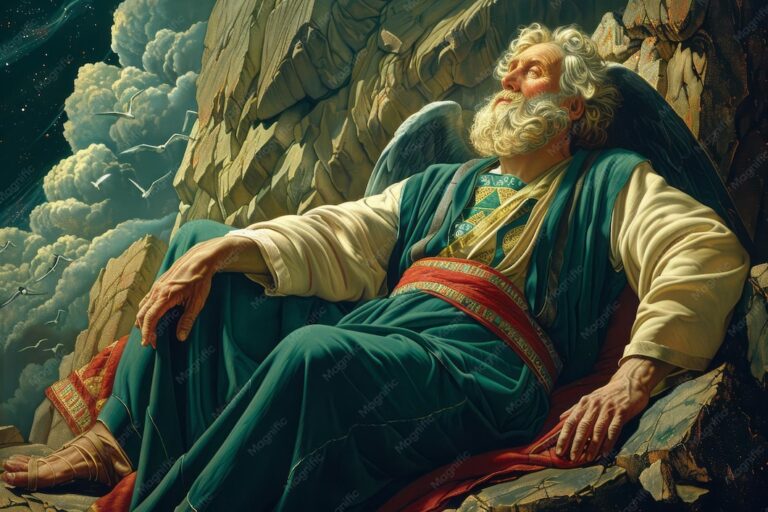
As Jacob’s life draws to a close, 12 Tribes of Israel, he gathers his twelve sons to deliver prophetic blessings that will shape the future of Israel. These final words are more than a father’s farewell—they reveal God’s covenant plan for generations to come. Through encouragement, correction, warning, and promise, Jacob speaks into the destiny of each son and the tribes that will come from them. Though marked by family conflict and human failure, God’s blessings remain at work, preparing His people for the future He has ordained.
God’s Covenant, God’s Blessings, Obedience, Family Conflict, Future Generations, The Twelve Tribes of Israel
📖 Genesis 49:1-2 (NIV)
49 Then Jacob called for his sons and said: “Gather around so I can tell you what will happen to you in days to come.
2 “Assemble and listen, sons of Jacob;
listen to your father Israel.
As Jacob’s life comes to an end, he gathers his twelve sons around him to reveal what lies ahead for each family line. These are more than final words from a dying father. They are prophetic declarations that help shape the future of the nation of Israel. Through blessings, warnings, correction, and promises, God reveals how each tribe will contribute to His covenant plan. Though the family has experienced conflict, failure, jealousy, and division, God’s purposes continue moving forward through every son.
📖 Genesis 49:3–4 (NIV)
3 “Reuben, you are my firstborn,
my might, the first sign of my strength,
excelling in honor, excelling in power.”
4 “Turbulent as the waters, you will no longer excel,
for you went up onto your father’s bed,
onto my couch and defiled it.”
Reuben possessed the privileges of the firstborn but forfeited his position through sin and instability. Though strong and honored by birth, he would no longer excel because of his actions against his father.
📖 Genesis 49:5–7 (NIV)
5 “Simeon and Levi are brothers—
their swords[a] are weapons of violence.
6 Let me not enter their council,
let me not join their assembly,
for they have killed men in their anger
and hamstrung oxen as they pleased.
7 Cursed be their anger, so fierce,
and their fury, so cruel!
I will scatter them in Jacob
and disperse them in Israel.
Jacob condemned Simeon’s violent anger and cruelty. His descendants would be scattered throughout Israel, illustrating the consequences of unchecked wrath.
📖 Genesis 49:5–7 (NIV)
5 “Simeon and Levi are brothers—
their swords[a] are weapons of violence.
6 Let me not enter their council,
let me not join their assembly,
for they have killed men in their anger
and hamstrung oxen as they pleased.
7 Cursed be their anger, so fierce,
and their fury, so cruel!
I will scatter them in Jacob
and disperse them in Israel.
Levi shared Simeon’s judgment because of the violence at Shechem. Yet later God’s grace transformed the tribe of Levi into Israel’s priestly tribe, showing redemption even after failure.
📖 Genesis 49:8–12 (NIV)
8 “Judah,[b] your brothers will praise you;
your hand will be on the neck of your enemies;
your father’s sons will bow down to you.
9 You are a lion’s cub, Judah;
you return from the prey, my son.
Like a lion he crouches and lies down,
like a lioness—who dares to rouse him?
10 The scepter will not depart from Judah,
nor the ruler’s staff from between his feet,[c]
until he to whom it belongs[d] shall come
and the obedience of the nations shall be his.
11 He will tether his donkey to a vine,
his colt to the choicest branch;
he will wash his garments in wine,
his robes in the blood of grapes.
12 His eyes will be darker than wine,
his teeth whiter than milk.[e]
Judah receives the greatest blessing. His brothers would praise him, kings would come through his line, and the scepter would remain with him.
This prophecy ultimately points toward Jesus Christ, the Lion of Judah, through whom all nations would be blessed.
📖 Genesis 49:13 (NIV)
13 “Zebulun will live by the seashore
and become a haven for ships;
his border will extend toward Sidon.
Zebulun would dwell near the seashore and become associated with trade and commerce, serving as a connection point for nations and merchants.
📖 Genesis 49:14–15 (NIV)
14 “Issachar is a rawboned[f] donkey
lying down among the sheep pens.[g]
15 When he sees how good is his resting place
and how pleasant is his land,
he will bend his shoulder to the burden
and submit to forced labor.
Issachar is pictured as strong but willing to carry heavy burdens. His tribe would enjoy fertile land but would also experience labor and responsibility.
📖 Genesis 49:16–18 (NIV)
16 “Dan[h] will provide justice for his people
as one of the tribes of Israel.
17 Dan will be a snake by the roadside,
a viper along the path,
that bites the horse’s heels
so that its rider tumbles backward.
18 “I look for your deliverance, Lord.
Dan would provide justice among the tribes of Israel. Yet Jacob also compares him to a serpent, suggesting both wisdom and danger. Jacob pauses here to declare:
“I look for your deliverance, Lord.”
📖 Genesis 49:19 (NIV)
19 “Gad[i] will be attacked by a band of raiders,
but he will attack them at their heels.
Though attacked repeatedly by enemies, Gad would persevere and overcome. His tribe would become known for courage and resilience.
📖 Genesis 49:20 (NIV)
20 “Asher’s food will be rich;
he will provide delicacies fit for a king.
Asher’s territory would be rich and productive. His tribe would enjoy abundance and provide food fit for kings.
📖 Genesis 49:21 (NIV)
21 “Naphtali is a doe set free
that bears beautiful fawns.[j]
Naphtali is described as a deer set free. His tribe would be associated with freedom, beauty, and fruitfulness.
📖 Genesis 49:22–26 (NIV)
22 “Joseph is a fruitful vine,
a fruitful vine near a spring,
whose branches climb over a wall.[k]
23 With bitterness archers attacked him;
they shot at him with hostility.
24 But his bow remained steady,
his strong arms stayed[l] limber,
because of the hand of the Mighty One of Jacob,
because of the Shepherd, the Rock of Israel,
25 because of your father’s God, who helps you,
because of the Almighty,[m] who blesses you
with blessings of the skies above,
blessings of the deep springs below,
blessings of the breast and womb.
26 Your father’s blessings are greater
than the blessings of the ancient mountains,
than[n] the bounty of the age-old hills.
Let all these rest on the head of Joseph,
on the brow of the prince among[o] his brothers.
Joseph receives one of the longest blessings.
Though attacked, betrayed, and tested throughout life, God sustained him.
Jacob describes Joseph as:
“A fruitful vine near a spring.”
God’s protection, provision, and blessing remained upon Joseph through every hardship. His descendants, Ephraim and Manasseh, would become powerful tribes within Israel.
📖 Genesis 49:27 (NIV)
27 “Benjamin is a ravenous wolf;
in the morning he devours the prey,
in the evening he divides the plunder.”
Benjamin is compared to a ravenous wolf.
His tribe would become known for strength, courage, and military success. Though small, Benjamin would produce mighty warriors and leaders.
📖 Genesis 49:28 (NIV)
28 All these are the twelve tribes of Israel, and this is what their father said to them when he blessed them, giving each the blessing appropriate to him.
Each son receives a blessing appropriate to his character, future, and role in God’s plan.
The blessings reveal that:
God works through imperfect people.
Sin has consequences.
Obedience brings blessing.
God’s covenant continues despite family conflict.
Every tribe has a purpose within God’s plan.
📖 Genesis 49:29–32 (NIV)
29 “Then he gave them these instructions: “I am about to be gathered to my people. Bury me with my fathers in the cave in the field of Ephron the Hittite, 30 the cave in the field of Machpelah, near Mamre in Canaan, which Abraham bought along with the field as a burial place from Ephron the Hittite. 31 There Abraham and his wife Sarah were buried, there Isaac and his wife Rebekah were buried, and there I buried Leah. 32 The field and the cave in it were bought from the Hittites.[p]”
Jacob instructs his sons to bury him in the Cave of Machpelah near Mamre.
This was more than a burial request.
It was a declaration of faith.
Jacob wanted to rest beside Abraham, Sarah, Isaac, Rebekah, and Leah in the land God promised to their descendants.
Even in death, Jacob trusted God’s covenant promises.
📖 Genesis 49:33 (NIV)
33 “When Jacob had finished giving instructions to his sons, he drew his feet up into the bed, breathed his last and was gathered to his people.”
After blessing his sons and confirming God’s promises, Jacob peacefully draws his feet into the bed and breathes his last.
His journey ends where faith began—with complete trust in God’s covenant.
The patriarch who wrestled with God, endured family conflict, suffered loss, and experienced restoration leaves behind a nation in its infancy and a future resting securely in God’s hands.
God’s covenant continues from generation to generation.
Blessings and consequences often flow from life’s choices.
God can redeem even deeply flawed people.
Family conflict cannot stop God’s plan.
Every believer has a role within God’s purposes.
Faith looks beyond death to God’s promises.
God’s blessings often unfold across generations.
The Lord remains faithful to His covenant forever.
Genesis 49 is both an ending and a beginning. Jacob’s life comes to a close, but the future of Israel is just beginning to unfold. Through twelve very different sons, God would build a nation, preserve His covenant, and eventually bring forth the Messiah through the tribe of Judah.
Jacob dies trusting what he cannot yet see. His final words remind us that God’s promises extend far beyond one lifetime. Generations may come and go, but the covenant of God remains steadfast, faithful, and sure.